

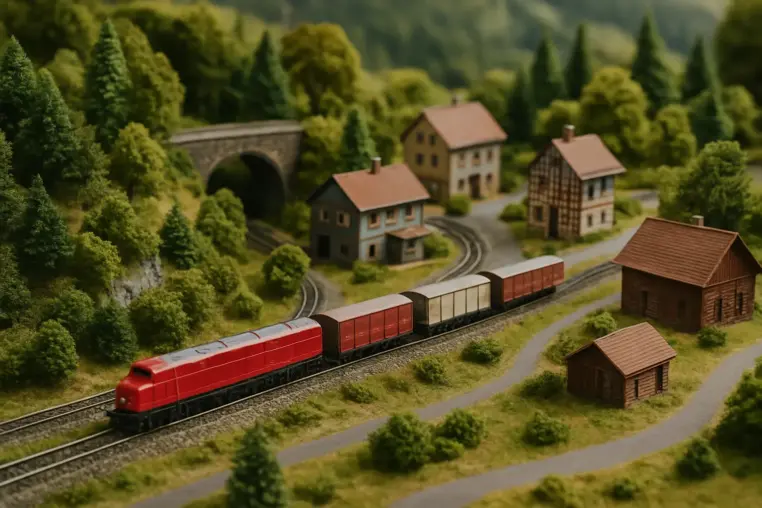
 Written by
 Z Scale Layout Ideas: Stunning Best Designs for Model Railroad Layout Planning
Z scale layout ideas offer model railroaders a unique way to create impressive scenes in a very small space. If you have limited room but still want a realistic, detailed, and visually striking railway, Z scale can be an excellent choice. Its tiny size makes it possible to fit more track, scenery, and operating interest into layouts that would be impossible in larger scales. Whether you are new to the hobby or looking to refine your current setup, planning a Z scale layout opens up many creative possibilities.
Why Choose Z Scale for a Model Railroad?
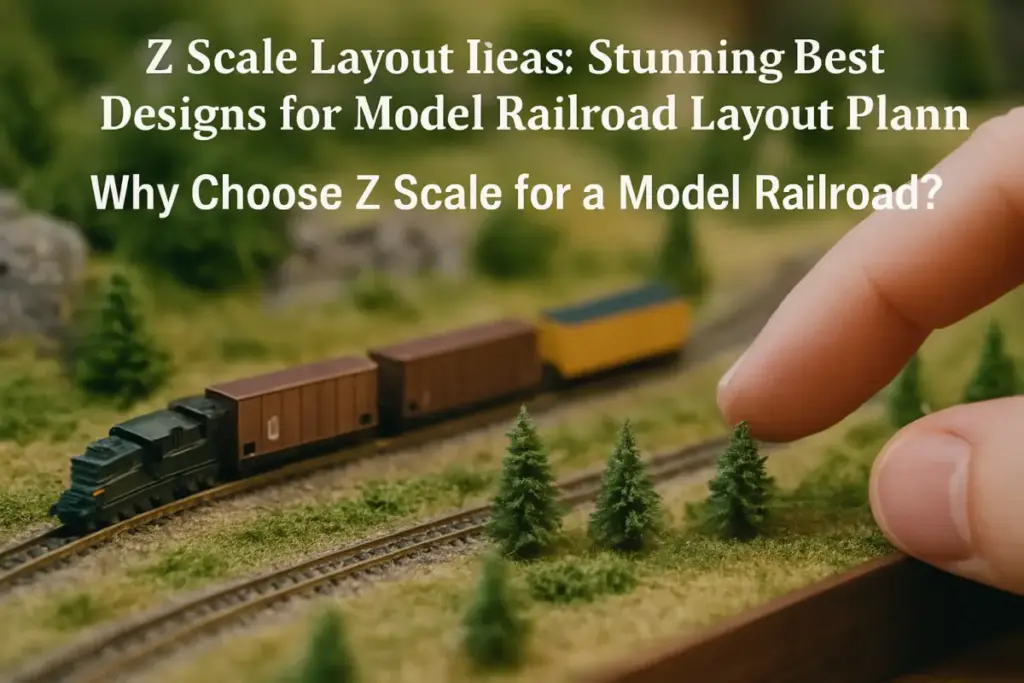
Z scale is one of the smallest commercially available model train scales, making it ideal for hobbyists who want to build in compact areas. One of the biggest advantages is how much layout you can fit into a small footprint. A tabletop, shelf, or corner space can become a full railroad scene with multiple industries, towns, and mountain passes.
Compared with HO scale trains, Z scale gives you the ability to create longer visible runs and larger operational variety in a much smaller area. While HO scale remains popular for detail and ease of handling, Z scale is often preferred when space is the main limitation. It is also a strong choice for collectors and operators who enjoy intricate scenery and realistic miniature worlds.
For those comparing model train scales, Z scale sits at the smaller end of the spectrum, alongside N scale trains, but it goes even further in maximizing space efficiency. That makes it especially appealing for modern apartments, office spaces, or dedicated shelves where every inch matters.
Key Principles of Z Scale Layout Design

Good model railroad layout design starts with a clear purpose. Before adding track or scenery, think about what kind of railroad experience you want. Do you want a point-to-point switching layout, a continuous run for relaxed operation, or a multi-level design with dramatic scenery? Z scale supports all of these concepts, but careful planning is essential.
A few principles help make the layout more successful:
– Keep track plans simple but purposeful. Small scales can tempt you to overbuild. A cleaner design often works better.
– Use curves wisely. Tight curves are possible in Z scale, but smoother transitions improve realism and reliability.
– Plan for accessibility. Because the trains are small, derailments can be harder to spot and fix.
– Balance track and scenery. In a compact layout, scenery often does as much visual work as the trains themselves.
– Think operationally. Even a small layout can include switching, staging, and branch-line movement.
Strong model railway layout planning combines realism, usability, and visual appeal. The best layouts feel believable and are enjoyable to operate, not just to look at.
Popular Z Scale Layout Ideas for Small Spaces
There are many ways to approach a Z scale project, depending on your goals and available room. Here are several proven concepts that work especially well.
1. Shelf Layout with a Small Town Scene
A shelf layout is one of the most practical model train layout ideas for Z scale. Built along a wall, it can feature a small town, one or two industries, and a mainline passing through the scene. This type of layout is ideal for people who want something attractive without needing a large dedicated room.
You can include:
– a depot
– freight siding
– road crossing
– small warehouse or factory
– scenic backdrop with hills or distant mountains
This design works well because it keeps the focus on detail and operation rather than sheer size.
2. Continuous Run with Scenic Variety
If you enjoy watching trains move, a continuous loop is a classic choice. In Z scale, a loop can be built with multiple scenic zones so that the train appears to travel through different environments. One side might feature farmland, another a river bridge, and another a town edge or industrial district.
This style is especially appealing for display layouts. It is also a good option for beginners because it provides straightforward train movement while leaving room for creative scenery.
3. Point-to-Point Switching Layout
For operators who enjoy realistic railroad work, a point-to-point design offers meaningful train activity. Instead of just circling endlessly, trains move from one location to another, picking up and setting out cars. This kind of layout adds purpose and challenge.
A Z scale switching layout can include:
– a yard lead
– several customer sidings
– staging tracks at each end
– a short run between industries
This is one of the most engaging model railroad layout design approaches because it emphasizes operations over size.
4. Multilevel Mountain Railroad
A mountain layout creates dramatic scenery and gives the illusion of a larger railroad. In Z scale, this concept works beautifully because the small trains can handle long-looking climbs and tunnels within a compact area. A spiral or hidden grade can connect different levels, allowing trains to pass through bridges, tunnels, and ridges.
This design is visually impressive and can make even a small room feel like a full rail adventure.
5. Modular Z Scale Sections
If you want flexibility, modular construction is worth considering. Individual sections can be designed separately and later combined. This lets you build slowly, test different ideas, and even transport the layout if needed.
Modules are especially useful for hobbyists who enjoy refining scenery and track design over time. They also make it easier to experiment with different model railway layout planning concepts before committing to a final arrangement.
How Z Scale Compares with Other Model Train Scales
When planning a layout, it helps to understand how Z scale compares with other model train scales. HO scale trains are larger and often easier to detail and handle, which is why they remain a favorite for many modelers. N scale trains are also compact, but Z scale goes one step further in saving space.
That smaller footprint means you can create tighter packing of track and scenery, but it also demands precision. Tiny couplers, lighter cars, and delicate components require patience and care. For modelers who enjoy the challenge, this is part of the appeal.
If your priority is maximum layout potential in minimal space, Z scale can outperform larger scales in surprising ways. However, if you prefer easier maintenance and more commercial accessory options, HO or N scale may be a better fit.
Tips for Better Model Railway Layout Planning in Z Scale
To get the most from your layout, keep these practical tips in mind:
– Draw a plan before building. Even a basic sketch helps prevent mistakes.
– Use high-quality track components. Reliability matters more in small scales.
– Choose scenery materials carefully. Fine textures look better at Z scale.
– Add depth with backdrops. Painted or printed backgrounds can make the layout feel larger.
– Limit clutter. In small scenes, too many details can overwhelm the composition.
– Test trains early. Make sure locomotives handle grades and curves before final scenery work.
A thoughtful approach to planning will save time and improve the final result. The best layouts are usually built in stages, with careful testing between each phase.
Bringing Your Z Scale Layout to Life
A successful Z scale railroad is more than just track on a board. It is a miniature world with motion, atmosphere, and story. The most stunning designs combine smart track planning with believable scenery, lighting, and realistic structures. Even a small layout can feel expansive if the composition is carefully arranged.
You might focus on a quiet rural branch line, a busy industrial spur, or a mountain railroad carving through rugged terrain. The beauty of Z scale is that it lets you tell a big story in a small space.
Final Thoughts
Z scale layout ideas are perfect for hobbyists who want maximum creativity in minimum space. With careful model railroad layout design and smart model railway layout planning, you can build a layout that is both practical and visually captivating. Whether you prefer a shelf layout, a scenic loop, or a switching terminal, Z scale offers endless inspiration.
As you explore different model train layout ideas, remember that the best layout is the one that fits your space, your interests, and your operating style. From comparing HO scale trains and N scale trains to working through the strengths of different model train scales, the process itself is part of the fun. With Z scale, even the smallest room can become a remarkable railroad world.

