

 Written by
 Model Railroad Layout Design: Stunning Best Ideas for Effortless Planning
Model railroad layout design is one of the most exciting parts of the hobby because it blends creativity, engineering, and storytelling into a single project. Whether you are building your first small shelf layout or planning a large basement empire, the way you design your railroad will shape how enjoyable it is to build, operate, and admire. A thoughtful plan helps you avoid wasted space, unrealistic track arrangements, and future frustration, while still leaving room for imagination and personal style.
The best layouts are not necessarily the biggest or most complicated. Instead, they are the ones that balance available space, operating goals, scenery, and accessibility. If you approach the process with a clear strategy, your layout can become a satisfying project instead of an overwhelming one. Below are practical ideas and planning tips to help you create a layout that looks great and functions smoothly.
Start with Your Purpose

Before drawing track plans or buying materials, decide what you want your layout to do. This is the foundation of effective planning. Some hobbyists want realistic freight operations, while others prefer watching trains circle through scenic landscapes. Many modelers enjoy a mix of both.
Ask yourself a few key questions:
– Do I want continuous running or realistic point-to-point operation?
– Will the layout focus on one era, one location, or a fictional setting?
– How much time do I want to spend building versus operating?
– Am I designing for display, detailed scenery, switching, or all three?
Your answers will guide every decision, from benchwork size to track arrangement. A small but well-designed layout can be more rewarding than a larger one that feels cluttered or unfinished.
Explore Practical Model Train Layout Ideas
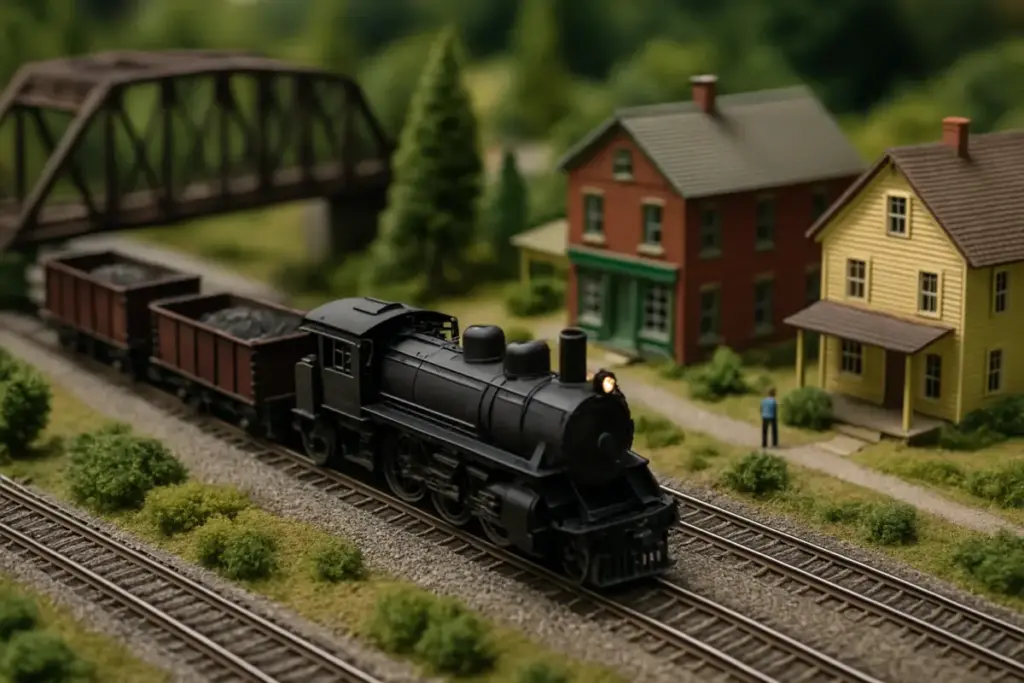
There are many model train layout ideas that work well depending on your space and interests. The most successful designs usually follow a clear theme and keep the track arrangement simple enough to operate comfortably.
Loop-and-Point Designs
A simple loop is often the best place to begin. It allows trains to run continuously and gives you time to learn how your model trains behave on curves, grades, and sidings. If you want more interest, add passing tracks or a small industrial spur.
Point-to-Point Layouts
This style creates the feeling of real rail movement between destinations. Trains leave one town, travel through the layout, and arrive at another. This is ideal for operators who enjoy switching and scheduling rather than just watching trains circle.
Switching Layouts
If you love local rail action, a switching layout may be perfect. These layouts focus on industries, yards, and careful train movements rather than long runs. They can fit into compact spaces and offer endless operational variety.
Shelf Layouts
Shelf layouts are narrow, wall-mounted designs that work well in apartments, spare rooms, and workshops. They are excellent for scenes with strong visual focus and can still include realistic operation if planned well.
Around-the-Room Layouts
An around-the-room design uses available wall space efficiently. It can provide longer runs, more scenic variety, and easier access than a large center-island layout. For many modelers, this is one of the most practical solutions.
Focus on Scale, Space, and Accessibility
A good model railroad layout design should fit your room, your scale, and your ability to reach all areas comfortably. It is easy to dream too big at the beginning, but accessibility is one of the most important parts of a usable layout.
Keep these principles in mind:
– Avoid making the layout so wide that you cannot reach the center.
– Leave space for duck-unders, access hatches, or lift-out sections if needed.
– Match track radius and grades to the size of your locomotives and rolling stock.
– Plan for future maintenance, not just initial construction.
If the layout is hard to reach, cleaning track, fixing derailments, and adding scenery become frustrating. Designing for access now will save you countless hours later.
Build Around a Strong Theme
A layout with a clear theme feels more believable and enjoyable. Your theme might be a historical railroad, a modern freight corridor, a mountain logging line, or a fictional short line. The key is consistency.
For example, if you choose a rural branch line, keep your structures, industries, and scenery in line with that setting. If you prefer a busy urban freight district, focus on warehouses, crossings, and industrial details. A strong theme helps tie together the track plan, scenery, and operating style.
You do not need every detail to be exact, but having a visual and operational direction makes the layout more coherent. It also makes it easier to choose rolling stock, weathering styles, and scenic elements.
Use the Right Balance of Track and Scenery
Many beginners put too much track into the available space. While it may seem like more track means more fun, crowded plans often leave little room for scenery, structures, and realistic open areas. Well-designed layouts usually benefit from breathing room.
A useful rule is to let scenery support the action rather than compete with it. For example:
– A freight yard can be framed by warehouses and roads.
– A mountain line can use cliffs and bridges to create visual interest.
– A small town scene can make a passing siding feel like a real destination.
Good scenery gives your trains context. Without it, even impressive trackwork can feel flat or unfinished.
Plan Operations Early
One of the smartest parts of model railway layout planning is thinking ahead about how the layout will be used. Even if you are not planning complex sessions, it helps to decide how trains will move through the scene.
Consider these operational elements:
– Where do trains enter and leave?
– Will there be a yard or staging area?
– How many industries can each town support?
– Is there a runaround track for switching?
– Are there passing sidings for meets and overtakes?
Operations add purpose to your layout. A train is more interesting when it has a job to do, not just a place to circle. Even simple switching tasks can make a small layout feel dynamic and alive.
Keep Construction Simple and Flexible
The easiest layouts to finish are often the ones built with simplicity in mind. That does not mean boring. It means making smart choices that reduce unnecessary complexity.
Use modular thinking whenever possible:
– Build in sections for easier handling.
– Keep wiring accessible.
– Use reliable track geometry.
– Leave room for future expansion if the layout may grow.
Flexibility is also important. Your interests may change as you spend more time with the hobby. A smart plan lets you expand or modify the layout without tearing everything apart.
Don’t Forget the Human Side of the Hobby
A successful layout is not just a technical project. It is also a place to relax, create, and enjoy the process of working with model railroad scenes and equipment. Make sure the layout is comfortable to sit or stand beside for long sessions. Add lighting, storage, and workspace where needed.
If you share the hobby with family or friends, think about how they will interact with the layout too. Clear viewing angles, easy controls, and accessible operating positions can make the experience more enjoyable for everyone.
Conclusion
The best model railroad layout design is one that reflects your goals, fits your space, and stays enjoyable over time. By starting with a clear purpose, choosing practical model train layout ideas, and planning carefully for access, scenery, and operations, you can build a layout that feels both beautiful and functional. Whether your dream is a compact switching scene or a large multi-level empire, thoughtful model railway layout planning will help you turn your vision into a layout you can be proud of for years to come.
