

 Written by
 HO Scale Layout Examples: Stunning Best Model Train Layout Ideas
HO Scale Layout Examples offer some of the most inspiring ways to bring a miniature railroad to life. Whether you’re just getting started or you’ve already built a few layouts, seeing how other modelers combine scenery, track planning, and realistic operations can spark fresh ideas for your own project. HO scale remains one of the most popular choices because it balances detail, space requirements, and availability of trains and accessories, making it a favorite for both beginners and experienced hobbyists.
One of the biggest advantages of HO scale is its versatility. It is large enough to showcase fine details like structures, figures, and realistic track work, yet compact enough to fit in many homes. If you are exploring model train layout ideas, HO scale gives you plenty of room to create a layout that feels immersive without demanding an entire basement. From simple oval starter layouts to advanced multi-level railroads, HO scale can support a wide range of modeling styles.
Why HO Scale Is So Popular
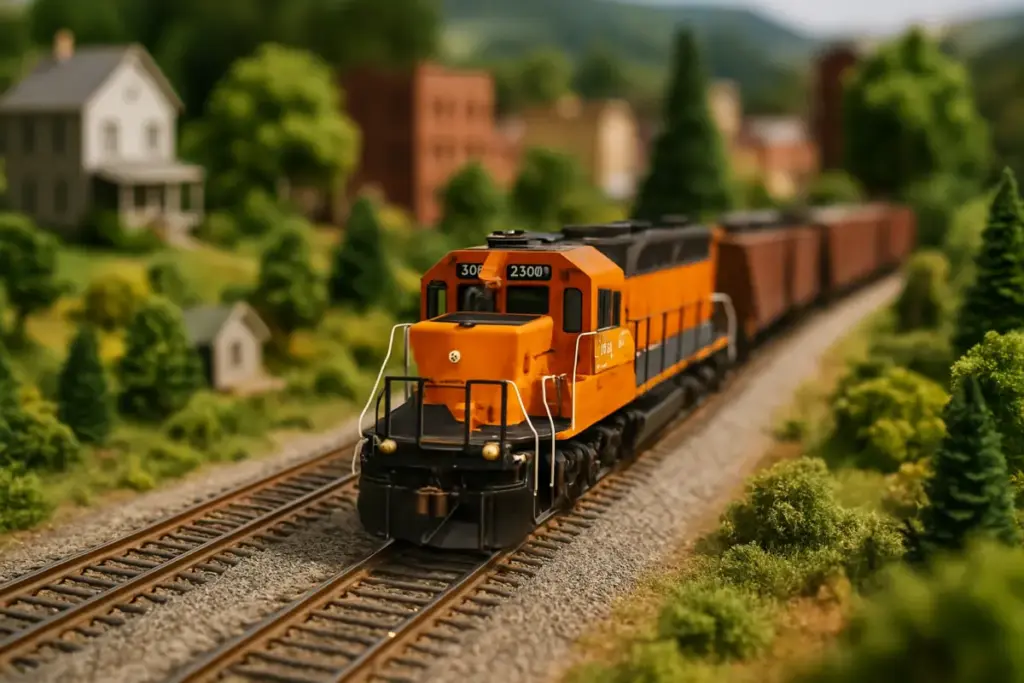
When comparing model train scales, HO scale is often considered the “sweet spot” for many hobbyists. Its 1:87 ratio strikes a strong balance between size and detail. Trains are large enough to handle easily, but not so large that they require an enormous amount of space. That makes HO ideal for layouts with cities, mountains, industries, and small towns all packed into one scene.
Another reason for its popularity is the enormous selection of products available. You can find locomotives, freight cars, passenger trains, buildings, scenery materials, and track components in nearly every style you can imagine. This makes model railroad layout design much easier because you’re not limited by a lack of parts or accessories. Whether you want a modern freight operation or a steam-era mountain line, HO scale can support it.
HO Scale Layout Examples for Different Spaces
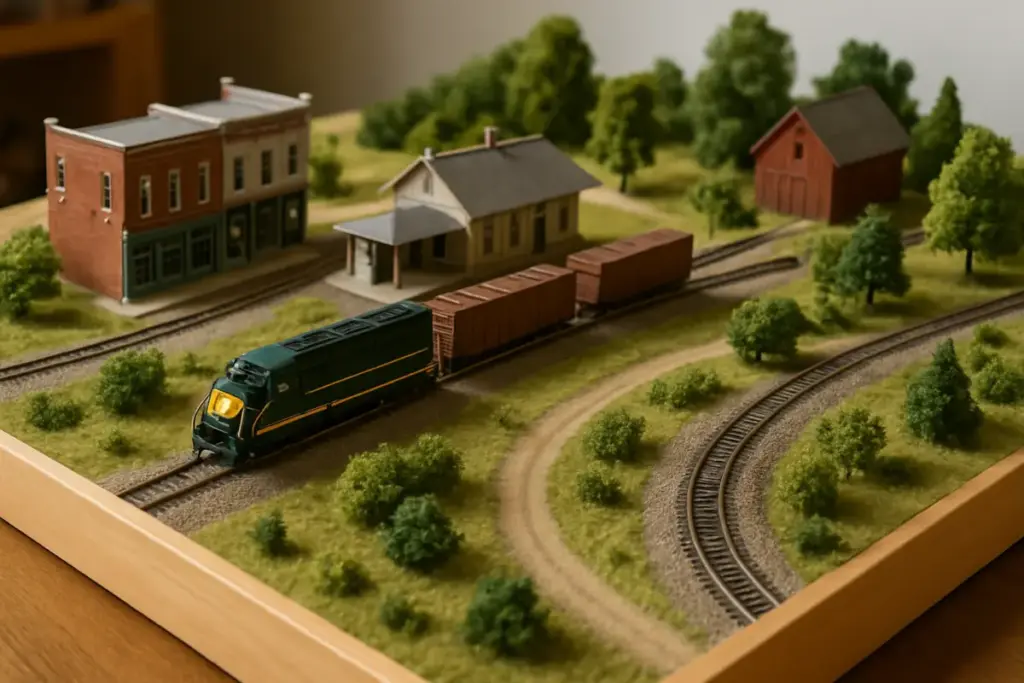
A good layout starts with the available room. Before buying track or scenery, think about how much space you have and how the layout will be used. These model railway layout planning ideas can help you choose a design that fits your goals.
1. The Simple Oval Starter Layout
For beginners, a basic oval is often the first step. It’s not just a beginner’s choice, though—it can be turned into a surprisingly attractive display with the right scenery. Add a small station, a road crossing, a few trees, and a town building or two, and the layout becomes much more interesting.
This type of layout works well for testing locomotives, running long trains, and learning the basics of wiring and control. While it may not offer a lot of switching opportunities, it is excellent for those who want to enjoy watching trains run.
2. The Point-to-Point Layout
A point-to-point design gives your railroad a more realistic feel. Instead of a train endlessly circling, it travels from one place to another, such as from a yard to a mine, factory, or small city. This design is great for operating sessions and creates a purpose for each train movement.
For hobbyists who enjoy realism, point-to-point layouts can be among the most satisfying model train layout ideas. They also fit well into long, narrow spaces like shelves or spare rooms.
3. The Around-the-Walls Layout
If your room is limited, an around-the-walls design is a smart choice. It uses the perimeter of the room and leaves open space in the center, giving you a longer mainline without requiring a huge footprint. This setup often allows for scenic variety, including towns, bridges, tunnels, and industrial districts.
An around-the-walls layout can be especially effective in HO scale because the trains look substantial while still fitting comfortably around corners and along wall-mounted benchwork.
4. The Multi-Level Layout
For modelers who want more track in less space, a multi-level layout can be a stunning option. By adding grades, bridges, and hidden staging, you can create the illusion of a much larger railroad. This style is visually impressive and provides more operational variety.
However, multi-level layouts require careful model railway layout planning. Grades must be manageable, curves should be designed to avoid derailments, and access to hidden areas should be built into the plan.
5. The Small Town Switching Layout
If you enjoy switching cars and creating realistic local operations, a small town layout may be ideal. This type of HO layout can include a freight depot, a grain elevator, a warehouse, and a few sidings. The train may only be a few cars long, but the operating possibilities are excellent.
This style is perfect for modelers who prefer hands-on interaction over continuous running. It also demonstrates how creative model railroad layout design can make a modest space feel lively and authentic.
Scenic Elements That Make HO Layouts Stand Out
A beautiful layout is about more than just track. Scenery adds depth and personality. Mountains, rivers, roads, backdrops, and vegetation all help tell the story of your railroad. Even a simple layout can look much more impressive with thoughtful scenery.
Try to create a sense of place. For example:
– A rural branch line might feature farms, barns, and open fields
– An industrial district could include warehouses, loading docks, and paved streets
– A mountain railroad may use tunnels, trestles, and rocky cliffs
– A city scene can include tall buildings, streetlights, and road traffic
These details help transform a train set into a true model railroad.
HO Scale vs Other Model Train Scales
Although HO scale is a favorite, it’s worth comparing it with N scale trains and other sizes. N scale is smaller, which allows for more track in a limited space. That makes it a strong option for people who want large rail networks in a compact room. However, smaller size can make detailing and handling more challenging for some hobbyists.
HO scale, by contrast, offers easier handling and more visible detail. If your goal is to enjoy scenery, maintenance, and realistic operation without working with tiny components, HO scale is often the better choice. Choosing between HO and N scale depends on your available space, your eyesight, and the kind of layout experience you want.
Tips for Successful Model Railway Layout Planning
Good planning is essential before you begin building. A well-designed layout saves time, money, and frustration later. Keep these tips in mind:
1. Measure your space carefully before deciding on a layout shape.
2. Plan for access so every track section can be reached for cleaning or repairs.
3. Think about operations, not just appearance.
4. Allow room for scenery so your layout doesn’t feel overcrowded.
5. Start simple and expand as your skills grow.
The best layouts are built with patience. It’s often better to complete a smaller, well-finished railroad than to rush into a large project that becomes difficult to maintain.
Final Thoughts
HO scale continues to inspire modelers because it combines realism, flexibility, and accessibility. From compact switching layouts to expansive mountain railroads, the possibilities are nearly endless. By studying different model train layout ideas, experimenting with model railroad layout design, and following smart model railway layout planning, you can create a layout that matches your space and your interests.
Whether you prefer the smooth operation of HO scale trains or you’re comparing them with N scale trains, the most important thing is building a layout that you enjoy. With the right plan and a creative approach, your railroad can become a miniature world full of movement, detail, and character.

