Written by
11 min read
2,067 words
49 views
-
Table of Contents

Introduction
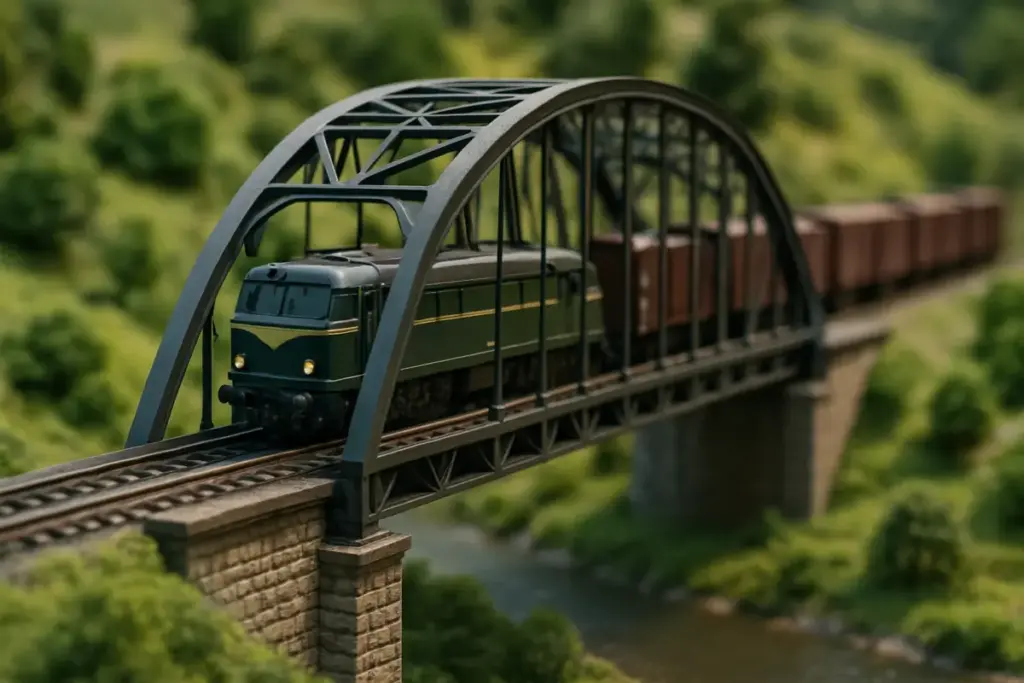
Engineering Marvels: The Most Iconic Train Bridges Around The World
Train bridges are architectural marvels that combine form and function in perfect harmony. Not only do these man-made marvels represent the human spirit of innovation and perseverance, but they also make it possible to transport products and people over difficult landscapes. Several of the world’s most famous railway bridges are particularly noteworthy due to the difficulties they faced during construction, the architectural genius of their designers, or both. One such marvel is the Forth Bridge in Scotland, a UNESCO World Heritage Site. Completed in 1890, this cantilever railway bridge spans the Firth of Forth and was considered a pioneering achievement in its time. Its robust design, characterized by massive steel structures, was a response to the tragic Tay Bridge disaster of 1879, emphasizing safety and durability. The Forth Bridge remains a testament to Victorian engineering prowess and continues to serve as a vital rail link between Edinburgh and the north of Scotland. The Goteik Viaduct in Myanmar is another amazing example of a bridge that spans the continent from Europe to Asia. Penn and MD Bridge Construction Company built what was formerly the world’s largest railway trestle in 1900. The distant location and rough terrain made the construction of the viaduct, which stretched over a deep valley, a tough undertaking. The engineers’ doggedness and expertise allowed them to finish the bridge in just two years, despite these challenges. It is still an important link in Myanmar’s rail network and a major draw for sightseers in search of spectacular scenery. The Lethbridge Viaduct, sometimes called the High Level Bridge in Canada, is yet another North American engineering wonder. Built in 1909, it holds the record for being the world’s longest and tallest trestle bridge. Constructed to meet the expanding needs of the Canadian Pacific Railway, the bridge spans the Oldman River Valley in Alberta. The unique methods and materials used to build it are a reflection of the technological and engineering breakthroughs that occurred around the turn of the twentieth century. An important part of Canada’s rail network, the Lethbridge Viaduct represents the nation’s determination to link its expansive landscapes. Now we’re in South America, where the Viaducto de la Polvorilla in Argentina stands as a monument to impressive engineering. This viaduct, which is more than 4,200 meters above sea level, is a part of the Tren a las Nubes, also known as the Train to the Clouds. Its 1930s construction let it to traverse the treacherous Andean terrain, easing commerce and travel between Chile and Argentina. A major feat in railway engineering, the bridge’s construction necessitated overcoming logistical hurdles and severe weather. Lastly, the Sydney Harbour Bridge in Australia is a multipurpose engineering marvel that carries a railway line in addition to roads. Built in 1932, it is among the world’s largest steel arch bridges. Its construction reflected the technological developments of the day through the employment of novel techniques and materials. Not only is the bridge an essential transportation link, but it is also a famous landmark that millions of tourists flock to see every year. Finally, every train bridge on Earth has its own history and set of obstacles, but they all serve as examples of the incredible feats of engineering. In addition to serving as means of transportation, these marvels are timeless symbols of the ingenuity and determination of the human race.The Evolution Of Train Bridge Design: From Stone Arches To Modern Steel
 Train bridge design has gone through an interesting evolution that mirrors society’s larger technological and engineering progress. Historically, stone had been the material of choice for train bridges due to its long history of use in this context. Due to their inherent strength and endurance, stone arch bridges were among the initial structures to sustain the expanding railway networks of the nineteenth century. Often blending in with the natural surroundings they passed through, these constructions served a practical purpose while also being visually beautiful. The availability of stone and the preexisting knowledge of masonry enabled the construction of strong bridges that could hold the weight of early trains, which led to its widespread adoption.
New materials and techniques were explored in response to the growing demand for more efficient and cost-effective construction methods throughout the Industrial Revolution. Train bridge architecture underwent a sea change with the advent of iron and, subsequently, steel. Longer spans and more elaborate designs were made possible by iron’s greater tensile strength when compared to stone. This was especially helpful in places where the landscape presented formidable obstacles, as along broad rivers or in steep valleys. Although it was not a railway bridge, the landmark Iron Bridge in Shropshire, England, which was finished in 1779, is a monument to the early use of iron in bridge construction and laid the groundwork for subsequent advancements.
Another revolutionary change in rail bridge design was the substitution of steel for iron. Engineers were able to build longer and more durable bridges using steel because it is stronger and more flexible than iron. Structures that could endure higher dynamic loads were essential when train weight and speed increased. One example of a railway bridge that used steel is the 1890-built Forth Bridge in Scotland. An engineering marvel even today, its cantilever design was revolutionary for its time and enabled it to bridge the Firth of Forth with incredible efficiency.
In addition to material advancements, the evolution of train bridge design has been influenced by improvements in engineering techniques and tools. The development of computer-aided design (CAD) and finite element analysis (FEA) has enabled engineers to model complex structures with unprecedented precision. These tools allow for the simulation of various stress scenarios, ensuring that modern train bridges are not only safe but also optimized for performance and cost. Moreover, the integration of advanced construction techniques, such as prefabrication and modular construction, has streamlined the building process, reducing both time and labor costs.
Sustainability has also become a key consideration in contemporary train bridge design. With growing awareness of environmental issues, engineers are increasingly focused on minimizing the ecological impact of bridge construction and operation. This includes the use of sustainable materials, such as recycled steel, and the implementation of designs that minimize disruption to local ecosystems. Furthermore, modern train bridges are often designed with longevity in mind, incorporating features that facilitate maintenance and reduce the need for frequent repairs.
In conclusion, the evolution of train bridge design from stone arches to modern steel structures is a reflection of the broader technological and societal changes over the past two centuries. As we look to the future, it is likely that train bridge design will continue to evolve, driven by advances in materials science, engineering techniques, and a growing emphasis on sustainability. This ongoing evolution ensures that train bridges will remain vital components of our transportation infrastructure, connecting communities and facilitating commerce for generations to come.
Train bridge design has gone through an interesting evolution that mirrors society’s larger technological and engineering progress. Historically, stone had been the material of choice for train bridges due to its long history of use in this context. Due to their inherent strength and endurance, stone arch bridges were among the initial structures to sustain the expanding railway networks of the nineteenth century. Often blending in with the natural surroundings they passed through, these constructions served a practical purpose while also being visually beautiful. The availability of stone and the preexisting knowledge of masonry enabled the construction of strong bridges that could hold the weight of early trains, which led to its widespread adoption.
New materials and techniques were explored in response to the growing demand for more efficient and cost-effective construction methods throughout the Industrial Revolution. Train bridge architecture underwent a sea change with the advent of iron and, subsequently, steel. Longer spans and more elaborate designs were made possible by iron’s greater tensile strength when compared to stone. This was especially helpful in places where the landscape presented formidable obstacles, as along broad rivers or in steep valleys. Although it was not a railway bridge, the landmark Iron Bridge in Shropshire, England, which was finished in 1779, is a monument to the early use of iron in bridge construction and laid the groundwork for subsequent advancements.
Another revolutionary change in rail bridge design was the substitution of steel for iron. Engineers were able to build longer and more durable bridges using steel because it is stronger and more flexible than iron. Structures that could endure higher dynamic loads were essential when train weight and speed increased. One example of a railway bridge that used steel is the 1890-built Forth Bridge in Scotland. An engineering marvel even today, its cantilever design was revolutionary for its time and enabled it to bridge the Firth of Forth with incredible efficiency.
In addition to material advancements, the evolution of train bridge design has been influenced by improvements in engineering techniques and tools. The development of computer-aided design (CAD) and finite element analysis (FEA) has enabled engineers to model complex structures with unprecedented precision. These tools allow for the simulation of various stress scenarios, ensuring that modern train bridges are not only safe but also optimized for performance and cost. Moreover, the integration of advanced construction techniques, such as prefabrication and modular construction, has streamlined the building process, reducing both time and labor costs.
Sustainability has also become a key consideration in contemporary train bridge design. With growing awareness of environmental issues, engineers are increasingly focused on minimizing the ecological impact of bridge construction and operation. This includes the use of sustainable materials, such as recycled steel, and the implementation of designs that minimize disruption to local ecosystems. Furthermore, modern train bridges are often designed with longevity in mind, incorporating features that facilitate maintenance and reduce the need for frequent repairs.
In conclusion, the evolution of train bridge design from stone arches to modern steel structures is a reflection of the broader technological and societal changes over the past two centuries. As we look to the future, it is likely that train bridge design will continue to evolve, driven by advances in materials science, engineering techniques, and a growing emphasis on sustainability. This ongoing evolution ensures that train bridges will remain vital components of our transportation infrastructure, connecting communities and facilitating commerce for generations to come.