 Written by
10 min read
1,966 words
47 views
-
Table of Contents

Introduction

Exploring the World of Model Railroading: Tips for Beginners
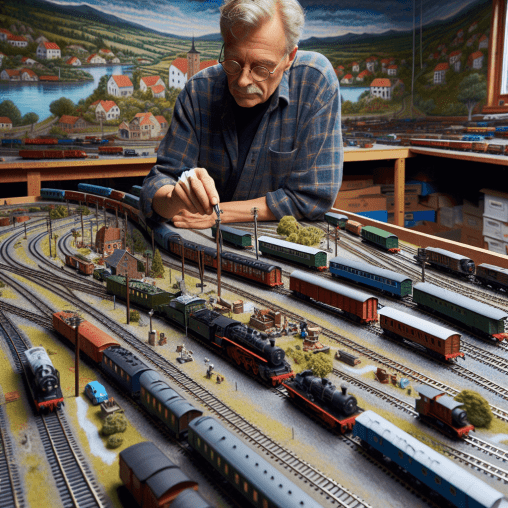
A fascinating pastime that has captivated fans for decades, model railroading provides a special fusion of engineering, design, and history. Starting the road of building and running a model railroad may be both thrilling and daunting for people just starting this amazing planet. But with some basic advice, novices can negotiate this complex activity with assurance and comfort. First of all, grasp the scale and gauge is quite vital. Different scales, or sizes, define the percentage of the model in respect to the actual train. HO, 1:87 of the actual size, is the most often used scale since it strikes a mix of space needs and detail. Other scales fit varied tastes and space restrictions; these include N scale, a smaller scale and O scale, a larger scale. Choosing the appropriate scale is a fundamental action that affects the whole model railroad design and layout. Planning the layout comes next once the scale is decided upon. Deciding on the subject, age, and geographical location of the model railroad calls for thought. Having a clear vision helps to create a realistic and coherent model whether the environment is calm countryside or a busy 1950s metropolitan scene. Starting with a basic track plan, beginners are urged to progressively widen as they develop confidence and expertise. Using track planning software can help since it offers a visual picture and lets one make changes before any actual building starts. Apart from organizing, it is imperative to choose appropriate tools and supplies. Any model railroad is built mostly on quality track, locomotives, and rolling equipment. Purchasing dependable brands guarantees lifetime and seamless performance. Moreover, assembly and maintenance of the pattern depend critically on instruments including soldering equipment, pliers, and hobby knives. Early on building a basic toolset will help to save time and aggravation as the project advances. Moreover, running a model railroad depends on knowing fundamental electrical ideas and wiring techniques. A functioning layout requires a knowledge of how to wire the tracks for signals, control switches, and power. Starting with basic wiring configurations, beginners should progressively add increasingly sophisticated systems like Digital Command Control (DCC) as they improve. DCC adds operational flexibility and realism by letting several trains be under control separately on the same track. As the layout starts to take shape, detail becomes ever more critical. The model railroad comes to life in landscape, architecture, and figures, therefore producing an immersive experience. Techniques like weathering—that is, adding reasonable wear and tear to buildings and trains—improve authenticity. Beginning students should try several materials and techniques, learning from community forums and internet tutorials to hone their abilities. At last, becoming a member of a model railroading community can offer great inspiration and help. Online organizations and clubs provide a forum for sharing ideas, debugging problems, and displaying development. Interacting with other aficionados builds friendship and motivates ongoing education. In essence, a deliberate approach may make the process fun and satisfying even if model railroading first seems difficult. Beginning with the fundamentals of scale, careful layout planning, tool acquisition, wire technique mastery, and attention to detail, novices may produce an amazing miniature world. Model railroading is a lifetime love since as they explore this activity they will find countless chances for invention and ingenuity.The History and Evolution of Train Collecting
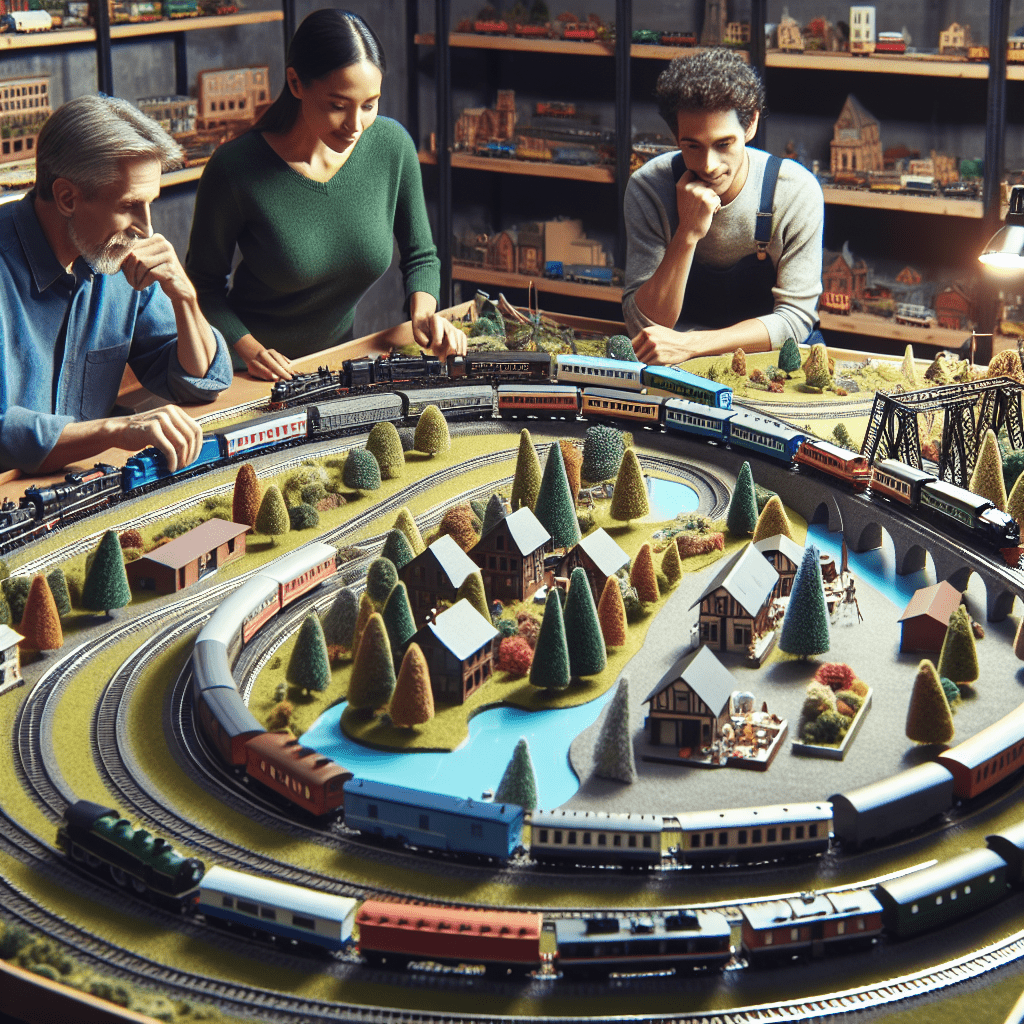 Enthusiasts for decades have been enthralled with train collecting, a pastime with rich history reflecting the general change of rail travel itself. This hobby, which entails the gathering and usually running of model trains, has origins firmly ingrained in the industrial developments of the 19th century. Railroads not only changed communities and businesses but also sparked an obsession that would finally show up as little reproductions as they spread over continents.
Train collecting first emerged in the late 1800s, a time of fast industrialization and technological advancement highlighted by Originally mostly as basic wooden or metal models, the first toy trains were manufactured in this age. Early toys were sometimes simple in design, devoid of the minute elements that would define subsequent models. But they piqued the interest of adults and kids as a physical link to the growing realm of rail travel.
The hobby started to change along with improvements in manufacturing and materials as the 20th century started. A major turning point came with the early 1900s arrival of electric trains. Production of electric model trains, which provided a more realistic and interesting experience, was pioneered by companies like Lionel in the United States and Märklin in Germany. These models were not only more realistic but also functional, enabling aficionados to design intricate schemes replacing actual rail systems.
Train collecting experienced a golden age throughout the interwar years and following World War II. The pastime became somewhat well-known during this period in part because mass-produced models became more easily available. Many families with disposable wealth from the post-war economic boom would frequently spend it on leisure activities such model railroading. Scale modeling, in which trains were manufactured to exact scales therefore enabling increased accuracy and consistency in collecting, also emerged in this age.
Turning now into the later part of the 20th century, train collection kept growing but with notable changes in emphasis. For fans of model trains, the arrival of digital technology in the 1980s and 1990s brought fresh opportunities. More complex operation of model railroads made possible by digital command control systems let several trains run on the same track separately. Along with improving the realism of model railroading, this technical advance drew a fresh batch of enthusiasts.
The past several years have seen the hobby welcome innovation as well as legacy. While some collectors are still committed to historical accuracy and vintage models, others have integrated current technologies like digital components and even 3D printing into their layouts. Connecting aficionados all around the world and creating a global community with knowledge, skills, and a love of trains depends critically on the internet as well.
In essence, the development of train collecting is evidence of the continuing appeal of rail travel. Train collecting has evolved to follow technology developments and societal changes from its modest origins as simple toys to the sophisticated models of today. It guarantees its ongoing appeal for next generations as, as a hobby, it provides a special mix of nostalgia, creativity, and technical challenge.
Enthusiasts for decades have been enthralled with train collecting, a pastime with rich history reflecting the general change of rail travel itself. This hobby, which entails the gathering and usually running of model trains, has origins firmly ingrained in the industrial developments of the 19th century. Railroads not only changed communities and businesses but also sparked an obsession that would finally show up as little reproductions as they spread over continents.
Train collecting first emerged in the late 1800s, a time of fast industrialization and technological advancement highlighted by Originally mostly as basic wooden or metal models, the first toy trains were manufactured in this age. Early toys were sometimes simple in design, devoid of the minute elements that would define subsequent models. But they piqued the interest of adults and kids as a physical link to the growing realm of rail travel.
The hobby started to change along with improvements in manufacturing and materials as the 20th century started. A major turning point came with the early 1900s arrival of electric trains. Production of electric model trains, which provided a more realistic and interesting experience, was pioneered by companies like Lionel in the United States and Märklin in Germany. These models were not only more realistic but also functional, enabling aficionados to design intricate schemes replacing actual rail systems.
Train collecting experienced a golden age throughout the interwar years and following World War II. The pastime became somewhat well-known during this period in part because mass-produced models became more easily available. Many families with disposable wealth from the post-war economic boom would frequently spend it on leisure activities such model railroading. Scale modeling, in which trains were manufactured to exact scales therefore enabling increased accuracy and consistency in collecting, also emerged in this age.
Turning now into the later part of the 20th century, train collection kept growing but with notable changes in emphasis. For fans of model trains, the arrival of digital technology in the 1980s and 1990s brought fresh opportunities. More complex operation of model railroads made possible by digital command control systems let several trains run on the same track separately. Along with improving the realism of model railroading, this technical advance drew a fresh batch of enthusiasts.
The past several years have seen the hobby welcome innovation as well as legacy. While some collectors are still committed to historical accuracy and vintage models, others have integrated current technologies like digital components and even 3D printing into their layouts. Connecting aficionados all around the world and creating a global community with knowledge, skills, and a love of trains depends critically on the internet as well.
In essence, the development of train collecting is evidence of the continuing appeal of rail travel. Train collecting has evolved to follow technology developments and societal changes from its modest origins as simple toys to the sophisticated models of today. It guarantees its ongoing appeal for next generations as, as a hobby, it provides a special mix of nostalgia, creativity, and technical challenge.