

 Written by
 Model Trains for Beginners: Effortless DC vs DCC Guide
Model trains for beginners can be one of the most rewarding hobbies to start, whether you’re interested in building realistic scenery, collecting locomotives, or running trains around a layout for pure enjoyment. If you’re new to the hobby, one of the first big decisions you’ll face is choosing between DC and DCC control systems. Understanding the difference early can save you money, time, and frustration as you learn how to start model trains in a way that fits your goals.
A great model railroad beginner guide should do more than define the basics. It should help you understand what equipment you need, how layouts are controlled, and which approach makes the most sense for your budget and long-term plans. This article breaks down DC versus DCC in simple terms so you can make a confident choice and enjoy the process of building your model railroad.
What Is DC in Model Trains?
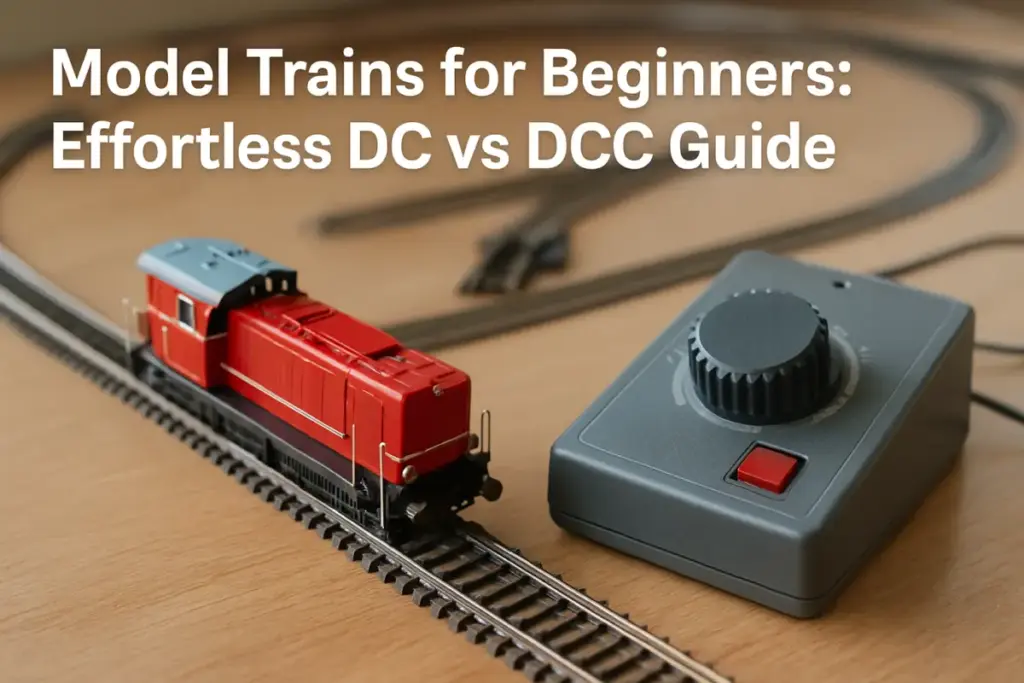
DC stands for direct current, and it is the traditional way to run model trains. In a DC system, the amount of power sent to the track controls the train’s speed. The direction of travel is usually changed by reversing the polarity of the power supply.
For beginners, DC is often appealing because it is simple and usually less expensive to get started. You connect a power pack to the track, place a train on the rails, and adjust the throttle to make it move. This straightforward setup makes DC a common entry point for people exploring model trains for beginners.
Advantages of DC
– Easy to understand
– Lower initial cost
– Fewer electronic components
– Good for very small layouts
Limitations of DC
– One train per track section is common
– Switching between multiple trains can become complicated
– Less flexibility for sound and advanced features
– Wiring can get more complex on larger layouts
If your goal is to run one train on a small oval or simple layout, DC may be all you need.
What Is DCC in Model Railroading?
DCC stands for digital command control. Instead of controlling the track voltage directly, DCC sends digital signals through the rails to small decoders inside each locomotive. These decoders interpret commands such as speed, direction, lights, horn, whistle, and sound.
This is where many hobbyists find the big leap in realism and convenience. With DCC, you can control multiple locomotives independently on the same track. That means more realistic operations and fewer restrictions compared with DC.
For anyone researching how to start model trains with future growth in mind, DCC is often the system that offers the most flexibility.
Advantages of DCC
– Control multiple trains independently
– Easier switching and operation on larger layouts
– Supports sound, lighting, and advanced features
– Better suited for realistic train operation
Limitations of DCC
– Higher initial cost
– Slightly steeper learning curve
– Requires decoders in locomotives
– May be more than a beginner needs for a very small layout
Model Trains for Beginners: Choosing Between DC and DCC
When comparing DC and DCC, the best option depends on your goals, space, and budget. There is no single correct answer for every new hobbyist. Instead, think about how you want to enjoy model trains.
If you want a low-cost way to get started with a single train, DC is usually the simplest choice. If you want to run multiple locomotives, add sound, or build a layout that feels more like a real railroad, DCC is likely the better investment.
Choose DC if you:
– Want to keep your first setup affordable
– Plan to run only one train at a time
– Prefer a very simple control system
– Are building a small test layout or starter oval
Choose DCC if you:
– Want to run more than one train at once
– Like realistic operations and sound effects
– Plan to expand your model railroad later
– Want more control with less track switching complexity
What You Need to Get Started
No matter which control system you choose, there are a few essentials every beginner needs. A good model railroad beginner guide should always include the basics before diving into advanced options.
Basic starter items
– Track
– A locomotive
– Rolling stock such as freight cars or passenger cars
– A power supply or DCC command station
– A piece of layout board or tabletop
– Tools for assembling and maintaining equipment
You do not need a large room or expensive collection to begin. Many people start with a small section of track and gradually expand as they learn.
How to Start Model Trains Without Feeling Overwhelmed
The easiest way to begin is to keep your first layout simple. Start with a small track plan, one locomotive, and a few cars. Focus on learning how the system works before buying too many extras.
Here are a few practical steps:
1. Pick a scale – HO and N are popular choices for beginners.
2. Choose DC or DCC – Based on your budget and goals.
3. Buy quality starter equipment – A dependable locomotive matters.
4. Build a simple layout first – An oval or basic loop is enough.
5. Test and learn – Run trains, check connections, and expand slowly.
Starting small helps you avoid common mistakes and lets you enjoy the hobby at a comfortable pace.
Common Mistakes Beginners Should Avoid
New hobbyists often get excited and buy too much too soon. That can lead to frustration, wasted money, or a layout that is difficult to finish.
Some common mistakes include:
– Choosing a scale that is too large for available space
– Buying too many trains before learning the basics
– Skipping track planning
– Ignoring compatibility between locomotives and control systems
– Overcomplicating the first layout
Remember, the best model trains for beginners setup is one that is easy to use and fun to operate. You can always add more detail and complexity later.
DC or DCC: Which Is Better for You?
If you want a simple, budget-friendly entry into the hobby, DC is a sensible place to begin. It is especially good for children, casual hobbyists, or anyone building a small, straightforward model railroad.
If you want long-term flexibility, realism, and the ability to run multiple engines independently, DCC is usually the stronger choice. It may cost more at first, but many modelers find it worth the investment once they start expanding.
The good news is that both systems can lead to a satisfying hobby. What matters most is getting started and learning what you enjoy.
Final Thoughts
Model trains for beginners should feel exciting, not intimidating. Whether you choose DC or DCC, the key is to start with a setup that matches your budget, space, and goals. A simple beginning is often the best foundation for a growing hobby.
If you are looking for a practical model railroad beginner guide, remember this: choose one system, start small, and build confidence step by step. Once you understand the basics, you can expand your layout, improve your scenery, and enjoy the creative side of model trains for years to come.

