

 Written by
 Model Train Table Build Guide
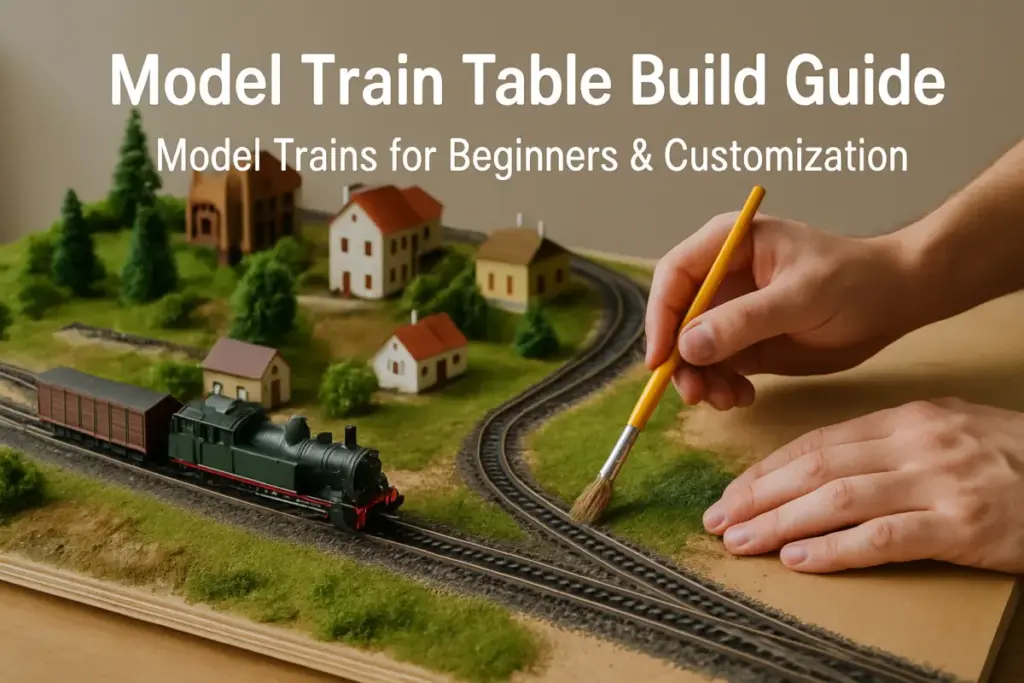
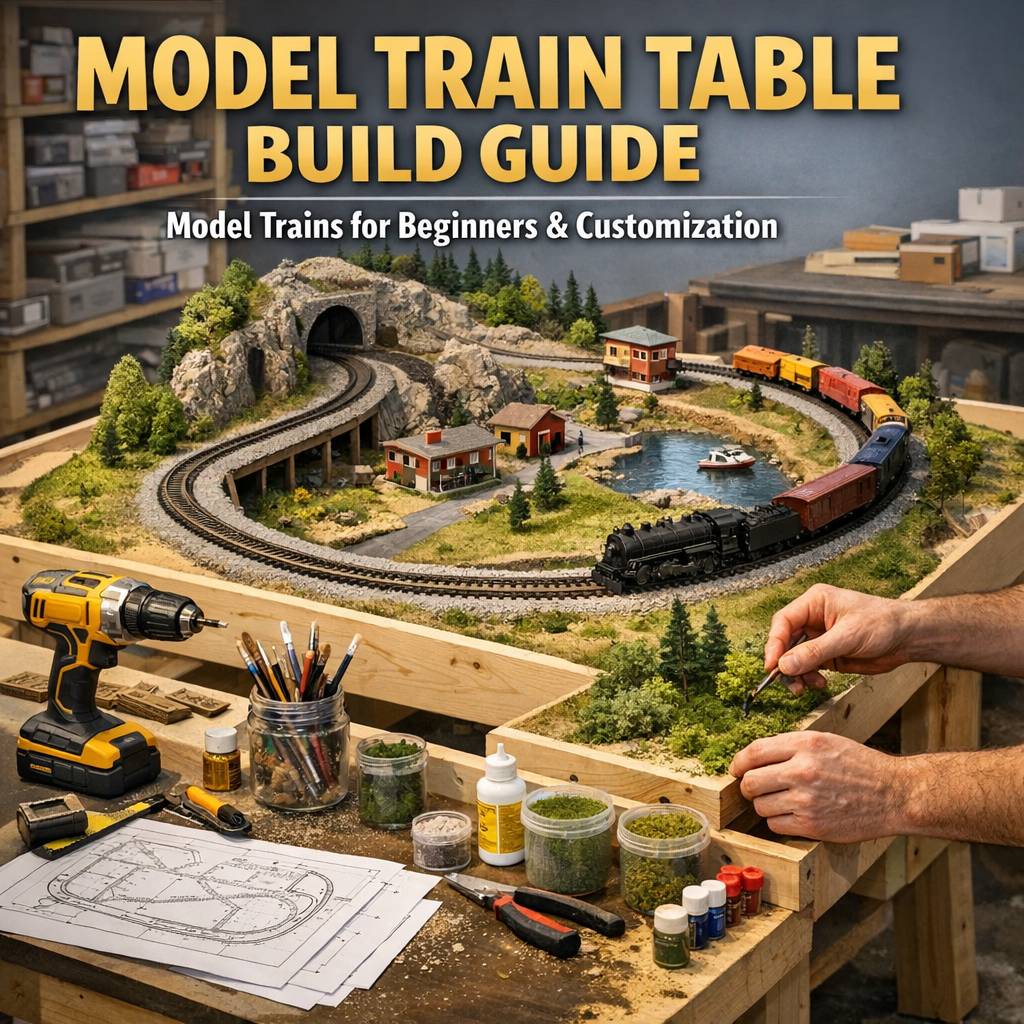
Building a model train table is one of the most rewarding projects you can take on as a hobbyist. Whether you’re exploring model trains for beginners or you’re ready to experiment with model railroad modding and custom model trains, a solid table and layout are the foundation for everything that follows. This guide walks you through planning, materials, construction, wiring, scenery, customization, automation, and maintenance—so you can go from “how to start model trains” to running realistic operations and making unique, customized models.
Why Build a Dedicated Model Train Table?
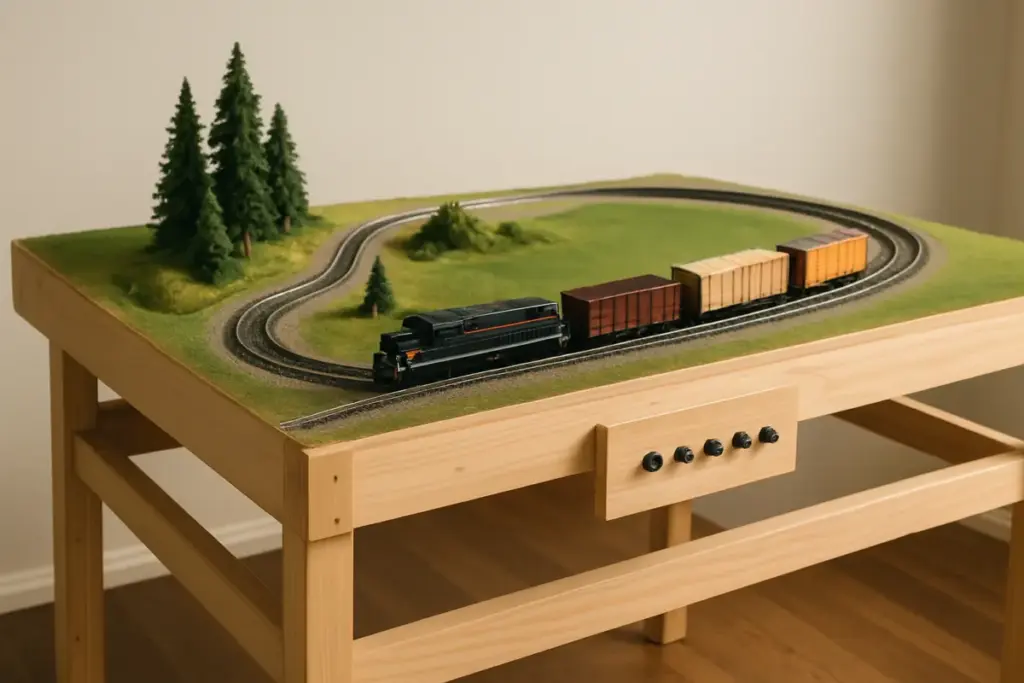
A dedicated table provides:
- A stable, level surface free from household disruptions.
- Proper benchwork for reliable track alignment and wiring.
- Space for scenery, control panels, and storage.
- Flexibility to customize layout shape, height, and features.
For beginners, a simple table can get you operational quickly. For intermediate and advanced hobbyists, a well-built table is an essential platform for model train customization, modding, and long-term layout expansion.
Choosing Scale and Type of Layout
Before measuring wood or buying tools, decide:
- Scale: HO (1:87) is the most popular for balance of detail and space. N (1:160) offers more track in less space. O is larger and dramatic but needs more room.
- Layout Type:
- Continuous loop: easy to run, good for beginners.
- Point-to-point: realistic operations, more switching.
- Around-the-walls: maximizes space in a room.
- Modular: sections that join for club meets.
- Folding/portable: for shows and storage.
Example decisions for beginners:
- Scale: HO
- Type: 4×8 continuous loop with a passing siding and small yards — simple yet expandable.
Planning Your Table: Dimensions, Height, and Zones
- Standard benchwork height: 40–44 inches (100–112 cm). Adjust for operator height.
- Depth considerations:
- 24 inches (61 cm) comfortable reach for single-track scenes.
- 30–36 inches (76–91 cm) allows deeper scenery or double-track.
- Common beginner footprint: 4×8 feet (1.22 x 2.44 m). Allows mainline, yard, and a small town.
Divide your table into zones:
- Scenic area (town, countryside)
- Operational area (yard, interchange)
- Fiddle yard or staging (for point-to-point operations)
- Electronics and storage under the table
Sketch multiple layout options on paper or using free planning software (AnyRail trial, SCARM, or the free code in JMRI).
Materials and Tools Checklist
Materials:
- 3/4" plywood (top) or 1/2" plywood with 1×3 perimeter for support
- 2x4s for legs and cross-bracing
- 1×2 or 1×3 pine for grid or L-girder benchwork
- Screws (wood screws, 1 5/8" and 3")
- Construction adhesive (wood glue)
- Cork or foam roadbed (pre-formed or strip)
- Track (flex track and turnouts matching your scale)
- Power bus wire (14–16 AWG) and feeders (18–22 AWG)
- Terminal blocks and connectors
- Foam (~1" to 2" extruded polystyrene) or papier-mâché/plaster for scenery base
- Ground cover materials, ballast, trees, static grass
- Paints and scenic adhesives
- Lighting (LED strips for under-table and scenes)
- Optional DCC system and decoders for locomotives
Tools:
- Circular saw or table saw
- Drill/driver and bits
- Jigsaw for cutouts
- Clamps, square, measuring tape, level
- Soldering iron (for wiring and custom model trains)
- Hobby tools: hobby knife, files, tweezers, paint brushes
Budget tip: Buy used tools or source materials from construction leftovers and online marketplaces.
Benchwork Methods: L-Girder, Grid, and Trestle
- L-Girder: Strong, great for large layouts and future expansion. Uses L-shaped girder structure with joists.
- Grid (open-grid): Built from 1×3 or 1×2 strips into a grid pattern. Efficient and lighter.
- Trestle legs with plywood top: Quick for temporary layouts.
For a 4×8 beginner table, a simple grid topped with 3/4" plywood or 1/2" plywood with perimeter joists is sufficient.
Example 4×8 benchwork plan:
- Perimeter 1×3 frame glued/screwed together.
- Internal 1×3 cross joists every 16 inches.
- Four legs made from 2x4s, braced with corner blocks.
- Plywood top screwed down to joists.
Track Planning and Laying Track
- Choose flex track for curves and smooth transitions.
- Plan minimum curve radius according to your rolling stock (HO beginners might use 18" radius; longer rolling stock prefers 22"+).
- Use cork roadbed or foam to reduce noise and provide realistic elevation.
- Pin track lightly until glued/soldered.
Steps to lay track:
- Dry-fit track; verify clearances and locomotive turning.
- Glue down roadbed with woodworking glue or contact cement.
- Fasten track to roadbed with small nails or adhesive.
- Solder feeders to rails every 3–4 feet (or at each turnout) and connect feeders to the bus wire.
Turnout tips:
- Use stub switches only for prototypical layouts; otherwise, pick-radius turnouts for smooth running.
- Plan turnout operation (manual throwbars or motorized).
- Label all turnouts and feeders on a wiring diagram.
Wiring: DC vs DCC, Bus and Feeder Strategy
DC (Analog):
- Easier to start but limits operations.
- You supply power to blocks; each block controlled by a throttle.
- Best for simple loop or beginner setups.
DCC (Digital Command Control):
- Allows independent control of multiple locomotives on the same track.
- Requires a DCC command station and decoders in locomotives.
- More wiring initially but more flexible and future-proof.
- Keywords: model railroad beginner guide often recommends DCC for modern flexibility.
Wiring basics:
- Run a heavy bus wire around the layout (14–16 AWG).
- Run feeders (18–22 AWG) from bus to track every 3–6 feet.
- Use color-coded wire to avoid confusion (e.g., red/black for DCC).
- Solder feeders to the rails; use rail joiner connections where needed.
Example wiring for a 4×8 DCC table:
- 14 AWG bus looped around edges.
- 18 AWG feeders every 2–3 feet.
- Terminal strips at the fascia or underneath for easier troubleshooting.
- A short block for a reversing loop with an auto-reverser or DPDT switch.
DCC extras:
- Accessory decoders for turnout motors and signals.
- Occupancy detectors and block detectors for automation with JMRI or layout controllers.
Control Panels and Fascia
- A control panel organizes switches, buttons, and throttle jacks.
- Use a simple layout diagram with LED indicators for turnout positions and power status.
- Install toggle switches for power routing and reversing loops.
- Use a clear fascia to mount the panel at operator height.
For a beginner, a small control panel with a power switch, DCC programming track connection, and one or two turnout controls is sufficient.
Scenery: From Foam to Realistic Towns
Common approaches:
- Foam base (extruded polystyrene): easy to carve and shape for hills and roadbeds.
- Plaster cloth or sculptamold: great for rocky surfaces and texturing.
- Cardboard and chicken wire for very large forms.
Scenery workflow:
- Establish roadbed and track.
- Build landscape forms (foam or paper-mâché).
- Apply base coat of earth-colored paint.
- Add ground cover (scenic glue + turf/ballast).
- Insert structures, roads, and bridges.
- Add trees, figures, and weathering.
Ballasting:
- Dry ballast into track, then use mixture of water and white glue (50/50) with a drop of dish soap to surface-tension and lock ballast in place.
Example scenic features for a small layout:
- One small town with a main street and depot.
- Industrial spur with a siding and loading dock.
- A rural hill with a trestle and a small farm.
Model Train Customization and Modding
Custom model trains and model train customization elevate your layout:
- Repainting and detailing:
- Remove factory paint and add custom liveries with airbrush or fine brushes.
- Add decals, roof details, or weathering powders for realism.
- Lighting upgrades:
- Replace incandescent bulbs with LEDs (warm white for prototypical look).
- Install directional headlight LEDs and ditch lights; add taillights on rolling stock.
- Sound decoders:
- Install DCC sound decoders if you have DCC; many decoders support functions like horns, brakes, and coupler sounds.
- Coupler upgrades:
- Install knuckle couplers for realism and reliable uncoupling. Consider magnetic uncouplers if you want hands-off switching.
- Mechanical upgrades:
- Improve pickups by adding more wheelset pickups or traction tires.
- Replace gears and bushings if sloppy.
Modding examples:
- Kitbashing: Combine parts from different kits to create unique rolling stock.
- 3D printing: Print custom details, figures, or rare locomotive parts.
- Scratch-building: Build custom structures and details from styrene or wood.
Safety note: Ensure proper soldering skills and observe polarity when installing decoders and LEDs. Use current-limiting resistors for LEDs.
Automation and Model Railroad Modding with Electronics
If you’re interested in model railroad modding, modern electronics open enormous possibilities:
- JMRI (Java Model Railroad Interface): Open-source software for layout automation, panel control, and decoder programming.
- Arduino or Raspberry Pi:
- Control turnout motors, signal LEDs, and sensors.
- Read occupancy detectors and trigger actions (lights, crossing gates).
- Block detection and automation:
- Implement occupancy detection using current-sensing modules or infrared sensors.
- Use automated block control for timetable simulation or to prevent collisions.
Simple automation example:
- Use a Raspberry Pi running JMRI to monitor block detectors and automatically set signals and routes for a small town they’ll pass through.
- Integrate phone/tablet throttle apps that connect to your DCC command station for wireless train control.
Useful hardware:
- Accessory decoders (NCE, Digitrax, TCS) to control turnouts and signals over DCC.
- Arduino with MOSFET drivers for LED lighting control on structures.
Operations: Making Your Layout Come Alive
Operations make a layout fulfilling:
- Car cards and waybills: Assign cars to destinations to simulate real railroad work.
- Timetable operations: Schedule trains to meet at passing sidings.
- Prototype-inspired switching puzzles: Create industries that require spotting and retrieving cars.
Beginner operation idea:
- Use a simple switching layout with 6 industries. Run a single train to pick up and set out cars according to a card system. This builds interest and adds replayability.
Maintenance and Troubleshooting
Routine maintenance keeps things running:
- Clean track regularly using a track cleaning car or a soft cloth and isopropyl alcohol.
- Clean wheel treads on locomotives and rolling stock.
- Keep turnout frogs free of debris; periodically check throw mechanisms.
- Tighten loose rail joiners and solder broken feeders.
Troubleshooting tips:
- If a locomotive hesitates, check for dirty wheels or dirty rails.
- If electrical sections are dead, verify feeder continuity and solder joints.
- For short circuits in DCC, identify the offending section by isolating blocks and use an auto-reverser or circuit breakers.
Budgeting and Where to Buy
Starting costs vary:
- Minimal starter set (box set): $100–$300 — good to learn basics.
- Table materials and benchwork for a 4×8: $150–$300.
- Track and electronics (DCC starter): $200–$600 depending on brand.
- Scenery materials and buildings: $100–$300.
Where to buy:
- Local hobby shops (support local and get advice).
- Online retailers (Walthers, Micro-Mark, Amazon, eBay).
- Community swaps, model railroad club sales, and Facebook Marketplace for bargains.
Communities and Learning Resources
- Join a local model railroad club for hands-on experience and access to layouts.
- Online forums and groups: Model Railroader Forum, Reddit r/modeltrains, N-Scale.net, RMweb.
- Software and tools: JMRI (free), AnyRail (trial), RailModeller (Mac).
- YouTube channels and blogs: Search for layout build videos and step-by-step projects.
Using a “model railroad beginner guide” and “how to start model trains” resources will accelerate learning and help you avoid common pitfalls.
Example 8-Week Build Timeline (Beginner 4×8 Table)
Week 1: Planning and materials list; buy tools and lumber.
Week 2: Build benchwork and legs.
Week 3: Install plywood top, paint base coat, attach fascia.
Week 4: Install roadbed and lay mainline track.
Week 5: Wire bus and feeders; test electrical continuity.
Week 6: Build scenic forms (foam hills) and base painting.
Week 7: Ballast track, place structures, install lighting.
Week 8: Final detailing, weathering, and initial operations.
This timeline is flexible; adjust for complexity and available time.
Final Tips for Success
- Start simple and expand. A functioning small layout is more rewarding than an unfinished masterwork.
- Embrace test-running early. Running trains early in the build keeps you motivated.
- Document your wiring and control logic. Good labeling saves hours later.
- Practice kit-building and small modifications before altering expensive models.
- Don’t be afraid to ask for help—clubs and forums are welcoming.
Conclusion
Building a model train table is a gateway to a rich hobby that spans carpentry, electronics, art, and storytelling. Whether you’re looking for model trains for beginners guidance, a model railroad beginner guide to your first layout, or you want to dive into model train customization and model railroad modding, the process is as rewarding as the finished product. With planning, the right benchwork, reliable wiring, and progressive scenery and customization, your layout will evolve from a simple table into a personal miniature world that reflects your interests and creativity. Start small, learn as you go, and have fun running trains.

