

 Written by
 HO Scale Trains vs N Scale Trains: Best Model Railroad Guide
HO scale trains are often the first choice for many hobbyists, but N scale trains have become just as popular for builders who want more layout in less space. When choosing between these two major model train scales, the decision usually comes down to room, detail, budget, and the kind of model railroad experience you want to create. Both options can deliver impressive model trains and satisfying operations, but each has strengths that make it better suited for different goals.
Understanding the Difference Between HO and N Scale

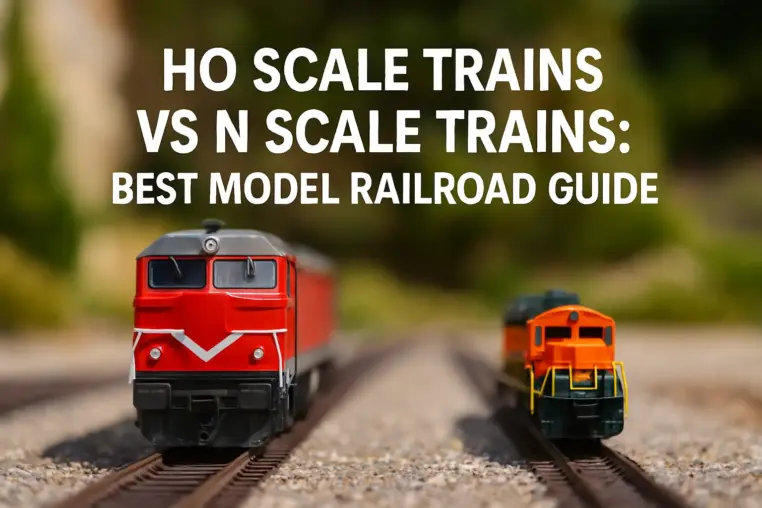
At the most basic level, the difference between HO and N scale is size. HO scale is larger, typically built at a 1:87 ratio, while N scale is smaller, usually around 1:160. That size difference affects nearly everything in a layout: track spacing, scenery, locomotive detail, wiring, and how much railroad you can fit into a given room.
For many beginners, HO scale feels easier to handle because the cars, locomotives, and track are larger. N scale, on the other hand, allows you to compress a huge amount of railroad into a relatively small area. That makes it a favorite among modelers who want sweeping mainlines, longer trains, and realistic-looking scenery in limited space.
HO Scale Trains: What Makes Them Popular?

One reason HO scale trains remain the most widely used scale is balance. They offer a strong mix of detail, availability, and manageability. The size is large enough for impressive realism, but not so large that layouts become difficult to fit in a typical home.
HO scale is also known for its wide product selection. Because so many model trains are made in HO, hobbyists can find locomotives, rolling stock, structures, figures, and accessories in nearly every era and style. This makes it easier to build a complete and realistic model railroad without hunting for specialty parts.
Another advantage is hands-on operation. Coupling cars, installing decoders, painting details, and maintaining track are usually more comfortable in HO scale because the parts are easier to see and manipulate. For modelers who enjoy detailing and customization, HO can be very rewarding.
N Scale Trains: Small Size, Big Possibilities
N scale trains are ideal for modelers who want maximum railroad in minimum space. Because the equipment is much smaller, you can build layouts with longer runs, larger towns, and more complex track plans in the same footprint that HO would require.
This scale has grown dramatically in quality over the years. Modern N scale locomotives can be highly detailed and reliable, and today’s track systems support smooth operation for both beginners and experienced builders. For apartment dwellers, tabletop layouts, and modular setups, N scale is especially attractive.
N scale also shines when it comes to visual illusion. A modest-sized layout can look much larger because the smaller equipment creates more open space. Hills, yards, bridges, and cities can all appear more expansive, which is a major advantage for those who love scenery and atmosphere.
Comparing Detail and Realism
When people compare model train scales, detail is often one of the first topics. HO scale usually offers a slight edge in visible detail because there is more room for paintwork, molded features, and added accessories. Figures are easier to pose, and weathering effects can be more noticeable.
That said, N scale has improved so much that it no longer feels like a compromise. High-quality model trains in N scale can look remarkably realistic, especially when viewed in motion on a well-designed layout. The smaller size may limit extreme detailing, but the overall appearance can still be very convincing.
If your favorite part of the hobby is adding tiny details, modifying freight cars, or displaying locomotives up close, HO may be the better fit. If your goal is to create the impression of a full railroad scene from a normal viewing distance, N scale is excellent.
Space Requirements and Layout Planning
Space is one of the biggest deciding factors in the HO vs. N scale debate. HO layouts need more room for curves, yards, and station platforms. If you have a dedicated basement, garage, or hobby room, HO scale can be an excellent choice because it allows room for a more expansive design.
If your available space is limited, N scale may be the clear winner. You can fit more track in a smaller room and still have room for scenery, industries, and towns. This is especially useful if you want to run long trains or build a railroad with continuous mainline operation.
A good rule of thumb is this: choose the scale that best matches the room you actually have, not the room you wish you had. A smaller layout built in the right scale is usually more enjoyable than a larger scale crammed into too little space.
Cost Considerations
Budget also plays an important role. At first glance, N scale equipment is often slightly smaller and may appear less expensive, but pricing varies widely depending on brand, detail level, and technology. In some cases, HO scale locomotives and cars may be easier to find at lower prices because of the huge market.
The real cost difference usually shows up in scenery and layout materials. HO requires more track, larger structures, and more landform materials to cover the same amount of scene. N scale can reduce those material costs because everything is smaller.
That said, the overall budget depends more on your layout ambition than on the scale alone. A modest HO layout can be affordable, and an elaborate N scale railroad can still become costly if you add advanced electronics, sound, and large amounts of scenery.
Which Scale Is Better for Beginners?
Beginners often ask which is easier to start with. HO scale is generally considered more beginner-friendly because the equipment is bigger and easier to handle. It can be less frustrating for those who are learning wiring, maintenance, and track cleaning.
N scale is not difficult, but it can be more demanding in terms of fine handling and precise track work. Beginners with smaller spaces may still prefer it, especially if they value long trains and broad scenery over hands-on detailing.
For many new hobbyists, the best choice is the one that keeps the hobby fun and practical. If you have plenty of room and want straightforward assembly, HO is a strong option. If space is tight and you love the idea of a large layout in a small area, N scale may be the better path.
Making the Right Choice for Your Model Railroad
There is no single correct answer when choosing between HO scale trains and N scale trains. Both are excellent model train scales with strong support, active communities, and endless creative possibilities. The best scale for your model railroad depends on your space, budget, comfort level, and what kind of railroad experience you want to build.
Choose HO if you value detail, ease of handling, and a broad product selection. Choose N if you want to maximize space, create larger scenes, and run longer trains in a compact area. Either scale can lead to a rewarding and visually impressive layout.
If you are still undecided, visit a hobby shop or local club and see both scales in person. Watching trains in motion often makes the choice much clearer. In the end, the best scale is the one that inspires you to keep building, running, and enjoying the hobby.

