
 Written by
10 min read
1,955 words
50 views
-
Table of Contents
Introduction
Understanding The Basics Of Train Signal Systems
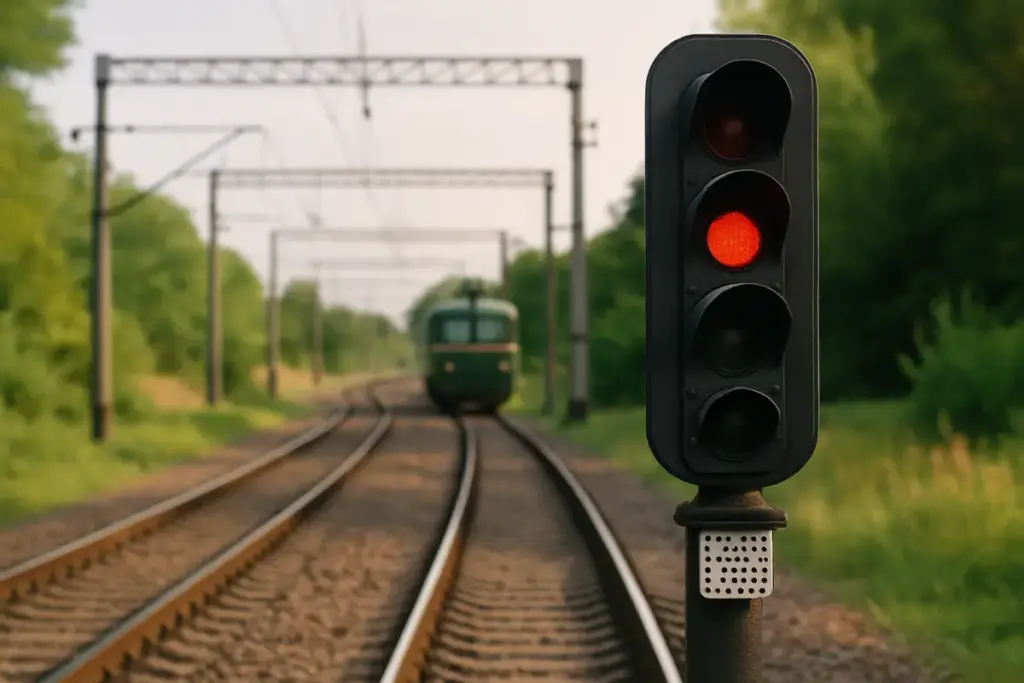
Train signal systems are a critical component of railway operations, ensuring the safe and efficient movement of trains across vast networks. These systems, which have evolved significantly over the years, are designed to prevent collisions, manage train traffic, and maintain optimal speeds. Understanding the basics of train signal systems involves exploring their components, functions, and the technology that underpins them. At the core of train signal systems are the signals themselves, which communicate essential information to train operators. These signals, often positioned along the tracks, use a combination of lights, colors, and shapes to convey instructions. For instance, a green light typically indicates that the track ahead is clear, allowing the train to proceed at full speed. Conversely, a red light signals the need to stop, as the track may be occupied or there may be an obstruction ahead. Yellow lights often serve as a cautionary signal, advising the operator to slow down and prepare to stop if necessary. These visual cues are crucial for maintaining safety and preventing accidents. In addition to visual signals, modern train signal systems incorporate advanced technology to enhance communication and control. Centralized Traffic Control (CTC) is one such system that allows for the remote management of train movements from a central location. By using electronic signals and track circuits, CTC systems can monitor train positions, control switches, and adjust signals in real-time. This level of control not only improves efficiency but also reduces the likelihood of human error, which can be a significant factor in railway accidents. Moreover, the advent of Automatic Train Control (ATC) systems has further revolutionized train signaling. ATC systems automate many aspects of train operation, including speed regulation and braking. By continuously monitoring a train’s speed and location, ATC systems can automatically adjust the train’s speed to ensure it remains within safe limits. This automation is particularly beneficial in high-speed rail networks, where precise control is essential for safety and efficiency. Another critical aspect of train signal systems is the use of block systems, which divide the railway into sections or “blocks.” Only one train is allowed in a block at any given time, preventing collisions and ensuring a safe distance between trains. Traditional block systems rely on track circuits to detect the presence of a train within a block, while more advanced systems use radio-based communication for greater accuracy and flexibility. As technology continues to advance, train signal systems are becoming increasingly sophisticated. The integration of digital communication networks and satellite-based positioning systems, such as the European Train Control System (ETCS), is paving the way for even more precise and reliable signaling. These systems offer real-time data exchange between trains and control centers, enabling more dynamic and responsive train management. In conclusion, train signal systems are an indispensable part of modern railway operations, providing the necessary framework for safe and efficient train movement. By combining traditional signaling methods with cutting-edge technology, these systems ensure that trains can operate smoothly and safely across complex rail networks. As the demand for rail transport continues to grow, the ongoing development and refinement of train signal systems will be crucial in meeting the challenges of the future.The Evolution Of Train Signaling Technology
 The evolution of train signaling technology has been a fascinating journey, marked by significant advancements that have enhanced the safety, efficiency, and reliability of rail transport. In the early days of railroads, signaling was rudimentary, relying heavily on manual systems and human intervention. Initially, train signals were simple flags or lamps, which required operators to be stationed at various points along the track to communicate with train engineers. This method, while innovative for its time, was fraught with potential for human error and inefficiencies.
As rail networks expanded and train speeds increased, the need for more sophisticated signaling systems became apparent. The introduction of the telegraph in the mid-19th century marked a pivotal moment in train signaling. By allowing instant communication over long distances, the telegraph enabled more precise coordination between trains, reducing the risk of collisions and improving overall network efficiency. This technological leap laid the groundwork for the development of more advanced signaling systems.
The late 19th and early 20th centuries saw the advent of mechanical signaling systems, which utilized semaphore arms and colored lights to convey information to train engineers. These systems were a significant improvement over manual signaling, as they provided clearer and more consistent communication. However, they still required a considerable amount of human oversight and maintenance. The limitations of mechanical systems eventually led to the development of electrical signaling, which offered greater reliability and reduced the need for manual intervention.
The introduction of track circuits in the early 20th century revolutionized train signaling by allowing for automatic detection of train presence on the tracks. This innovation enabled the implementation of automatic block signaling, which divided tracks into sections or “blocks” and ensured that only one train could occupy a block at any given time. This system significantly enhanced safety by preventing trains from following too closely and reducing the likelihood of rear-end collisions.
As technology continued to advance, the mid-20th century saw the emergence of centralized traffic control (CTC) systems. These systems allowed for the remote control of signals and switches from a central location, streamlining operations and further improving safety. CTC systems also facilitated more efficient use of rail infrastructure by enabling more precise scheduling and routing of trains.
In recent decades, the advent of digital technology has ushered in a new era of train signaling. The development of computer-based interlocking systems has allowed for even greater automation and precision in train control. These systems use complex algorithms to manage train movements, optimize traffic flow, and respond to real-time conditions on the network. Additionally, the implementation of communication-based train control (CBTC) systems has further enhanced the capabilities of modern signaling technology. CBTC systems use wireless communication to continuously monitor and control train movements, allowing for closer train spacing and increased network capacity.
Looking to the future, the integration of artificial intelligence and machine learning into train signaling systems holds the promise of even greater advancements. These technologies have the potential to further enhance safety, efficiency, and reliability by enabling predictive maintenance, adaptive traffic management, and real-time decision-making. As rail networks continue to evolve, the ongoing development of train signaling technology will remain a critical component in ensuring the safe and efficient operation of trains around the world.
The evolution of train signaling technology has been a fascinating journey, marked by significant advancements that have enhanced the safety, efficiency, and reliability of rail transport. In the early days of railroads, signaling was rudimentary, relying heavily on manual systems and human intervention. Initially, train signals were simple flags or lamps, which required operators to be stationed at various points along the track to communicate with train engineers. This method, while innovative for its time, was fraught with potential for human error and inefficiencies.
As rail networks expanded and train speeds increased, the need for more sophisticated signaling systems became apparent. The introduction of the telegraph in the mid-19th century marked a pivotal moment in train signaling. By allowing instant communication over long distances, the telegraph enabled more precise coordination between trains, reducing the risk of collisions and improving overall network efficiency. This technological leap laid the groundwork for the development of more advanced signaling systems.
The late 19th and early 20th centuries saw the advent of mechanical signaling systems, which utilized semaphore arms and colored lights to convey information to train engineers. These systems were a significant improvement over manual signaling, as they provided clearer and more consistent communication. However, they still required a considerable amount of human oversight and maintenance. The limitations of mechanical systems eventually led to the development of electrical signaling, which offered greater reliability and reduced the need for manual intervention.
The introduction of track circuits in the early 20th century revolutionized train signaling by allowing for automatic detection of train presence on the tracks. This innovation enabled the implementation of automatic block signaling, which divided tracks into sections or “blocks” and ensured that only one train could occupy a block at any given time. This system significantly enhanced safety by preventing trains from following too closely and reducing the likelihood of rear-end collisions.
As technology continued to advance, the mid-20th century saw the emergence of centralized traffic control (CTC) systems. These systems allowed for the remote control of signals and switches from a central location, streamlining operations and further improving safety. CTC systems also facilitated more efficient use of rail infrastructure by enabling more precise scheduling and routing of trains.
In recent decades, the advent of digital technology has ushered in a new era of train signaling. The development of computer-based interlocking systems has allowed for even greater automation and precision in train control. These systems use complex algorithms to manage train movements, optimize traffic flow, and respond to real-time conditions on the network. Additionally, the implementation of communication-based train control (CBTC) systems has further enhanced the capabilities of modern signaling technology. CBTC systems use wireless communication to continuously monitor and control train movements, allowing for closer train spacing and increased network capacity.
Looking to the future, the integration of artificial intelligence and machine learning into train signaling systems holds the promise of even greater advancements. These technologies have the potential to further enhance safety, efficiency, and reliability by enabling predictive maintenance, adaptive traffic management, and real-time decision-making. As rail networks continue to evolve, the ongoing development of train signaling technology will remain a critical component in ensuring the safe and efficient operation of trains around the world.