

 Written by
 Model Railroad Tools You Need for Stunning, Effortless Customization
Model railroad customization is one of the most rewarding parts of the hobby. Whether you are upgrading a single freight car, adding weathering to an engine, or building an entire miniature world from scratch, the right tools make every step smoother and more enjoyable. With a few essential supplies and some smart techniques, you can turn ordinary model trains into detailed, eye-catching displays that reflect your style and creativity.
For beginners, the world of custom model trains can seem overwhelming at first. There are cutters, files, paints, adhesives, tweezers, and specialty tools for nearly every job. But you do not need everything at once. A well-chosen set of tools can handle most model train customization tasks and help you avoid frustration, mistakes, and wasted materials. If you enjoy model railroad modding, investing in the right equipment will save time and improve your results dramatically.
Why the Right Tools Matter in Model Railroad Customization
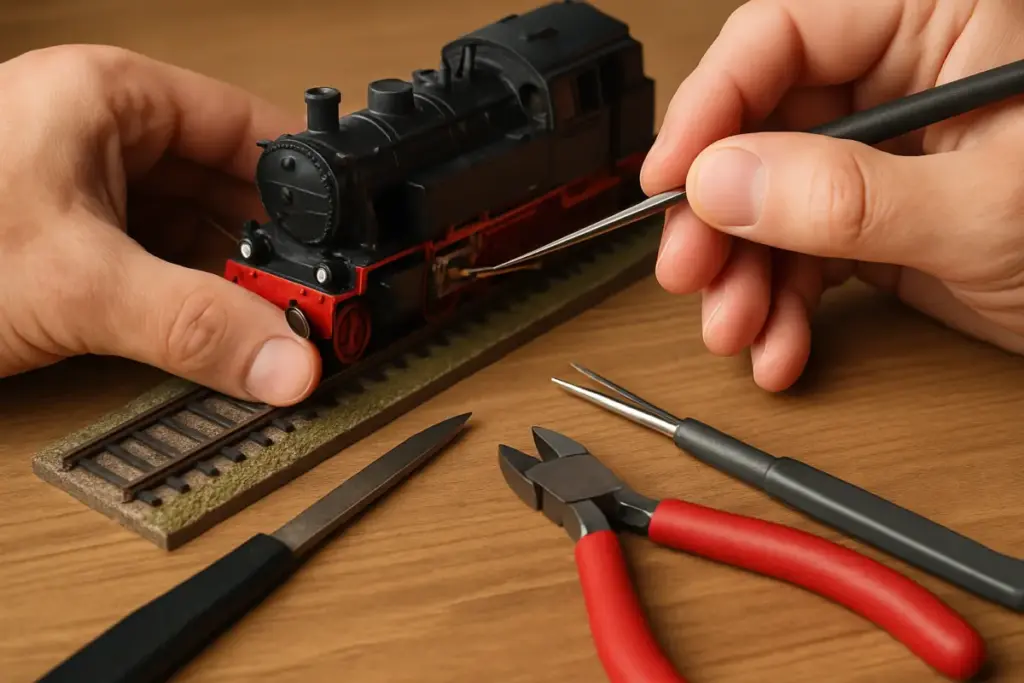
Customization in the hobby is about precision. Trains are small, delicate, and often made from materials that require careful handling. A tool that is too large, too blunt, or poorly suited to the job can damage fine details or make an upgrade look unfinished. On the other hand, the right tool gives you clean cuts, neat paint lines, secure bonds, and realistic details.
Good tools also make the process more enjoyable. Instead of fighting against sticky adhesives or jagged plastic edges, you can focus on creativity. That matters whether you are modifying an engine shell, detailing a boxcar, or building scenery around your layout. The best tools do not just help you work faster; they help you work better.
Essential Cutting Tools for Model Train Customization

Cutting tools are among the most important items in any hobbyist’s kit. Many customization projects require trimming plastic parts, removing molded details, or cutting wire, decals, and styrene pieces.
A sharp hobby knife is indispensable. Look for one with replaceable blades so you always have a clean cutting edge. Dull blades can slip or tear surfaces. A self-healing cutting mat is another must-have, protecting your work surface while giving you a safer place to cut.
Precision sprue cutters or flush cutters are also useful for removing parts from plastic frames. They help prevent stress marks and reduce the cleanup needed afterward. For shaping small components, hobby saws and fine needle files are valuable additions. These tools are especially helpful in model railroad modding, where tiny alterations can have a big visual impact.
Measuring and Marking Tools for Accuracy
Accuracy is key when working on custom model trains. Even a small misalignment can affect the overall appearance of a locomotive or freight car. That is why measuring and marking tools should be part of your toolkit from the beginning.
A metal ruler, calipers, and a fine pencil or scribing tool will help you measure parts precisely before making any cuts. Calipers are especially useful when comparing parts or checking uniform spacing. A small square can also help you keep cuts and assemblies aligned.
For repetitive tasks, such as installing grab irons, handrails, or windows, marking tools save time and reduce mistakes. When details are placed carefully, the final result looks far more professional and realistic.
Adhesives and Applicators for Secure Assembly
Choosing the correct adhesive is just as important as choosing the right cutting tool. Different materials require different bonding methods, and using the wrong glue can cause damage or poor adhesion.
Plastic cement works well for styrene parts because it chemically bonds the surfaces together. This creates a strong and nearly invisible joint. For mixed materials like metal, resin, or photo-etched parts, cyanoacrylate glue, or super glue, is often the better choice. Epoxy is useful for stronger bonds or larger parts that need extra support.
Applicators matter too. Fine-tip glue applicators, toothpicks, and micro-brushes help you control how much adhesive you use. Too much glue can leave visible residue or damage painted surfaces, while too little may not hold securely. Clean application is one of the simplest ways to improve the look of model trains and other layout details.
Painting Tools That Bring Your Layout to Life
Paint transforms basic parts into realistic, personalized features. Whether you want a weathered locomotive, a bright custom passenger car, or a faded industrial look, painting supplies are essential.
At minimum, you will want good quality brushes in a few different sizes. Fine detail brushes are perfect for lettering, windows, and small trim, while larger brushes handle base coats and scenery touches. An airbrush can take your work to the next level by creating smooth finishes, subtle color transitions, and realistic weathering effects.
You will also need paint masks, mixing cups, and a palette for blending colors. Primer is important for helping paint adhere evenly, especially on plastic or resin surfaces. For model railroad enthusiasts, even small improvements in paint quality can make the entire scene feel more authentic and professionally built.
Tweezers, Pick-Up Tools, and Other Small-Detail Helpers
Small parts are a major part of hobby customization. Handrails, couplers, lamps, decals, and wires can be hard to manage without the right tools. Tweezers are essential, especially fine-point or curved-tip versions that make it easier to grip tiny items.
Pick-up tools with wax tips or magnetic ends can be useful for handling even smaller pieces without sending them flying across the room. A small parts tray or organizer also helps keep everything visible and sorted. Losing a tiny part can interrupt a project and add unnecessary stress.
For anyone serious about model railroad modding, these tools are more than conveniences. They are time-savers that protect both your patience and your progress.
Weathering and Detailing Tools for Realism
One of the most satisfying parts of model train customization is adding realism. Weathering tools help simulate rust, dirt, soot, dust, and wear so your trains look like they belong in the real world.
Weathering powders, chalks, fine sponges, and specialty brushes are great for subtle effects. A sponge can create chipped paint textures, while dry brushing highlights raised edges and details. Fine applicators are also useful for rust streaks or grime on freight cars and locomotives.
Decal setting solutions and micro-sol tools are important if you plan to add lettering or custom graphics. These products help decals conform to curves and uneven surfaces, making them blend naturally into the finish.
Organization Tools That Keep Custom Projects Stress-Free
A tidy workspace makes hobby work easier and safer. Tool organizers, drawer units, labeled bins, and magnetic strips help keep essential supplies within reach. Clear storage boxes are especially useful for sorting tiny screws, couplers, and spare parts.
Good lighting is another important “tool” that many hobbyists overlook. A bright desk lamp or magnifying lamp can reduce eye strain and help you see fine details clearly. When your tools and parts are organized, customization becomes less chaotic and much more enjoyable.
Building Your Toolkit Over Time
You do not need to buy everything at once. Start with the basics: a hobby knife, cutting mat, tweezers, glue, brushes, and measuring tools. As your skills grow, add specialty items like an airbrush, weathering supplies, and more advanced detailing tools.
The best toolkit is one that matches your projects. If you mainly work on small repairs, focus on precision tools. If you love scenic builds and repainting, invest more heavily in painting and weathering supplies. The hobby is flexible, and your tool collection can grow alongside your interests.
Final Thoughts
Customizing model trains is a creative process that becomes far easier with the right equipment. From cutting and measuring to painting and weathering, each tool plays a role in producing clean, realistic, and satisfying results. Whether you are just starting out or expanding an existing collection, a thoughtful set of tools will make model railroad work more accurate, efficient, and enjoyable.
With the proper setup, custom model trains are no longer complicated projects reserved for experts. They become approachable, rewarding builds that let you bring your own vision to life. And that is what makes model railroad modding such a lasting part of the hobby: every upgrade tells a story, and every tool helps you tell it better.

