

 Written by
 Model Train Scales: Best Simple Guide for Stunning HO and N Scale Trains
Model train scales are one of the most important things to understand when building a layout, choosing rolling stock, or planning a realistic railroad scene. The right scale affects everything from how much space you need to how detailed your trains can look. For beginners and experienced hobbyists alike, knowing the differences between popular scales like HO and N can help you make better choices for your layout, budget, and style of modeling.
What Are Model Train Scales?

A model train scale is the ratio between the size of the model and the size of the real train or railroad equipment it represents. For example, a 1:87 scale model is 87 times smaller than the prototype. Scales help keep model trains, buildings, track, and scenery consistent so everything looks realistic together.
Different scales are used for different reasons. Some modelers want maximum detail and don’t mind a larger layout. Others want to fit a whole railroad into a smaller room. That’s where HO and N scale trains stand out.
Why Model Train Scales Matter
Choosing the right scale is not just about size. It affects nearly every part of the hobby:
– Space requirements: Larger scales need more room for track curves and scenery.
– Detail level: Bigger models can often show more fine details.
– Cost: Scale can influence the price of locomotives, track, buildings, and accessories.
– Availability: Some scales have a wider selection of products than others.
– Ease of handling: Smaller models can be trickier to work with, especially for beginners.
If you’re planning custom model trains, scale choice also determines how easy it will be to add unique details, weathering, lights, sound, and other features.
HO Scale Trains: The Popular All-Around Choice
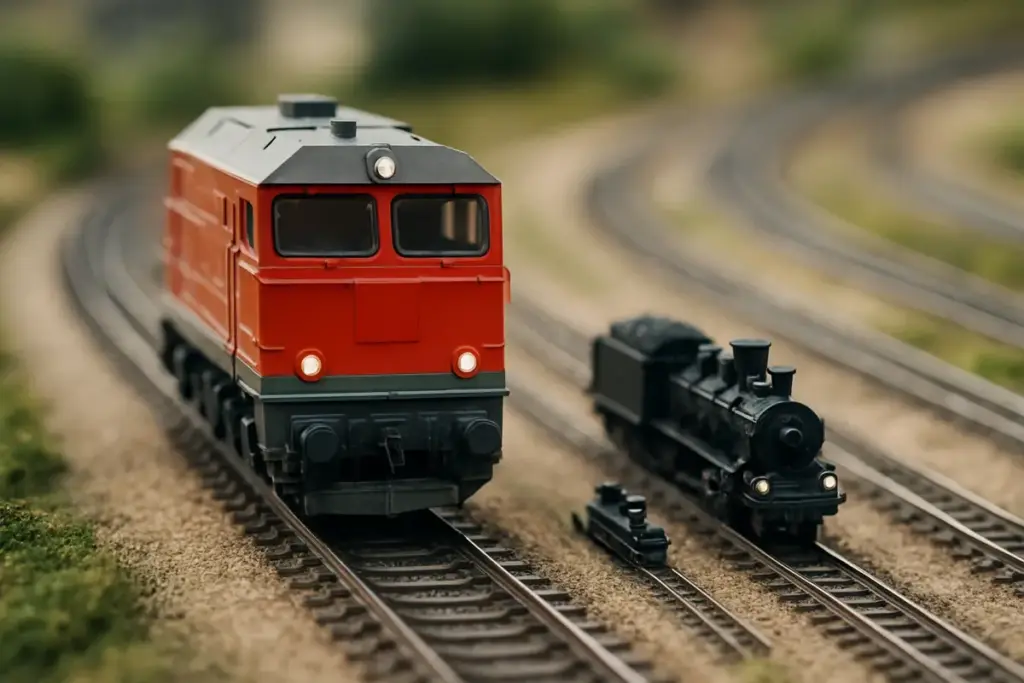
HO scale trains are among the most popular in the hobby, and for good reason. HO scale uses a 1:87 ratio, making it large enough for impressive detail while still compact enough for many home layouts.
Advantages of HO Scale
HO scale trains are a favorite because they offer a strong balance between realism and practicality. Some of the biggest benefits include:
– Wide product selection: There are countless locomotives, freight cars, passenger cars, buildings, and accessories available.
– Good detail: HO models are large enough to allow excellent detailing and customization.
– Flexible layout design: You can build anything from a small shelf layout to a large basement railroad.
– Strong support for hobbyists: There are lots of parts, tools, and tutorials available for model railroad modding.
Best Uses for HO Scale
HO is ideal for modelers who want a balance of detail and size. It works well if you have a spare room, a garage layout, or a medium-sized space. It is also a strong choice for model railroaders who enjoy improving locomotives, adding interiors, or creating realistic weathering effects.
For many hobbyists, HO is the best starting point because it offers enough room for creative model train customization without requiring an enormous setup.
N Scale Trains: Compact and Space-Friendly
N scale trains are much smaller than HO, with a scale ratio of 1:160 in most regions. Because of their compact size, N scale trains are perfect for modelers who want to fit more track and scenery into a limited space.
Advantages of N Scale
N scale has become very popular, especially for apartment setups and small rooms. Here’s why:
– Fits more in less space: You can model longer mainlines, larger scenes, and more complex rail networks.
– Great for realistic scenery: Because the trains are smaller, scenery can feel expansive and dramatic.
– Improving detail options: Modern N scale models often have impressive detail despite the smaller size.
– Portable layouts: Smaller modules are easier to move and store.
Best Uses for N Scale
N scale is a great choice if you want to run long trains in a limited area or if your goal is to model scenic mountain routes, urban rail lines, or extensive rail systems. It is especially attractive for modelers who enjoy designing a layout that looks large and realistic without taking over the whole room.
While N scale trains can be a little more delicate to handle, many hobbyists enjoy the challenge and the visual impact they can create in a small footprint.
HO vs N Scale: How to Choose
When comparing model train scales, the decision often comes down to your goals and available space.
Choose HO Scale If You Want:
– Larger models with easier handling
– More visible detail
– A huge range of products
– A good middle ground between size and realism
Choose N Scale If You Want:
– Maximum track in minimum space
– Large-looking scenery in a compact layout
– Easier storage and portability
– The ability to model bigger rail scenes in smaller rooms
If you are undecided, think about the size of your layout area, your budget, and how much detail you want to see and work on. Many modelers prefer HO for hands-on customization, while others choose N for the sheer amount of railroad they can fit into a small place.
Custom Model Trains and Model Train Customization
One of the most enjoyable parts of the hobby is working on custom model trains. Whether you choose HO or N scale, customization lets you turn standard models into something unique and personal.
Common types of model train customization include:
– Painting and repainting locomotives
– Adding decals and road-specific markings
– Weathering engines and freight cars
– Installing new couplers or wheels
– Adding lights, sound, or interior details
– Modifying locomotives for specific eras or railroads
Model railroad modding can be simple or advanced. Beginners might start with weathering a freight car or adding figure details, while advanced hobbyists may rebuild locomotives, install electronics, or create fully customized rolling stock. HO scale often gives more room for these changes, but N scale still offers plenty of possibilities with the right tools and patience.
Tips for Getting Better Results
No matter which scale you choose, a few simple habits can improve your layout and models:
1. Plan before buying – Make sure your track, buildings, and scenery match your chosen scale.
2. Use consistent measurements – Keep everything proportional for a realistic look.
3. Start with a simple layout – A smaller successful project is better than an unfinished large one.
4. Practice weathering carefully – Subtle effects often look more realistic than heavy applications.
5. Invest in good tools – Precision cutters, tweezers, paints, and adhesives make customization easier.
6. Learn from other modelers – Forums, videos, and clubs are great places to pick up useful techniques.
Final Thoughts
Model train scales play a major role in shaping the look, feel, and practicality of any railroad layout. HO scale trains are a great all-around option for modelers who want detail, flexibility, and a wide range of products. N scale trains are ideal for those who need to save space while still creating a visually impressive railroad.
Whether you’re building custom model trains from scratch or experimenting with model railroad modding, the right scale can make your project more enjoyable and realistic. The best choice is the one that fits your space, your goals, and the kind of railroad story you want to tell.

