

 Written by
 Industrial Layout Design: Stunning, Affordable Model Railroad Layout Planning
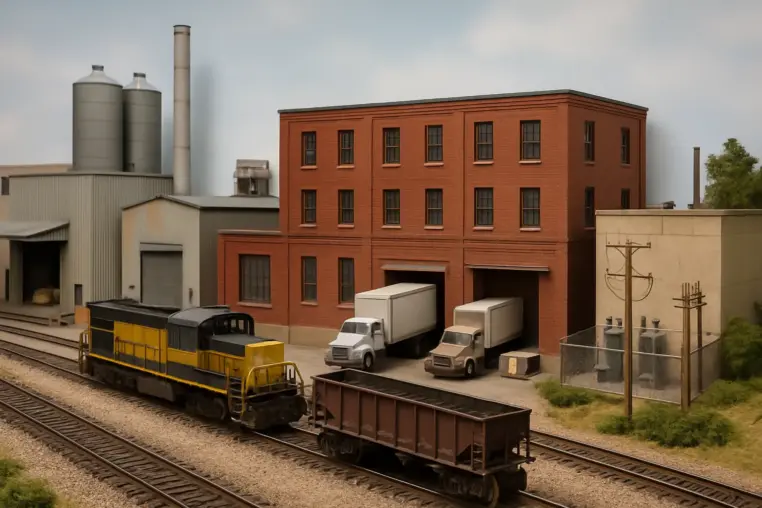
Industrial layout design is one of the most rewarding ways to bring a model railroad to life. If you want a layout that looks realistic, operates smoothly, and stays within budget, an industrial theme is a smart choice. Warehouses, loading docks, freight yards, factories, and utility buildings create a believable setting for model trains while also offering plenty of opportunities for switching operations and detailed scenery. Best of all, industrial scenes can be built in stages, making them ideal for hobbyists who want an impressive layout without spending a fortune.
A well-planned industrial scene does more than provide a backdrop for trains. It gives your model railroad a purpose. Instead of simply watching trains circle endlessly, you can create a railroad that delivers goods, switches cars, and simulates real-world operations. That makes the layout more immersive, more fun to operate, and more satisfying to build over time.
Why Industrial Scenes Work So Well in Model Railroad Layout Design

Industrial areas are naturally suited to railroads because real railroads were built to serve businesses and factories. That means the setting feels authentic and operationally logical. A single siding leading to a warehouse or a cluster of tracks around a small freight terminal can instantly make a layout feel more realistic.
Another advantage is flexibility. Industrial scenes fit into many spaces, from compact shelves to larger basement layouts. You do not need a huge amount of room to create a convincing scene. In fact, some of the best model train layout ideas are based on narrow streets, brick buildings, chain-link fencing, loading platforms, and a few carefully placed cars or containers. These elements create depth and interest without requiring a large footprint.
Industrial layouts also support a wide range of eras. Whether you prefer steam, diesel, or modern intermodal operations, industrial settings can be adapted to match your chosen time period. That makes model railroad layout design easier because you can build around a theme that suits your collection and your operating style.
Smart Model Railway Layout Planning for an Industrial Theme

Good model railway layout planning begins with a clear purpose. Decide what your railroad is supposed to do. Is it serving a single factory? A cluster of warehouses? A shipping district? Maybe it connects a small town to an industrial park on the edge of the city. Once you define the role of the railroad, the rest of the design becomes easier.
Start by sketching the track plan. Industrial layouts often use simple but effective track arrangements:
– A main line with one or two sidings
– A small freight yard or staging area
– Spurs leading to loading docks or factory buildings
– Runaround tracks for switching moves
– Optional team tracks or container areas
These features give you operational variety without making the layout overly complex. For many hobbyists, simplicity is the key to affordability and reliability. Fewer turnouts and less track mean lower costs and fewer maintenance issues.
It also helps to plan scenery around the tracks instead of forcing the tracks to dominate the space. In an industrial setting, buildings often sit close to the rails, and pavement, retaining walls, fences, and roadways can help frame the scene. This creates a more believable urban or semi-urban look, even on a compact layout.
Affordable Ways to Build a Realistic Industrial Layout
Creating a stunning layout does not require expensive materials. Some of the most convincing scenery can be made from low-cost or repurposed items. Foam board, cardboard, basswood scraps, old packaging, and printable brick textures can all be used to build buildings and structures.
Here are a few budget-friendly ideas:
– Use foam insulation board for terrain and building bases
– Build simple factory shells from cardstock or styrene sheet
– Create pavement with paint, matte board, or textured paper
– Add realism with inexpensive details like barrels, pallets, and signs
– Salvage parts from old kits to make custom industrial structures
Lighting is another inexpensive way to add impact. A few warm LED lights inside a warehouse or office building can make the scene feel alive, especially in low-light room conditions. You can also use weathering powders, acrylic paints, and dry brushing to make buildings and rolling stock look used and authentic.
When it comes to model railroad scenery, weathering is especially important in industrial areas. Rust, soot, dirt, oil stains, and faded paint all help tell the story of a hard-working environment. Even simple buildings can look impressive once they are carefully weathered and placed in a thoughtfully arranged scene.
Model Train Layout Ideas for Industrial Operations
If you are looking for practical model train layout ideas, industrial operations offer a lot of variety. One popular concept is a switching district where local freight trains deliver cars to several businesses. A switch job might need to pick up covered hoppers from a grain facility, deliver boxcars to a warehouse, and spot tank cars at a fuel dealer. This kind of operating challenge adds interest without requiring long mainline runs.
Another idea is a port or transload terminal. This type of layout can combine rail with trucks, cranes, containers, and loading equipment. It works well for modern-era model trains and provides a strong visual focal point. Even a small section of track can feel busy and believable when surrounded by trailers, forklifts, and stacks of cargo.
You could also design a factory district with multiple spur lines feeding different parts of one large industrial complex. This is a great way to make a compact layout feel bigger. By using fences, roads, and building walls as visual barriers, you can suggest a much larger environment beyond the edges of the benchwork.
Tips to Make Your Industrial Model Railroad Feel Real
Realism comes from consistency and detail. Choose a specific era, location, and industry type so the scene feels coherent. A 1950s steel town will look very different from a 1990s warehouse district or a modern logistics center. Matching your structures, vehicles, and freight cars to your chosen period helps the layout feel authentic.
Here are a few helpful tips:
– Keep road markings and signage consistent with the era
– Use appropriate freight car types for the industries you model
– Add utility poles, dumpsters, pipes, vents, and fire escapes
– Vary building heights and textures to avoid a flat look
– Include workers, parked trucks, and small vehicles for scale
Sound can also enhance the experience. If your layout includes sound-equipped locomotives, operating in an industrial scene becomes even more immersive. The rumble of a diesel engine, the squeal of couplers, and the clatter of switching moves all fit naturally in this environment.
Building in Phases Makes the Project Easier
One of the best things about industrial layout design is that it can be developed gradually. You do not need to finish the entire layout before you start enjoying it. Begin with the track, basic structures, and a few finished scenes, then expand as time and budget allow.
This phased approach is especially helpful for beginners. It lets you learn as you go, correct mistakes early, and spread costs over time. You can start with a small switching area and later add streets, background buildings, and additional sidings. Over time, the layout becomes richer and more detailed without feeling overwhelming.
Final Thoughts
Industrial layout design offers a practical, affordable, and visually striking way to enjoy the hobby. With careful planning, simple materials, and a focus on believable operations, you can create a layout that looks impressive and provides hours of enjoyment. Whether you are exploring model railroad layout design for the first time or refining an existing setup, an industrial theme gives you endless possibilities for creativity.
By combining smart model railway layout planning with realistic scenery and reliable trackwork, you can build a model railroad that feels both authentic and rewarding. The result is a layout where model trains have a purpose, every siding tells a story, and every scene adds to the overall experience.

