

 Written by
 HO Scale Trains vs N Scale Trains: Best Model Railroad Comparison
HO scale trains are often the first choice for many hobbyists, but N scale trains have also become extremely popular for modelers who want to maximize layout size in a smaller space. Choosing between these two is one of the biggest decisions in the hobby, and the best option depends on your room, goals, budget, and the kind of railroading experience you want. Since both scales are widely supported and offer excellent detail, understanding their strengths and trade-offs can help you build a model railroad that fits your needs.
Understanding Model Train Scales

When comparing model train scales, the main difference is size. A scale tells you how large the model is compared to the real locomotive, freight car, or passenger car it represents. The two most common scales in North America are HO and N.
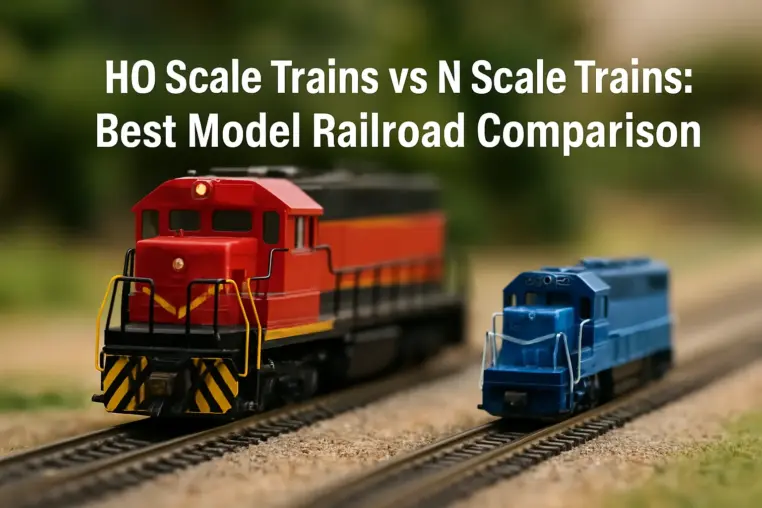
HO scale is 1:87, meaning the model is 87 times smaller than the real prototype. N scale is even smaller at 1:160. That difference may sound minor at first, but in practice it has a huge effect on space, track design, scenery, and operational possibilities. Both scales can be used to create incredibly realistic model trains, but each serves a different kind of hobbyist.
HO Scale Trains: The Popular Standard

HO scale trains are the most widely used scale in the hobby, and for good reason. They strike a strong balance between size, detail, affordability, and ease of handling. Because the models are larger than N scale, they are often easier to work with for beginners and advanced modelers alike.
Advantages of HO Scale
One of the biggest advantages of HO scale is detail. Larger locomotives and cars allow manufacturers to include more realistic features, such as fine handrails, see-through grilles, and detailed interior components. For many hobbyists, this added realism is one of the main attractions.
Another benefit is availability. Because HO is so popular, there is a massive range of products available, including locomotives, rolling stock, track systems, buildings, scenery items, and accessories. Whether your interests are steam, diesel, freight, passenger service, or a specific prototype railroad, you will likely find plenty of options in HO.
HO scale is also easier to handle. Couplers are more accessible, track cleaning is simpler, and repairs or modifications are often less frustrating. For modelers with less dexterity or those who want a smoother maintenance experience, this can make a big difference.
Challenges of HO Scale
The main drawback of HO is space. Even a modest layout can take up a fair amount of room if you want realistic curves, longer trains, and meaningful switching operations. If you only have a small spare room or a compact apartment space, HO may limit how much railroad you can build.
Cost is another factor. While HO is not necessarily expensive compared to other hobbies, larger models and accessories can add up quickly, especially if you want a fully detailed and operational layout.
N Scale Trains: Big Railroading in a Small Space
N scale trains are ideal for hobbyists who want more railroad in less room. Because the scale is much smaller, you can fit longer mainlines, larger yards, and more scenery into the same area that HO would occupy. This makes N scale especially appealing for people working with limited space.
Advantages of N Scale
The biggest advantage of N scale is layout density. You can create a far more expansive model railroad in a small room, which is especially useful if you enjoy mainline running, mountain scenery, or large terminal operations. For many modelers, the ability to model a broad prototype region is a major benefit.
N scale also allows for longer trains relative to the space available. A train that would feel cramped in HO can look much more natural in N, especially on a home layout. If your goal is to capture the feel of long-distance railroading, N scale can be a great fit.
Another advantage is portability. Smaller modules and lighter equipment make it easier to transport layouts to club events, exhibitions, or temporary setups. This is one reason many traveling modelers and modular railroad groups like N scale.
Challenges of N Scale
N scale does have some drawbacks. The smaller size makes details harder to see and handle, especially for beginners. Coupling cars, placing figures, weathering equipment, and performing repairs can be more delicate work. For some people, that level of precision is part of the fun, but for others it can feel frustrating.
There may also be fewer choices in some categories compared to HO, though the N scale market has improved dramatically over the years. Still, if you want a very specific prototype or specialty item, HO usually offers a broader selection.
Track cleanliness and electrical pickup can be more noticeable in N scale because the models are smaller and lighter. As a result, reliable operation depends on careful trackwork and consistent maintenance.
HO Scale Trains vs N Scale Trains: Which Is Better?
There is no single answer for everyone. The best choice depends on what matters most to you.
Choose HO if you value:
– Easier handling and maintenance
– Greater detail visibility
– The widest product selection
– A more forgiving scale for beginners
– A layout with a substantial but manageable footprint
Choose N if you value:
– Maximum layout potential in limited space
– Longer trains and broader scenery
– Portability and modular setup
– The ability to model large prototypes in a smaller area
If you have a dedicated train room or basement and want highly detailed scenes, HO may be the better choice. If your space is limited but you still want an impressive and operational model railroad, N scale can be an excellent solution.
Budget and Skill Level Considerations
Your budget can influence the decision as much as space. In both scales, you can spend a little or a lot. However, because HO items are larger, some components may cost more per piece. N scale equipment can sometimes be slightly less expensive, but the difference varies by manufacturer and product category.
For beginners, HO often feels more approachable. The larger size makes it easier to learn basic wiring, scenery, and maintenance skills. N scale is not necessarily harder overall, but it does require more patience and a steadier hand in some tasks.
If you are returning to the hobby after a long break, HO may feel more familiar and user-friendly. If you are starting fresh and want a compact layout that still looks impressive, N scale could be the smarter option.
Layout Design and Scenic Impact
One of the most exciting parts of the hobby is designing scenery. In HO, scenery elements tend to feel more tangible and immersive because of the larger size. Buildings, vehicles, and figures are easier to customize and place. This makes HO especially rewarding for modelers who enjoy detailed scenes and close-up viewing.
N scale excels in creating the impression of distance. Mountains, towns, and rail lines can stretch farther, which makes layouts feel grander. A well-designed N scale layout can suggest an entire rail district or region in a relatively small area.
Final Thoughts
Both HO scale trains and N scale trains offer rewarding ways to enjoy model trains and build a memorable model railroad. HO is often the best all-around choice for detail, availability, and ease of use, while N scale is ideal for compact spaces and larger scenic possibilities. In the end, the right scale is the one that fits your room, your interests, and the kind of railroading experience you want to create.
If you’re still undecided, consider starting with a small test layout in each scale. Handling a few cars, building a short track plan, and comparing the visual effect can make your choice much clearer. Either way, both scales can deliver years of creativity, operation, and enjoyment in the hobby.

