

 Written by
 HO Scale Trains vs N Scale Trains: Best Model Train Scale Comparison
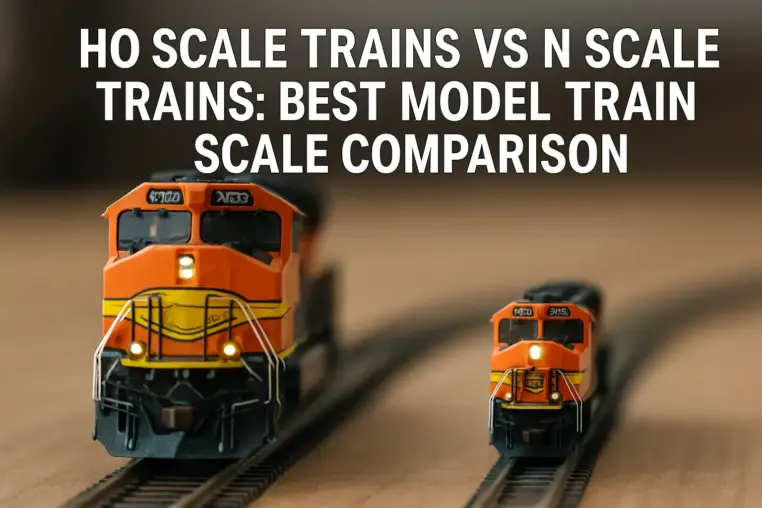
HO scale trains and N scale trains are two of the most popular choices in the hobby of model railroading, and for good reason. Each offers a different balance of size, detail, layout flexibility, and operating potential. If you’re planning a new model railroad or deciding which scale fits your space and style, understanding the differences between these model train scales is essential. The best choice often depends on how much room you have, how much detail you want, and what kind of railroad experience you want to build.
Understanding Model Train Scales

Before comparing the two scales directly, it helps to know what “scale” means. In model trains, scale refers to the proportional size of the model compared to the real locomotive or car. A larger scale means bigger models, while a smaller scale means more compact ones. This affects everything from track planning to scenery, maintenance, and the amount of detail visible on each piece.
For many hobbyists, choosing the right scale is one of the first major decisions in building a model railroad. The most common scales include HO, N, O, and others, but HO and N are especially popular because they offer a strong mix of realism and practicality.
HO Scale Trains: The Most Popular Choice

HO scale is one of the most widely used scales in the world. It is sized at 1:87, meaning the model is 87 times smaller than the real train. HO scale trains are large enough to show excellent detail but still compact enough to fit in many homes.
Why Modelers Love HO Scale
One of the biggest advantages of HO is its balance. It gives modelers the chance to enjoy realistic detailing without requiring an enormous amount of space. Locomotives, rolling stock, structures, and figures in HO are easy to see and work with, which makes this scale appealing for beginners and experienced hobbyists alike.
HO scale also offers a huge variety of products. Because it is so popular, you can find almost every type of locomotive, freight car, passenger car, building, and accessory in this scale. That makes it easier to create a highly customized layout.
Advantages of HO Scale Trains
– Strong level of visual detail
– Wide availability of products and parts
– Easier to handle for many beginners
– Great balance between size and layout flexibility
– Ideal for operators who enjoy adding detail and weathering
Challenges of HO Scale
The main drawback of HO is that it requires more space than N scale. If you want a larger layout with lots of track and scenery, you may need a dedicated room or large area. HO also tends to cost more than N scale in some cases, especially when building a full layout with many locomotives and cars.
N Scale Trains: Small Size, Big Possibilities
N scale trains are much smaller, at about 1:160 scale. This compact size makes them a favorite among hobbyists who want to build a large and complex layout in a limited amount of space. Despite their smaller size, N scale models can still deliver impressive realism and variety.
Why N Scale Is So Popular
The biggest advantage of N scale is space efficiency. A layout that would take up an entire room in HO might fit comfortably on a smaller table in N scale. This makes it a smart option for apartment dwellers, people with limited hobby rooms, or anyone who wants to create a long mainline, expansive scenery, or multiple operating areas.
N scale also allows for more track in less space. If you like the idea of long trains, dramatic mountain scenes, winding routes, or large yard operations, this scale can make those ideas more achievable.
Advantages of N Scale Trains
– Fits more railroad into less space
– Great for long mainlines and larger scenes
– Easier to build expansive layouts in small rooms
– Often allows more dramatic scenery effects
– Good choice for modelers with limited space
Challenges of N Scale
The smaller size can make handling and maintenance more difficult. Couplers, tiny details, and track cleaning may require more patience and care. Some beginners also find N scale harder to work with because parts are small and more delicate. While the selection of products is broad, there may still be fewer options than HO in some categories.
HO Scale Trains vs N Scale Trains: Key Differences
When comparing HO scale trains and N scale trains, the real question is not which one is better overall, but which one is better for your goals. Both scales can support beautiful and realistic model railroad layouts.
Space Requirements
This is often the deciding factor. HO needs more room, while N allows more layout in a smaller footprint. If you have a spare room, basement, or dedicated train area, HO may be a good fit. If your space is limited, N scale may be the better choice.
Detail and Visibility
HO trains are easier to see and work on. This makes them ideal for hobbyists who enjoy fine detailing, painting, weathering, and adding tiny features to locomotives and structures. N scale still offers good detail, but the smaller size means details are less visible from a distance and more challenging to modify.
Operating Experience
HO provides a hands-on operating experience that many hobbyists enjoy. Cars are easier to couple and uncouple, trackwork is more forgiving, and maintenance is usually simpler. N scale can still provide excellent operation, but the smaller components require more precision.
Cost Considerations
Costs vary, but both scales can be affordable or expensive depending on the quality and size of the layout. Because N scale uses less physical material and can fill a layout more efficiently, it may cost less to build a large scene. However, premium N scale equipment can still be costly, and prices depend heavily on brand and detail level.
Which Scale Is Best for Beginners?
For beginners, both scales can work well. HO is often recommended because it is easier to handle, easier to see, and has a huge support network of products, tutorials, and hobby shops. It is also more forgiving when learning track laying, wiring, and maintenance.
That said, N scale is a great choice for beginners who know they have limited space and want to build something larger in footprint without dedicating a whole room. If you are patient and comfortable working with smaller parts, N scale can be very rewarding.
Choosing the Right Scale for Your Model Railroad
The best way to choose between these model train scales is to ask a few practical questions:
– How much space do I have?
– Do I value detail or layout size more?
– Will I enjoy working with small parts?
– Do I want a simple layout or a more expansive one?
– What kind of scenery and operations do I want?
If you want a scale that is easy to work with and rich in detail, HO is likely the better match. If you want to maximize scenery and track within a limited area, N scale may be ideal.
Final Thoughts
There is no universal winner in the HO vs N scale debate. Both HO scale trains and N scale trains have loyal followings because both offer unique strengths. HO is often favored for its detail, accessibility, and broad product range, while N scale shines when space is limited and you want the most layout in the smallest footprint.
In the end, the best scale is the one that matches your space, your goals, and your enjoyment of the hobby. Whether you choose HO or N, the real reward is building a model railroad that reflects your creativity and passion for model trains.

