

 Written by
 Model Trains for Beginners: Best Must-Have Guide to Start Easy
Model trains for beginners can be one of the most rewarding hobbies you ever pick up. There is something special about building a small world, watching trains move through scenery, and gradually turning a simple layout into a detailed miniature railroad. The best part is that you do not need to be an expert to begin. With a little planning and the right approach, anyone can start small, learn the basics, and enjoy the hobby right away.
Understanding the Appeal of Model Trains

Model railroading combines creativity, craftsmanship, engineering, and storytelling. Some people enjoy collecting locomotives and cars, while others love building landscapes, tunnels, bridges, and stations. Many hobbyists eventually move into custom model trains and advanced scenery work, but every great layout starts with the basics.
For beginners, the hobby is appealing because it can be as simple or as advanced as you want. You might start with a basic oval track on a table, then later expand into a full room-sized railroad with multiple routes, lighting, and realistic scenery. The flexibility is one reason so many people stay in the hobby for years.
How to Start Model Trains the Right Way
If you are wondering how to start model trains, the first step is not buying everything at once. It is choosing a scale and a purpose for your layout.
Model train scales come in different sizes, such as HO, N, O, and others. HO scale is one of the most popular for beginners because it offers a good balance between detail and space. N scale is smaller and great if you have limited room. O scale is larger and easier to handle, though it usually requires more space.
Here are a few beginner-friendly steps:
1. Choose a scale based on your available space and comfort level.
2. Decide on a theme such as freight, passenger, modern, or steam-era railroads.
3. Start with a simple layout instead of building something too large too quickly.
4. Buy a starter set if you want an easy entry point.
5. Learn track basics before adding advanced features.
A good model railroad beginner guide will always emphasize starting small. A simple loop of track with one locomotive and a few cars is enough to learn power connections, coupling, uncoupling, and basic operation.
What You Need to Begin
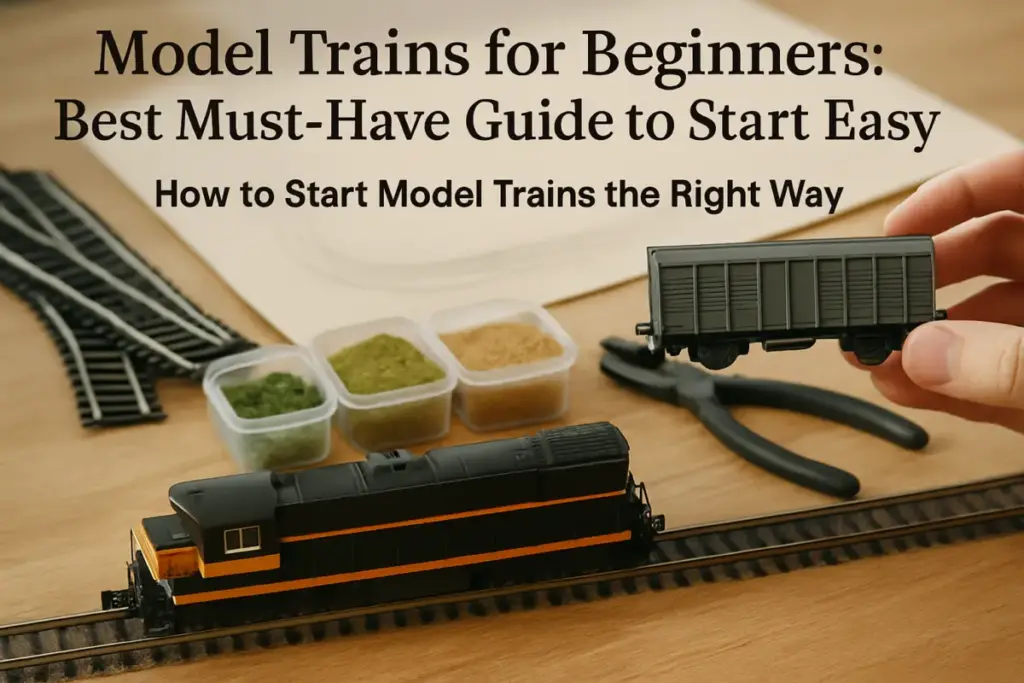
You do not need an entire workshop to get started. A beginner setup can be surprisingly simple.
Essential starter items:
– Locomotive
– A few train cars
– Track pieces
– Power supply or controller
– Basic tools like pliers and a hobby knife
– A flat surface or bench for your layout
Some beginners also like to add foam board or plywood as a base. This gives you a stable area for track and scenery. If you plan to expand later, choosing a base that is easy to modify will save you time.
Building Confidence with a Simple Layout
The smartest move for newcomers is to build confidence with easy projects. Before trying advanced wiring or scenery, focus on getting the train to run smoothly. Make sure the track is level, connections are secure, and curves are wide enough for your train set.
A reliable first layout teaches important lessons:
– How track sections fit together
– How trains react on curves and slopes
– How to clean wheels and track
– How to troubleshoot common problems
This phase may seem basic, but it lays the foundation for everything that comes later. Many experienced hobbyists still return to simple techniques when solving problems on larger layouts.
Exploring Custom Model Trains
Once you are comfortable with the basics, you may become interested in custom model trains. This can mean repainting locomotives, adding unique details, changing lighting, or building one-of-a-kind rolling stock. Customization is what gives a layout personality.
Some beginners think customization is only for advanced modelers, but that is not true. You can begin with small changes such as:
– Adding weathering effects
– Replacing couplers
– Installing better wheels
– Adding decals or road numbers
– Improving the appearance of buildings and scenery
These changes help you understand the hobby more deeply while making your layout feel more realistic.
Model Train Customization for Beginners
Model train customization is where the hobby really becomes personal. You can make trains and scenery reflect a specific railroad, time period, or location. This is also where creativity matters most. Even small adjustments can make a big difference.
For beginners, the key is to avoid rushing into complicated modifications. Start with easy projects and learn the materials you are using. Paint, glue, plastic, resin, and metal all behave differently. Test methods on inexpensive pieces before applying them to a favorite locomotive.
Some easy beginner customization ideas include:
– Painting figures and accessories
– Adding grass, trees, and terrain
– Installing station signs and road signs
– Weathering freight cars for realism
– Designing unique train yards or sidings
Customization should feel enjoyable, not stressful. The goal is to make the layout your own while developing new skills at a comfortable pace.
Understanding Model Railroad Modding
As you grow more confident, you may hear the term model railroad modding. This usually refers to modifying trains, track layouts, electronics, or scenery for better performance or appearance. Modding can range from simple upgrades to advanced projects involving digital command control, sound systems, and lighting effects.
Examples of model railroad modding include:
– Adding LEDs to locomotives or buildings
– Upgrading motors or couplers
– Creating automated signals
– Building hidden staging tracks
– Changing track plans for smoother operation
If you are new, do not feel pressured to do everything at once. Modding becomes much easier after you understand how your trains operate. Start with one improvement at a time, and keep notes on what works.
Common Mistakes Beginners Should Avoid
Every beginner makes a few mistakes, but some are easy to prevent.
Avoid these early errors:
– Buying too many items before planning a layout
– Choosing a scale that does not fit your space
– Making track curves too tight
– Skipping track cleaning and maintenance
– Adding too much scenery too quickly
– Trying advanced electrical work before learning the basics
The best way to avoid frustration is to stay patient. Model railroading is a hobby that rewards steady progress. Small improvements build up into something impressive over time.
Why Starting Small Works Best
A small layout is easier to build, cheaper to maintain, and less overwhelming. It also gives you room to make mistakes and learn from them. Many hobbyists who begin with a tiny setup eventually create large, detailed railroads. Starting small does not mean thinking small; it means building smart.
When you start with simple track, a reliable train set, and a few scenery elements, you can focus on enjoyment rather than pressure. That approach keeps the hobby fun and sustainable.
Final Thoughts
Getting started with model railroading is less about perfection and more about curiosity. If you follow a practical model railroad beginner guide, choose a manageable scale, and learn how to start model trains step by step, you will build confidence quickly. From there, you can explore custom model trains, try model train customization, and eventually experiment with model railroad modding as your skills grow.
The most important thing is to begin. Start with a simple layout, enjoy the process, and let your railroad evolve naturally. With patience and creativity, your first train set can become the beginning of a long and rewarding hobby.

