


 Written by
 Beginner’s Guide to Model Trains
Model railroading is one of the most rewarding hobbies: it combines creativity, engineering, history, and storytelling. Whether you dream of a tiny steam locomotive chuffing through a handcrafted mountain pass or a modern freight operation controlled from your tablet, this beginner-friendly guide will walk you through everything you need to know to get started. This is your model railroad beginner guide — from picking a scale and a starter set to learning basic wiring, scenery, and model train customization.
Why Model Trains?
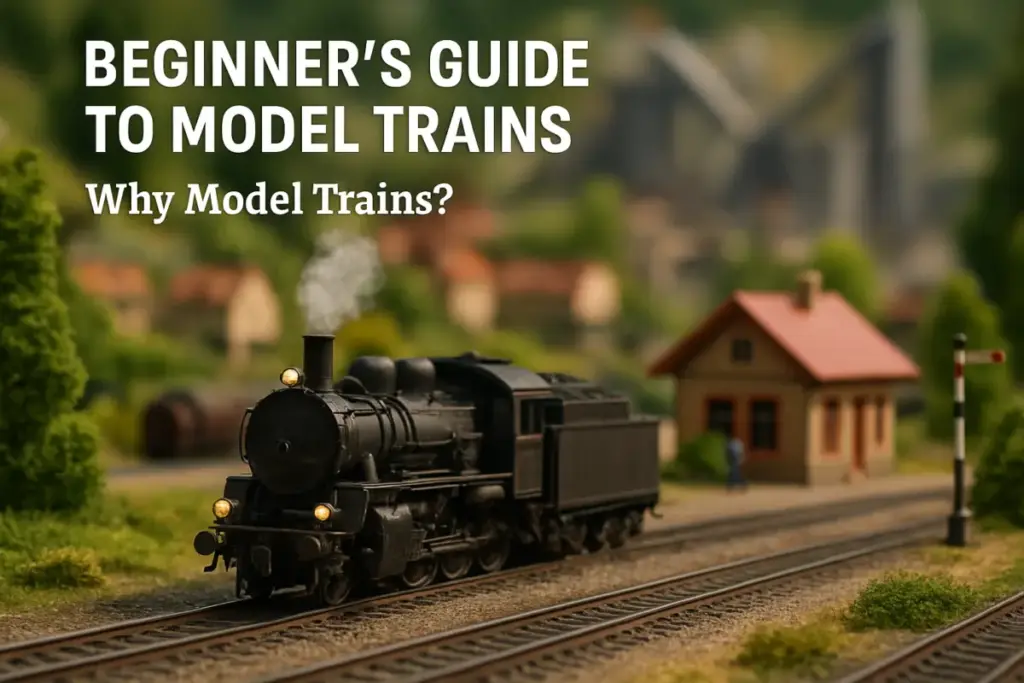
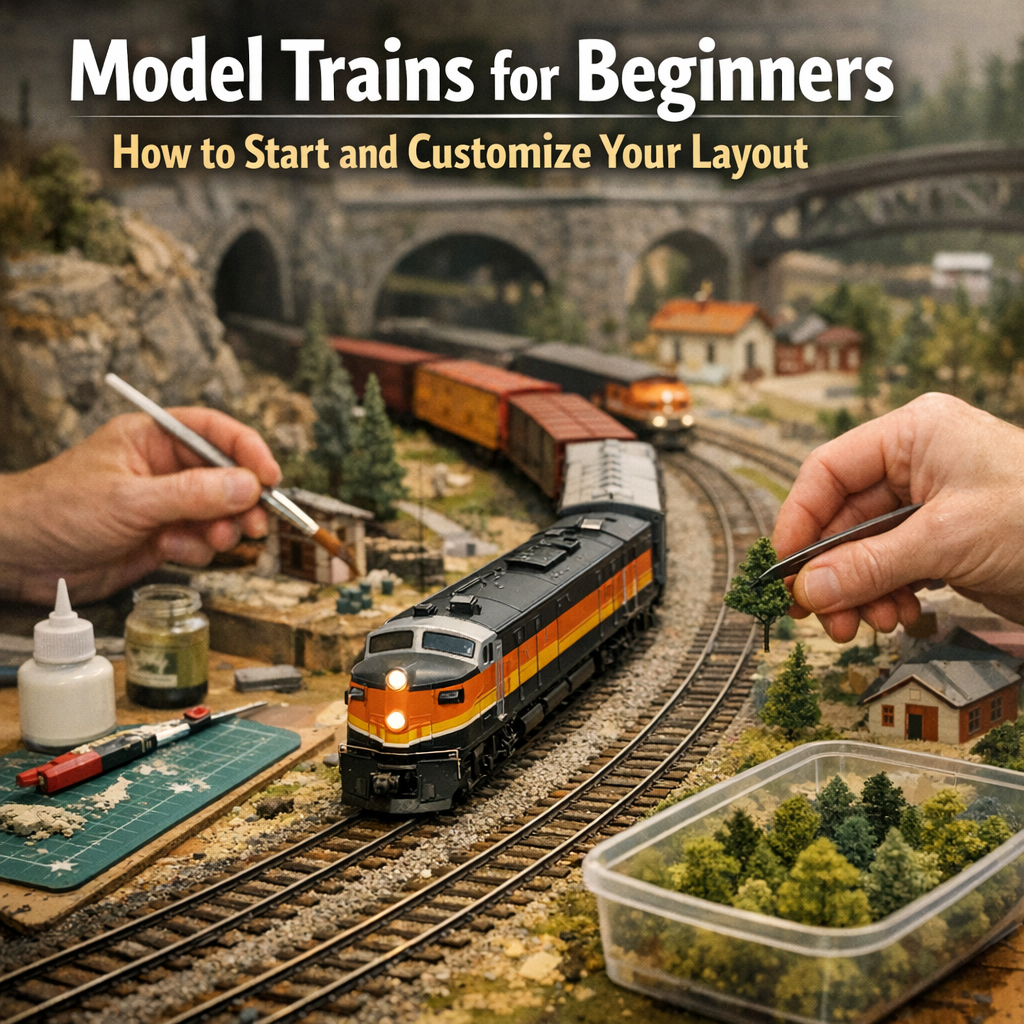
- It’s creative: design landscapes, towns, industries, and operations.
- It’s technical: electronics, mechanics, and problem solving.
- It’s social: clubs, shows, and online communities.
- It’s historical: model eras, prototypes, and regional railroads.
If you’ve searched “model trains for beginners” or “how to start model trains,” you’re in the right place. This guide gives practical steps, examples, and project ideas so you can move from curiosity to building your first layout.
Choosing a Scale: Which Size Is Right?
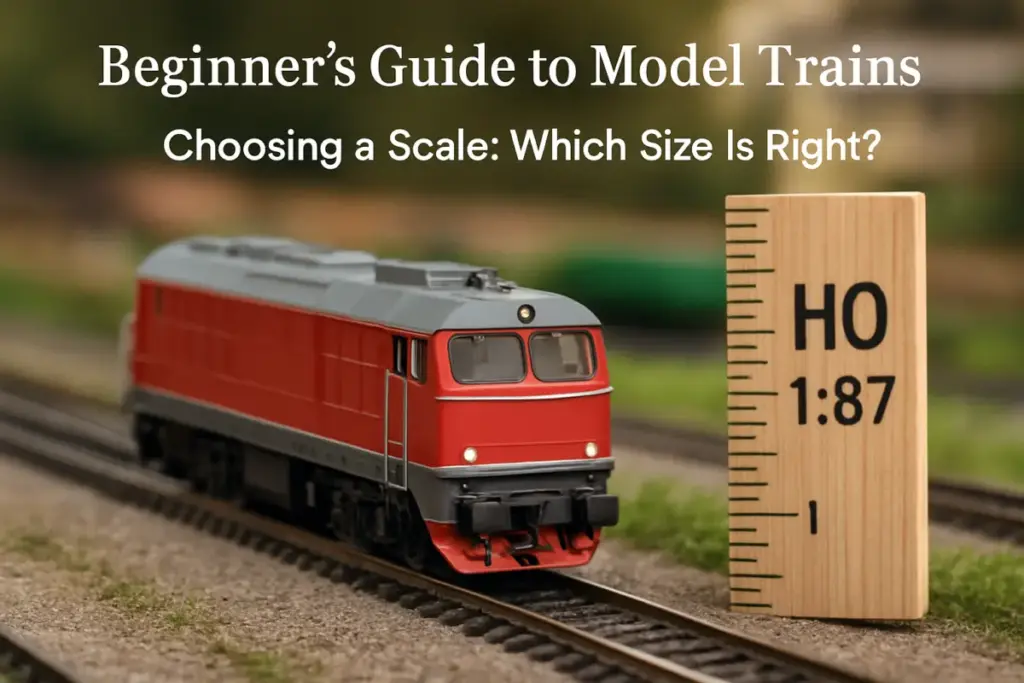
Scale determines the size of the models and influences cost, space, and detail.
- HO scale (1:87)
- Pros: Most popular, wide availability, good balance of size and detail.
- Cons: Requires moderate space.
- N scale (1:160)
- Pros: Compact, great for smaller spaces.
- Cons: Smaller detail, fiddlier work.
- O scale (1:48)
- Pros: Big, detailed, impressive visual impact.
- Cons: Expensive, needs lots of space.
- G scale (garden) (around 1:22–1:32)
- Pros: Outdoor/durable, large and robust.
- Cons: High cost, weather concerns.
- Z scale (1:220)
- Pros: Tiny, extreme space efficiency.
- Cons: Very delicate, limited selection.
Choice tip: If you want lots of aftermarket parts, modding options, and easy access to accessories, HO is the most beginner-friendly. For limited space, pick N scale.
Starter Set or Build from Scratch?
For many beginners, a starter set is the best way to learn basic operation.
- Advantages of starter sets:
- Includes loco, cars, track, power pack — everything to run.
- Cost-effective introduction.
- Good way to learn about couplers, wheels, and track.
- Disadvantages:
- May use proprietary connectors or lower-quality components.
- Limited customization within the box.
If your goal is to create custom model trains or dive into model train customization and model railroad modding, a starter set is an easy first step. Later you can replace parts and upgrade to better controllers, DCC decoders, and aftermarket detail parts.
Basics of Track and Layout Planning
Before you buy more, plan a simple layout.
-
Layout footprint options:
- Oval: Best for continuous running and beginners.
- Point-to-point: Prototype-accurate operations, switching-focused.
- Switching layout: Small, fun for shunting and realistic operations.
- Modular: Build sections that connect to other layouts/clubs.
-
Track types:
- Sectional track: Pre-formed pieces; easy and fast for beginners.
- Flex track: Bendable rails for smooth curves and custom routes; preferred for more realistic track geometry.
-
Turnouts (switches):
- Use them to create sidings, yards, and industries.
- Plan for turnout wiring if using servo, Tortoise, or solenoid motors.
Example beginner plan:
- A 4’ x 2’ board with a simple oval (continuous run) and one siding for a passing siding or industry. This layout is perfect for learning basic track laying, wiring, and scenery.
Building Benchwork and Roadbed
You don’t need a workshop to start — a strong table or a simple plywood sheet over saw horses works. Key elements:
- Benchwork:
- Simple shelf for small layouts.
- L-girder or stud framing for larger builds.
- Roadbed:
- Cork or foam underlay reduces noise and simulates ballast height.
- Use Adseal or white glue for gluing track to cork.
- Surface:
- Plywood top or extruded foam (pink/blue) for terrain carving.
Tip: Start small. A 2’ x 4’ plywood board with foam terrain is instructive and inexpensive.
Wiring and Power: DC vs DCC
Two main electrical systems:
- DC (Direct Current)
- Simple: One controller supplies variable voltage; reversing direction changes polarity.
- Better for beginners learning basics.
- Limitations: Each train on a common track must be controlled together unless you add block control.
- DCC (Digital Command Control)
- Power to the track is constant; digital commands (decoders) in locomotives control functions independently.
- Allows multiple trains independently on the same track.
- Supports sound and lighting functions.
- Slightly steeper learning curve; more flexible for model railroad modding.
Wiring basics:
- Bus and feeders: Run heavy-gauge bus wires around the layout; connect feeders (22-24 AWG) every 3–6 feet.
- Turnout motors and accessories: Use separate accessory power runs or a decoder system designed for turnouts.
- Blocks: On DC layouts, create electrically isolated blocks to control different trains.
Example: For a 4’ x 8’ HO layout, run a pair of 12-14 AWG wires (red/black) as the bus, with feeders every 2–3 feet. If using DCC, choose a reliable command station (entry-level brands: Digitrax, NCE, MRC).
Choosing Locomotives and Rolling Stock
- Locomotives:
- Buy reliable starters: look for metal-frame locos with decent traction.
- Consider adding a DCC-ready or factory-DCC locomotive if you plan to go digital.
- Rolling stock:
- Start with a small variety: a boxcar, tank car, gondola, and a passenger coach if desired.
- Match couplers and wheel gauge standards (many sellers provide NEM or NMRA standard couplers).
Example shopping list for beginners:
- HO starter set with loco and cars ($150–$400).
- Extra track pack for expansion ($25–$100).
- Basic tools: rail cutters, needle-nose pliers, small screwdriver set ($40–$80).
- Soldering iron for wiring ($20–$60).
- Foam or cork roadbed ($20–$50).
Scenery Basics: From Ballast to Buildings
Scenery is where the hobby shines. You can build everything from a flat urban layout to lush mountains.
-
Materials:
- Foam (extruded or insulation) for terrain.
- Plaster cloth for shaping.
- Ground cover: turf, static grass, and fine gravel.
- Trees: commercially made or handmade with armatures and foliage.
- Buildings: kit-built, laser-cut, or scratch-built from card and styrene.
-
Basic scenery workflow:
- Paint baseboard with earth-colored latex paint (brown/earth tone).
- Glue down large features (roads, parking lots, ballast).
- Apply ground cover in layers (turf sprays, then static grass, then fine scatter).
- Add details: figures, vehicles, signs, fences.
Project example: Small freight depot
- Build a simple rectangular building kit.
- Add a platform, a loading dock, and a siding with a weathered boxcar.
- Surround with gravel ballast, ground scatter, and two or three trees.
Beginner Weathering and Detailing
Weathering gives realism. Start with gentle techniques:
- Dust/wash: Use diluted acrylic or oil washes to darken panel lines and add grime.
- Drybrushing: Lightly highlight raised details with lighter paint on a dry brush.
- Powders: Weathering powders for soot and rust can be brushed on and fixed with a matte varnish.
- Rust streaks: Apply thin lines of rust-colored paint and blend with a wet brush.
Start with old rolling stock or a spare car for practice. Keep notes of paint mixes and techniques.
Custom Model Trains and Kitbashing
If you want to create unique models, model train customization and custom model trains are popular paths.
- Kitbashing:
- Combine parts from different kits to make a unique prototype or fantasy model.
- Example: Combine two boxcar kits to create a specialized flatcar.
- Scratchbuilding:
- Use styrene sheets, brass, or wood to build models from raw materials.
- Good for unique structures or rare prototype items.
- 3D printing:
- Design or download models and print custom parts (cab roofs, coupler pockets, detail parts).
- Use 3D printing for hard-to-find parts or one-off builds.
- Decals and repainting:
- Use model paints, masking, and decals to create custom liveries or local railroad names.
Example customization project:
- Convert a common freight loco into a shortline with new paint, handrails, and new number plates. Add a sound decoder for character.
Model Railroad Modding: Electronics and Automation
Model railroad modding often involves electronics: sound, lighting, automation, and sensors.
- Sound decoders:
- Add authentic engine sounds, horns, bells, and adjustable volume.
- Many DCC decoders include sound functions.
- Lighting mods:
- Replace incandescent bulbs with LEDs for headlights, marker lights, and interior lighting.
- Use resistor values suitable for LED voltage and current.
- Automation:
- Arduino, Raspberry Pi, and specialized controllers can automate signals, turnouts, and block detection.
- Use occupancy detectors (resistive or current-sensing) or IR sensors for train detection.
- Turnout motors:
- Tortoise (slow motion) or servos offer reliable control for turnouts.
- Connect to switch decoders or microcontrollers for remote operation.
Basic modding example: Add LED headlights to a DC loco
- Open the loco body carefully.
- Identify the power pick-up points on the frame.
- Solder a resistor (220–1kΩ depending on LED) in series with the LED.
- Mount LED in the headlight location and reassemble.
Tools and Supplies for Beginners
Essential tools:
- Hobby knife and spare blades.
- Small flat and Phillips screwdrivers.
- Rail cutters and track pliers.
- Needle files and small files.
- Fine paint brushes and detail brushes.
- Soldering iron and solder (rosin-core).
- Multimeter for checking continuity and voltage.
- Tweezers and magnifier.
Consumables:
- CA and PVA glues, epoxy.
- Paints (acrylics recommended for beginners).
- Ballast, ground foam, scenic glue (diluted white glue), weathering powders.
Common Beginner Mistakes and How to Avoid Them
- Buying too much too quickly:
- Start small and learn before expanding. A simple layout is better than an unfinished large one.
- Skipping wiring basics:
- Proper bus/feeder wiring avoids unreliable power and dropouts.
- Poor planning for expansion:
- Leave access to wiring and include removable scenery for maintenance.
- Ignoring wheel and track cleaning:
- Keep wheels and rails clean to prevent stalling and poor pickup.
- Over-detailing early:
- Learn techniques on scrap pieces before committing to the main layout.
Maintenance and Troubleshooting
- Track cleaning:
- Use a track cleaning eraser or isopropyl alcohol on a rag; clean wheels with a wheel-cleaning tool.
- Lubrication:
- Use small amounts of plastic-compatible oil on gears and axles. Avoid over-lubrication.
- Coupler and wheel replacement:
- Replace worn couplers with standard Kadee-compatible couplers or scale friction-lock couplers.
- Diagnosing power issues:
- Check continuity with a multimeter; measure voltage at the rails; check feeder connections.
Joining the Community
Model railroading thrives on community. Join clubs, online forums, and attend shows.
- NMRA (National Model Railroad Association): standards, local chapters, and clinics.
- Local clubs: Many clubs let beginners run on larger layouts and offer mentorship.
- Online communities: Reddit (r/modeltrains), Model Railroader forums, and Facebook groups.
- YouTube channels and podcasts: Excellent for visual tutorials on weathering, DCC, and scenery.
Suggested Beginner Projects (Step-by-Step Ideas)
-
The First Oval (Weekend Project)
- Buy an HO starter set and extra flex track.
- Build a simple 4’ x 2’ board with cork roadbed.
- Lay track, connect power, and run the locomotive.
- Add basic scenery: ballast the track, add a building kit, and a few trees.
-
Small Switching Layout (Advanced Weekend)
- Create a 2’ x 4’ switching puzzle with three industries.
- Add power routing for isolated sidings if using DC.
- Practice switching moves and spot cars in industries.
-
Diorama (Single-Scene Project)
- Build a 12” x 24” diorama showing a crossing, small depot, or bridge.
- Use this for practicing scenery and weathering skills.
-
Custom Locomotive Mod (Electronics)
- Install a DCC decoder or sound decoder in an old locomotive.
- Add LED lights and test functions on a programming track.
Budgeting and Time Expectations
Model railroading can be cheap or expensive depending on choices.
- Starter level: $150–$500 for a basic set and tools.
- Intermediate layout (4’ x 8’, with scenery and decent locos): $1,000–$5,000.
- Advanced layouts: $5,000+ for large, detailed setups with high-end models.
Time:
- Simple layouts take a weekend to run trains.
- Realistic, detailed layouts take months or years—enjoy the process.
Safety and Environmental Considerations
- Ventilation: Paints, solvents, and adhesives should be used in a ventilated area.
- Disposal: Dispose of solvent-soaked rags safely and follow local regulations.
- Small parts: Keep small parts away from children and pets.
- Electricity: Use proper power supplies and fuses to avoid shorts and hazards.
Resources and Further Reading
- Magazines: Model Railroader, Railroad Model Craftsman.
- Books: The Model Railroader’s Guide to… (topic-specific books).
- Online: NMRA website, YouTube tutorials (search for techniques like “ballasting track,” “DCC programming,” or “weathering freight cars”).
Conclusion
Getting into model trains is both accessible and endlessly deep. As a model railroad beginner guide, this article covered the essentials: choosing a scale, planning a layout, wiring basics, scenery, and the entry points into custom model trains, model train customization, and model railroad modding. Start small, enjoy learning hands-on skills, and gradually add complexity. The key is to run trains, make mistakes, learn, and most importantly, have fun. Whether you end up with a tiny diorama or a sprawling empire of rails, the journey is as rewarding as the finished layout. Happy modeling!

