

 Written by
 Model Train Layout Ideas: Stunning, Effortless Design Tips
Model train layout ideas can turn a simple hobby setup into a captivating miniature world that feels alive, detailed, and personal. Whether you are building your first layout or improving an existing one, the right design approach can make the process easier, more enjoyable, and far more impressive. With a thoughtful plan, you can create a layout that looks realistic, functions smoothly, and reflects your own style.
Why Good Planning Matters

Before placing a single track section, it helps to think through the overall vision for your layout. Strong model railroad layout design is not just about fitting track into a space—it is about creating a scene that tells a story. A well-planned layout balances aesthetics, operation, maintenance, and available room.
If you rush the planning stage, you may end up with tight curves, hard-to-reach areas, or scenery that feels crowded. On the other hand, careful model railway layout planning helps prevent these issues and gives you a layout that works as well as it looks. Start by deciding on your theme, available space, scale, and operational goals. Do you want a switching yard, a scenic mountain route, an urban transit scene, or a freelanced world inspired by real railroads?
Model Train Layout Ideas That Feel Realistic

A realistic layout does not need to be huge or overly complex. In fact, the most effective designs often focus on a few well-chosen elements.
1. Build Around a Clear Theme
A theme gives your layout identity. You might choose:
– A small-town freight branch
– A busy mainline with passing sidings
– A mountain logging route
– A modern industrial switching district
– A classic steam-era countryside
Having a theme makes it easier to choose scenery, structures, rolling stock, and track arrangements that all work together.
2. Use Layers of Interest
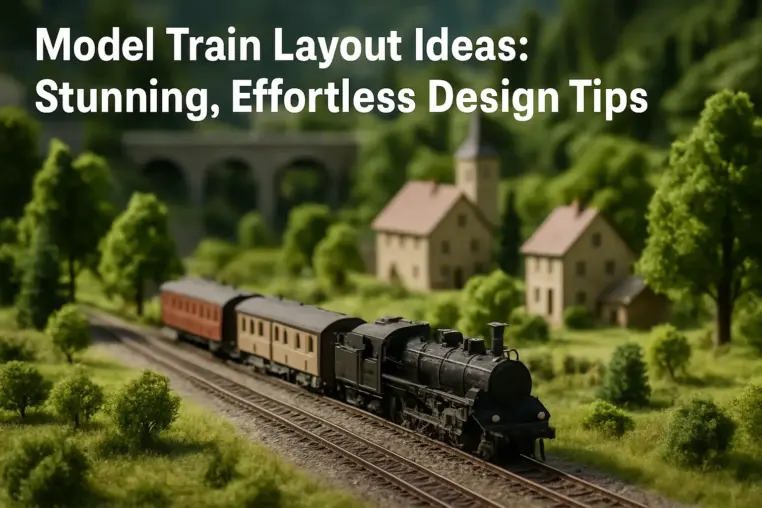
Instead of relying on one flat scene, create depth with multiple visual layers. Place taller buildings or hills in the back, mid-level details in the center, and foreground features like roads, fences, and people near the edge. This technique makes even a modest layout feel larger and more immersive.
3. Keep the Track Plan Simple
Simple track arrangements often lead to smoother operation and more attractive scenery. A continuous loop, a point-to-point line, or an oval with spurs can all be effective if designed thoughtfully. Overcrowding the layout with too many tracks can make it look busy in a bad way and leave little space for scenery.
4. Include Focal Points
Every good layout should have one or two attention-grabbing areas. These may include a train station, bridge, tunnel, yard, factory, or river crossing. Focal points give the eye a place to land and help make the layout feel composed rather than random.
Smart Tips for Easy, Attractive Design
Some of the best results come from simple techniques that are easy to apply.
Use Curves and Angles Intentionally
Natural-looking railroads rarely use only straight lines. Gentle curves can make a layout feel more realistic, while angled road crossings and building placement can add visual variety. Avoid making everything perfectly symmetrical unless that is part of your design style.
Leave Space for Scenery
A common mistake in model railroad layout design is using too much of the available space for track. Scenery needs room too. Open space helps build atmosphere and makes your trains stand out. Even a small patch of grass, a few trees, or a road crossing can make the scene feel complete.
Think About Viewing Angles
A layout is usually viewed from one or more sides, so plan your scenery accordingly. Place taller structures where they won’t block the best views. If the layout is visible from the front, create a natural “story” that unfolds as the train moves across the scene.
Hide Transitions
Wherever possible, use terrain, trees, buildings, or tunnels to hide awkward transitions and create a smoother visual flow. This can make the layout feel much more believable.
Adding Personality with Custom Features
One of the most rewarding parts of the hobby is making the layout your own. Custom model trains and unique scenic details can set your setup apart from standard displays.
Personalize Rolling Stock and Locomotives
Through model train customization, you can repaint, weather, decal, or detail locomotives and cars to match a specific era or railroad. Even small changes like adding roof details, new handrails, or realistic dirt effects can dramatically improve appearance.
Try Custom Structures
You can also build or modify buildings to fit your scene. A factory, depot, grain elevator, or warehouse made to your own specifications often looks better than an off-the-shelf piece that does not quite match the layout’s scale or story.
Explore Model Railroad Modding
Model railroad modding opens up even more creative options. You might add LED lighting, sound systems, slow-speed control, DCC features, or motion effects like blinking signals and animated crossings. Modding can improve both realism and operating enjoyment.
Easy Ways to Make a Layout Look Finished
A layout often feels incomplete until the small details are added. Fortunately, these details do not need to be expensive or difficult.
– Add figures to suggest daily life
– Place vehicles near roads and loading docks
– Use weathering powders or paint to age tracks and buildings
– Add signs, telephone poles, and utility lines
– Include grass, bushes, and ground cover to soften empty areas
– Vary tree sizes and colors for more natural scenery
These finishing touches help tie everything together and create a believable miniature world.
Planning for Future Expansion
Even if your layout is small now, it is wise to think ahead. Leave room for future changes, additional tracks, or expanded scenery. Modular thinking can make upgrades much easier later. If you build with flexibility in mind, your layout can grow with your skills, budget, and interests.
This is especially useful if you are experimenting with different model train layout ideas before settling on a final style. A layout that can adapt over time offers long-term enjoyment and reduces the pressure to make everything perfect immediately.
Final Thoughts
A great model railroad is built from a mix of planning, creativity, and practical design choices. By focusing on simple track planning, clear themes, realistic scenery, and thoughtful customization, you can create a layout that feels impressive without becoming overwhelming. Whether you enjoy detailed custom model trains, scenic building, or hands-on model railroad modding, the key is to design with both beauty and function in mind.
With the right approach to model railway layout planning, even a modest space can become a stunning miniature world that captures the imagination every time you switch on the trains.

