

 Written by
 Model Railroad Layout Design: Stunning, Effortless Ideas for Model Trains
Model railroad layout design is where creativity, planning, and craftsmanship come together to build a miniature world that feels alive. Whether you are just starting with model trains or looking to improve an existing setup, the right approach can turn a simple shelf into a detailed scene full of movement, atmosphere, and charm. A well-designed layout does not need to be huge or complicated to be impressive. In fact, some of the most memorable model railroad scenes are the ones that balance realism, simplicity, and smart use of space.
Why Good Design Matters in Model Railroading

A successful layout begins with purpose. Before placing track or choosing scenery, it helps to think about what kind of railroad you want to create. Do you imagine a busy industrial switching yard, a mountain logging route, or a peaceful rural line passing through small towns? Your answer will shape every choice, from track arrangement to buildings and scenery.
Good design also improves how the layout functions. If the track plan is awkward, trains may be difficult to operate. If scenery is overcrowded, the scene may feel cluttered. A thoughtful design makes the layout enjoyable to run and pleasant to look at. For many hobbyists, that balance is the real reward of model railroading.
Model Railway Layout Planning Made Simple

One of the most important parts of model railway layout planning is understanding the space you have available. Measure the room carefully and decide how much of it you want to dedicate to the layout. Even a small area can support a satisfying setup if it is planned well.
Start with these basic questions:
– What scale will you use?
– Will the layout be permanent or modular?
– Do you want continuous running or point-to-point operation?
– How much detail do you want to include?
Once you know the answers, sketch a few rough ideas. You do not need advanced software at this stage. A pencil and graph paper are often enough to test possibilities. Think about reach, visibility, and access. You should be able to comfortably reach all parts of the layout for maintenance and scenery work.
Another useful planning tip is to keep the design simple at first. Beginners often try to fit too much into a small space. A cleaner plan with fewer tracks can be more realistic and easier to operate. It also leaves room for scenic elements, which can make a big difference in the overall effect.
Smart Model Train Layout Ideas for Any Space
There are many ways to create a satisfying layout, even if your room or budget is limited. These model train layout ideas can help spark inspiration:
1. The Small Town Main Line
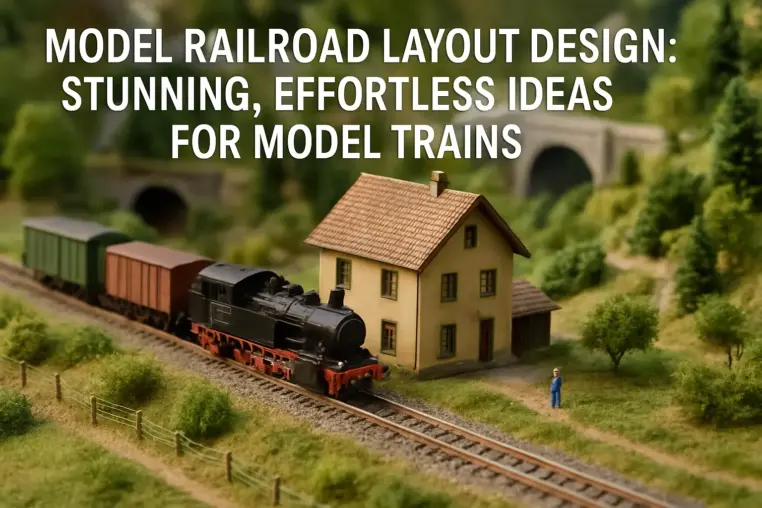
A single-track main line running through a town creates a classic, timeless scene. Add a depot, crossing, a few storefronts, and some trees for a layout that feels complete without being crowded. This type of layout works well for display and light operation.
2. The Switching District
If you enjoy realistic operations, a switching layout can be very engaging. Use sidings, warehouses, loading docks, and industrial buildings to create a scene where model trains move freight cars in a purposeful way. This design is especially effective in smaller spaces.
3. The Mountain Pass
Curves, tunnels, bridges, and elevation changes make mountain layouts visually dramatic. Even a modest rise in terrain can add depth and interest. This idea is excellent if you want your model railroad to feel adventurous and scenic.
4. The Loop-and-Scene Layout
A continuous loop with carefully arranged scenery allows trains to run for long periods while still looking realistic. By hiding part of the track behind hills, buildings, or structures, you can create the illusion of a larger railroad.
5. The Shelf Layout
For those with limited space, a shelf-style design can be a practical and attractive choice. Built along a wall, it can still include a yard, passing siding, or branch line. With good scenery, shelf layouts can look surprisingly expansive.
Building Realism with Scenic Balance
A layout becomes more convincing when scenery and structures support the story of the railroad. Think of the model railroad as a miniature environment rather than just a place for trains to run. Roads, rivers, fences, power lines, and people all help create a lived-in appearance.
Keep proportions consistent. A few well-placed details often work better than covering every inch with objects. Empty space can actually improve realism by making scenes breathe. In the real world, not every area is packed with structures, and your model railroad should reflect that.
Lighting also plays a major role. Warm, consistent lighting can make colors feel more natural and help your model trains stand out. If possible, avoid harsh shadows or overly bright spots that make the layout look artificial.
Choosing a Theme That Guides the Design
A theme gives your layout direction. Without one, the project can feel random. With one, every choice becomes easier. Common themes include:
– Steam-era railroading
– Modern freight operations
– Passenger service through a city
– Rural branch line travel
– Industrial switching scenes
Once you choose a theme, stay consistent with it. The locomotives, buildings, vehicles, and scenery should all support the same era and setting. This does not mean every detail must be perfect, but consistency makes the layout more believable.
Making Model Trains the Star of the Scene
Although scenery is important, the real focus is still the trains themselves. Your layout should give model trains room to move naturally and visibly. Track geometry matters here. Gentle curves, smooth transitions, and properly spaced sidings make operations look better and run more reliably.
It also helps to think about sightlines. Place the most interesting scenes where they will be easy to see. A train passing through a bridge, station, or switching area can become the highlight of the entire layout. These moments create visual rhythm and keep the layout engaging.
Practical Tips for Long-Term Success
A beautiful layout is easier to enjoy when it is built with maintenance in mind. Use accessible wiring, stable benchwork, and track that is easy to clean. Leave enough space beneath or around the layout for repairs and expansion.
It is also wise to build in stages. Complete one section before moving to the next. This prevents the project from becoming overwhelming and helps you learn what works best for your style. Many hobbyists discover that a gradual approach leads to better results than trying to finish everything at once.
Final Thoughts
A well-planned model railroad layout design does more than hold track and scenery. It creates a miniature world where model trains can tell a story. With thoughtful model railway layout planning, practical model train layout ideas, and attention to detail, you can build a layout that is both stunning and manageable.
The best layouts are not always the biggest or most complex. They are the ones that feel cohesive, operate smoothly, and capture the imagination. Whether you are designing your first model railroad or refining an existing one, focus on simplicity, consistency, and enjoyment. That combination will give your model trains a home that looks impressive and feels rewarding for years to come.

