

 Written by
 Foam vs Wood Layout Base: Best Model Railroad Design Guide
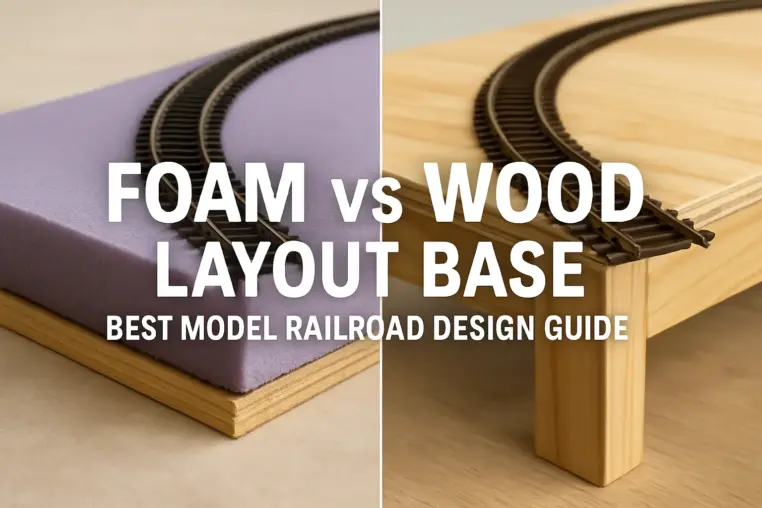
Foam vs wood layout base is one of the first big decisions any hobbyist faces when building a new railroad. The choice affects everything from weight and durability to scenery options, wiring access, and how easy it is to modify your design later. Whether you are sketching out simple model train layout ideas or planning a large, multi-level scene, the base you choose will shape the entire building experience.
A well-designed layout starts with a strong foundation. In model railroad layout design, the base is more than just a support surface—it influences track stability, noise control, portability, and how realistic your finished scene can look. Some builders prefer the lightweight flexibility of foam, while others trust the strength and familiarity of wood. Both materials have clear advantages, and the best choice depends on your goals, skill level, and the kind of model railroad you want to create.
Why the Layout Base Matters

Before comparing materials, it helps to understand why the base is so important. In model railway layout planning, the foundation must support track, scenery, structures, and wiring without warping or shifting over time. It also needs to fit your available space and match the way you plan to operate your trains.
A good layout base should:
– Hold track securely
– Support terrain and structures
– Allow for easy wiring and access
– Resist damage from humidity or weight
– Match your desired level of portability
For many model trains enthusiasts, the base determines how ambitious the layout can be. A compact shelf layout may need a lightweight and easy-to-move surface, while a permanent basement railroad may benefit from a sturdier build.
Foam Layout Base: Lightweight and Flexible

Foam has become increasingly popular in model railroad layout design because it is easy to work with and versatile. It is especially attractive for beginners and hobbyists who want to create scenery quickly without investing in heavy lumber framing.
Advantages of Foam
One of the biggest benefits of foam is weight. Foam panels are much lighter than wood, which makes them ideal for portable layouts or designs that may need to be moved later. If you are experimenting with model train layout ideas in a small apartment, attic, or temporary setup, foam can make the job easier.
Other key advantages include:
– Easy to cut and shape with simple tools
– Great for carving hills, valleys, and tunnels
– Provides natural sound dampening
– Useful for layered scenery and elevations
– Reduces overall layout weight
Foam is also convenient for creating realistic terrain. Since it can be stacked and carved, it helps builders form mountains, riverbanks, and roadbeds without needing complex support structures. For many model railroad projects, this makes scenery building faster and more creative.
Limitations of Foam
Despite its strengths, foam is not perfect. It is less rigid than wood, so it often needs a supportive frame underneath, especially for larger layouts. Thin foam sheets can flex under pressure, and heavy structures or repeated handling may cause damage over time.
Other drawbacks include:
– Can be dented or crushed
– May require a frame for stability
– Some adhesives or solvents can damage it
– Not always ideal for very large or load-bearing layouts
Foam works best when paired with a well-thought-out support system. On its own, it may not be strong enough for a long-term, heavy-duty model railroad unless the design is small or carefully reinforced.
Wood Layout Base: Strong and Traditional
Wood has long been the classic choice for layout construction. It is dependable, widely available, and strong enough to support large model railroad systems. Many experienced builders still prefer wood because of its structural reliability and familiar construction methods.
Advantages of Wood
Wood offers excellent rigidity, which is important for keeping track aligned and preventing unwanted flexing. For complex model railroad layout design, especially in larger rooms or permanent installations, wood provides a dependable foundation.
Benefits of wood include:
– Strong support for heavy layouts
– Long-lasting durability
– Easy integration with benchwork and framing
– Good for large or multi-level layouts
– Compatible with a wide range of scenery techniques
Wood also makes it easier to build a custom benchwork system. Plywood, dimensional lumber, and strips can be arranged to create stable frames, open-grid supports, or tabletop sections. This is helpful in model railway layout planning when you need precise dimensions or want to create a layout that can handle expansion in the future.
Limitations of Wood
Wood does have some disadvantages. It is heavier than foam, which can make construction and relocation more difficult. It may also warp if exposed to moisture or poor storage conditions. In addition, building with wood often requires more tools, more time, and a bit more carpentry skill.
Other potential issues include:
– Heavier to move and transport
– Can transmit more train noise
– May need sealing to resist humidity
– Requires more cutting and assembly work
For beginners, wood may feel more intimidating than foam. Still, once the framework is built, many hobbyists appreciate the confidence that comes from having a strong base under their model trains.
Foam vs Wood Layout Base: Which Is Better?
The best answer depends on how you plan to use your model railroad. If your priority is lightweight scenery, easy shaping, and a quieter run, foam may be the better choice. If you want a sturdy, permanent layout with excellent support, wood is often the stronger option.
Choose Foam If You Want:
– A lightweight build
– Easy terrain carving
– A layout that can be moved
– Quieter train operation
– Fast scenery construction
Choose Wood If You Want:
– Maximum strength and stability
– A permanent or semi-permanent layout
– Large benchwork support
– More confidence with heavy structures
– A traditional building approach
Many hobbyists actually use both. A wood frame can provide the structural support, while foam can sit on top to create scenery and elevation changes. This hybrid approach is one of the smartest solutions in modern model railroad layout design because it combines the best features of both materials.
Tips for Better Model Railroad Layout Planning
When deciding between foam and wood, think beyond the material itself. Good model railway layout planning starts with your space, budget, and long-term goals.
Consider these questions:
– Will the layout stay in one place?
– How large is the layout going to be?
– Do you want realistic hills and scenery?
– Are you building for display, operation, or both?
– How much experience do you have with carpentry?
If you are new to the hobby, start small. Simple model train layout ideas are often easier to refine when you use manageable materials and a compact footprint. A small foam-top layout can teach you a lot about track placement, terrain, and wiring without requiring a major construction project.
If you are building a more advanced model railroad, consider using wood for the frame and foam for the scenic surface. This method provides a solid base while still allowing you to shape landscapes with ease.
Final Thoughts
Choosing between foam and wood is not just a construction decision—it is a planning decision that affects the entire life of your model railroad. Foam offers lightweight convenience, easy scenic shaping, and quieter operation. Wood provides strength, durability, and structural confidence for larger or more permanent layouts. In many cases, the best solution is a combination of both.
No matter which material you choose, the key is to match the base to your vision. With thoughtful model railway layout planning and a clear understanding of your space and goals, you can build a layout that supports your trains beautifully and brings your model railroad ideas to life.

