

 Written by
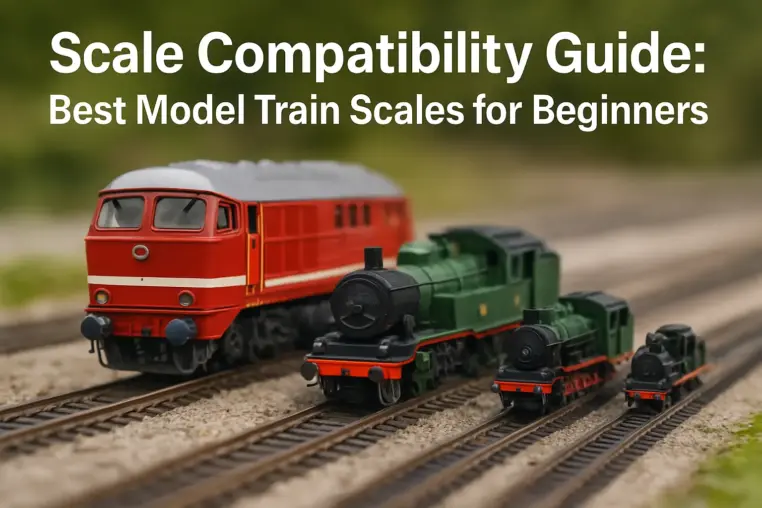
 Scale Compatibility Guide: Best Model Train Scales for Beginners
Model trains for beginners often begin with one big question: which scale should you choose? If you are just getting started, the scale you pick will affect everything from the size of your layout to the cost of your hobby, the amount of detail you can enjoy, and how easy it is to work with track, scenery, and rolling stock. This model railroad beginner guide will help you understand the most common model train scales, compare the best options for new hobbyists, and make a confident decision about how to start model trains the right way.
What Are Model Train Scales?
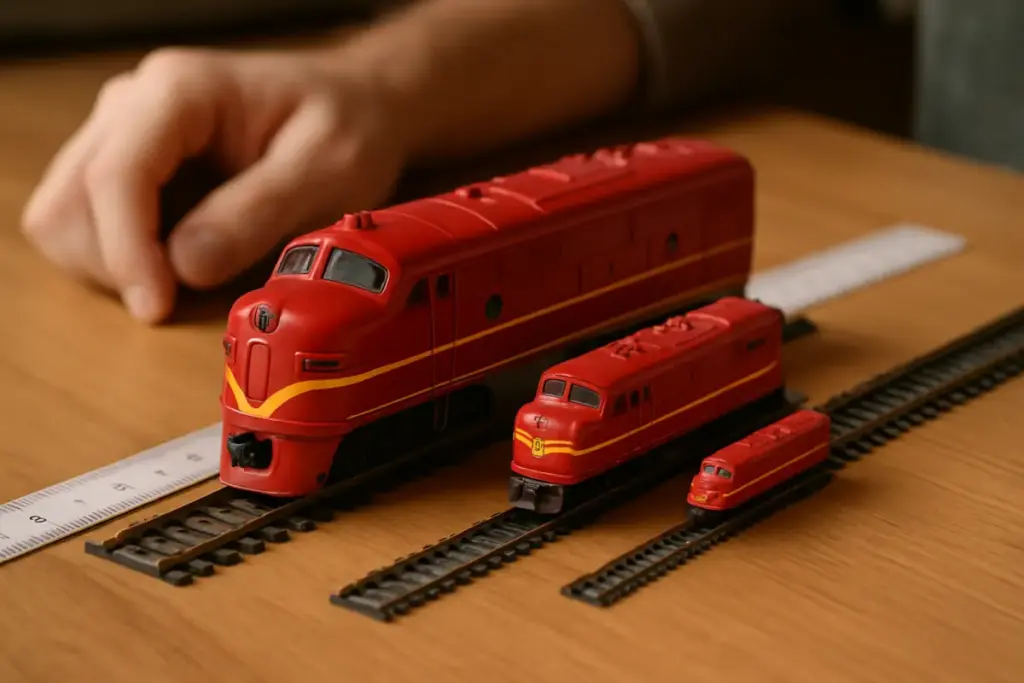
Model train scale refers to the proportional size of a model compared to a real train. For example, a 1:87 scale model is 87 times smaller than the real locomotive or car it represents. Different scales come with different benefits and trade-offs, especially for beginners.
When people talk about model train scales, they are usually also referring to the matching track gauge, which is the distance between the rails. Scale and gauge are related, but not the same thing. Choosing the correct combination matters because it affects compatibility, appearance, and how smoothly your trains run.
For beginners, the most important thing is not choosing the “best” scale overall, but choosing the scale that best fits your space, budget, and comfort level.
HO Scale Trains: The Most Popular Choice

Among all model trains for beginners, HO scale trains are often the first recommendation. HO scale is 1:87 proportion and is widely considered the most popular model train scale in the world.
Why beginners like HO scale
HO scale offers a strong balance between size and detail. The locomotives and cars are large enough to handle easily, yet small enough to build an interesting layout without needing a huge room. This makes HO a practical choice for people who want realism without overwhelming complexity.
Another major advantage is availability. Because HO is so popular, you will find a huge selection of locomotives, freight cars, passenger cars, buildings, figures, track systems, and accessories. That means more choices and often better prices.
Things to consider
HO scale still requires a fair amount of space. While it is manageable, it is not as compact as smaller scales, so if you only have a desk, shelf, or very small table, you may feel limited.
HO is a great fit if you want:
– A wide product selection
– Good detail without extremely tiny parts
– A layout that can fit in a spare room or dedicated area
– A beginner-friendly path with lots of community support
N Scale Trains: Great for Small Spaces
N scale trains are another excellent option for newcomers, especially if space is limited. N scale is smaller than HO, typically at 1:160 proportion, and lets you build more railroad into less room.
Why beginners choose N scale
The biggest advantage of N scale is space efficiency. You can create longer mainlines, larger scenery scenes, and more interesting track plans in a compact area. This is especially useful if you want a sense of distance and movement in a smaller home or apartment.
N scale has also become much more beginner-friendly over time. Modern products run better, look more realistic, and offer a strong selection of starter sets and accessories.
Things to consider
Because N scale trains are smaller, they can be a bit harder to handle, especially for beginners with limited dexterity or eyesight challenges. Track work and detailing may also require more patience.
N scale is a great fit if you want:
– Maximum layout potential in a small space
– Lightweight, compact equipment
– The ability to model long trains and wider scenes
– A modern, efficient setup for limited room
Other Model Train Scales Beginners May See
While HO and N are the most common beginner choices, you may also encounter other scales.
O scale
O scale is larger and easier to handle, which makes it attractive to some beginners. However, it usually requires much more room and can be more expensive. It is often better suited to those who have a large layout area or want bigger, more visible trains.
Z scale
Z scale is very small and impressive for compact layouts, but it can be challenging for new hobbyists because the trains and components are tiny. It is less common as a first scale for beginners.
TT, S, and others
These scales exist and can be enjoyable, but they are less common and may have more limited product availability depending on where you live.
For most newcomers, the simplest decision is still between HO and N.
How to Start Model Trains: Key Questions to Ask
If you are wondering how to start model trains, it helps to ask a few practical questions before buying anything.
1. How much space do you have?
This is usually the deciding factor. If you have a whole room or a large basement, HO scale may be ideal. If you only have a small table or limited shelf space, N scale may be the better choice.
2. Do you prefer detail or distance?
If you enjoy handling models and want slightly larger details, HO may feel more satisfying. If you want to fit more railroad into less room, N scale gives you that advantage.
3. What is your budget?
Smaller scales often allow more layout in less space, but pricing can vary. Starter sets in both HO and N are available at different price points. In general, beginners should consider not only the train set itself, but also track, power, scenery, tools, and future expansion.
4. How comfortable are you with tiny parts?
If you do not want to work with very small couplers, wheels, or accessories, HO may be easier to manage. If you are fine with delicate detail and small components, N scale is a strong option.
Choosing Compatible Products
One of the most important parts of a model railroad beginner guide is understanding compatibility. A train’s scale must match the track, rolling stock, buildings, and accessories designed for that scale. HO scale trains need HO track and HO structures. N scale trains need N scale track and N scale scenery.
Mixing scales can make a layout look unrealistic and can create practical problems. For example, an HO locomotive will not run on N scale track. So before buying accessories, always check the scale label carefully.
It also helps to buy from the same scale family when starting out. That makes it easier to plan, expand, and avoid accidental mismatches.
Best Scale for Beginners: A Simple Recommendation
If you are trying to decide between the most common model train scales, here is the short answer:
– Choose HO scale trains if you want the best all-around balance of size, detail, availability, and beginner support.
– Choose N scale trains if you have limited space and want to build a larger-looking layout in a smaller area.
Both are excellent choices. Neither one is “wrong.” The best scale is the one that matches your space, budget, and interests.
Final Thoughts
Starting in model railroading should be fun, not confusing. By understanding the main model train scales and thinking carefully about your goals, you can avoid common mistakes and enjoy a smoother first experience. For most newcomers, HO and N are the best places to begin because they offer strong product support, plenty of layout options, and a clear path for growth.
Whether you choose HO scale trains for their balance and popularity or N scale trains for their compact efficiency, the most important thing is to get started with a scale that fits your life. With the right choice, your first layout can become the beginning of a rewarding long-term hobby.

