Written by
10 min read
1,919 words
58 views
-
Table of Contents
Introduction
Choosing The Right Paint For Your Model Train: A Comprehensive Guide
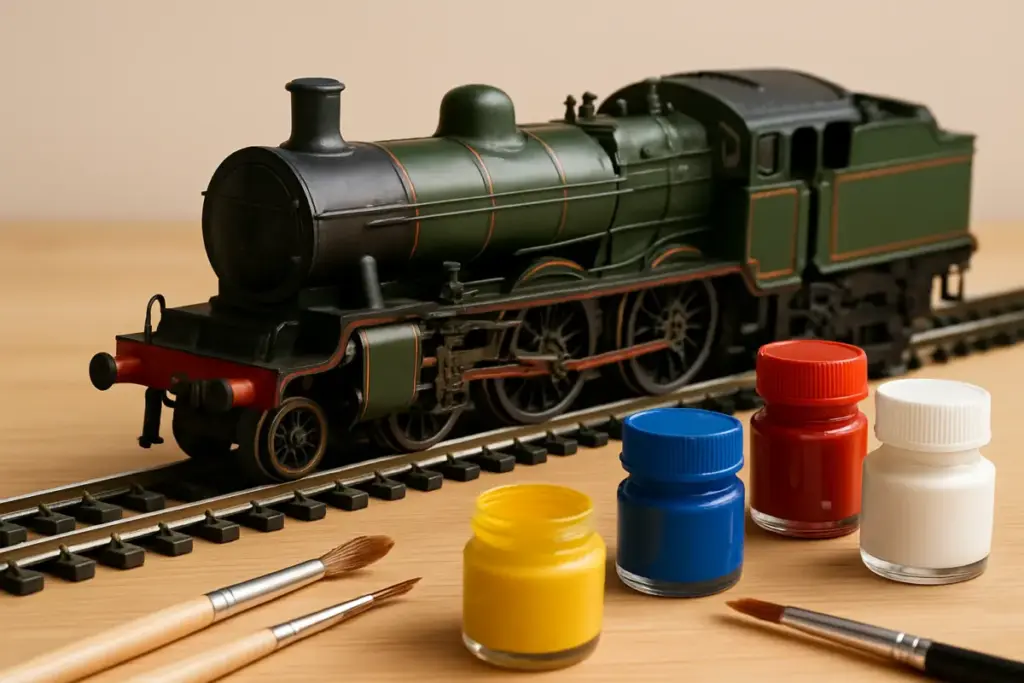
Choosing the suitable paint for your model train will be one of the most important choices you will make when starting the complex and fulfilling hobby of model train building. Paint choice influences not only your model’s appearance but also its authenticity and longevity. For each model train fan, then, knowledge of the several kinds of paints accessible and their respective benefits is absolutely necessary. First of all, you should give some thought to the content of your model train. Most model trains are constructed of plastic, metal, or some mix of both. Every material interacts differently with different kinds of paint, hence the final result can be greatly changed. For plastic models, for example, acrylic paints are sometimes preferred because of their rapid drying times and simplicity of usage. For novices especially, they are less harmful and simpler to clean as they are water-based. Moreover, acrylic paints provide a wide spectrum of colors and finishes, so enabling more inventiveness and customizing. Conversely, enamel model train paints are quite good for metal models since they are known for their glossy surface and durability. For models who will be handled often, their durability to wear and tear makes them perfect even if they take more time to cure than acrylics. Additionally offering a polished, professional surface, enamel paints help to accentuate the realism of your model train. They are solvent-based, nevertheless, hence during application they must be handled carefully and properly ventilated. Apart from the kind of model train paints, one also has to take great consideration the application technique. Especially for fine details and complex designs, brush painting is a classic method providing accuracy and control. Painting small sections or adding delicate details to your model train would especially benefit from it. But occasionally, brush strokes are obvious and, if not done skillfully, may compromise the general look. On the other hand, professional modelers often use airbrushing since it generates a smooth, even layer free of obvious brush strokes. Covering big regions and getting gradient effects call for this method. Although airbrushing calls for some degree of talent and an initial equipment cost, the outcomes can be rather profitable. To guarantee safety, airbrushing calls both a well-ventilated area and protective gear. Moreover, the finish you choose— matte, satin, or gloss—may greatly affect the visual impression of your model train. Whereas a gloss finish can make colors seem more vivid and eye-catching, a matte finish can give your model a realistic, aged appearance. A halfway ground, satin finishes give a subdued sheen that accentuates features without being unduly reflecting. Ultimately, choosing the appropriate model train paints calls for careful evaluation of various elements, including the material of the model, the type of paint, the application technique, and the desired finish. Knowing these components and how they interact will help you make wise choices that will improve the realism and attractiveness of your model train. Choosing the correct paint will surely help your model train building experience be successful and enjoyable regardless of your level of skill.Techniques For Weathering Model Trains With Paint
 Painting weathering miniatures gives miniature railroads a realistic touch and turns perfect models into lifelike copies of their full-sized counterparts. Using several painting techniques, this method replics the effects of aging, wear, and environmental exposure on trains. Modelers must grasp the subtleties of various paint kinds and application methods if they are to reach this and guarantee that every model tells a unique tale.
First of all, choosing the suitable kind of paint is rather important. Often preferred for their rapid drying times and simplicity of use are acrylic paints. Water can be used to thin them so that blending and layering are subtly possible. Conversely, enamel paints are great for producing hard-wearing surfaces and provide a strong finish. But given their lengthy drying durations and requirement for solvents, they should be handled carefully. Though less often used, oil paints are quite good for mixing and especially useful for producing rust effects.
The model surface has to be ready after the type of model train paints is decided upon. This entails giving the model complete cleaning to eliminate any oils or dust that can compromise paint adherence. Then a primer is used to guarantee a consistent base, therefore improving the lifetime and adherence of the paint. The model is ready, hence the weathering process starts.
A basic technique in weathering model trains is dry brushing. Modelers can highlight elevated details and replicate the look of worn edges by using a brush with low paint load. Replacing the appearance of chipped paint and surface blemishes is especially easy using this approach. Layering several tones of the same color can produce depth and dimension, so emulating the natural wear patterns seen on actual trains, so attaining a more complex image.
Apart from dry brushing, another indispensible method is washing. A wash, a thinned-down paint mixture, accentuates features and generates shadows by flowing into the model’s fissures and recesses. Particularly around wheel wells and undercarriages, this method is quite helpful for modeling grime and dirt accumulation. Modelers can mimic many kinds of dirt and weathering effects, from soot to mud splatters, by changing the color and consistency of the wash.
Moreover, the usage of powders and colors can improve the weathering process. Realistic textures can be created by either applying these small particles dry or combined with a substance. For example, black powder can replicate soot deposits surrounding exhausts, while rust-colored pigments can be slapped onto regions likely to corrode. Many times, fixatives are used to hold these colors in place so they stay whole over time.
At last, airbrushing provides a flexible approach for controlled application of model train paints. Perfect for copying aged paintwork and sun-bleached surfaces, this method lets for seamless gradients and subdued color transitions. Modelers can create a variety of effects from faint dusting to severe weathering by varying the airbrush’s pressure and paint flow.
Ultimately, paint-based weathering model training is a painstaking process requiring patience and repetition. Modelers can provide life to their works by learning several techniques including dry brushing, washes, and airbrushing, so recreating the spirit of actual railroads. Every technique adds to the whole tale of the model, turning it from a simple replica into a rich historical and temporal representation.
Painting weathering miniatures gives miniature railroads a realistic touch and turns perfect models into lifelike copies of their full-sized counterparts. Using several painting techniques, this method replics the effects of aging, wear, and environmental exposure on trains. Modelers must grasp the subtleties of various paint kinds and application methods if they are to reach this and guarantee that every model tells a unique tale.
First of all, choosing the suitable kind of paint is rather important. Often preferred for their rapid drying times and simplicity of use are acrylic paints. Water can be used to thin them so that blending and layering are subtly possible. Conversely, enamel paints are great for producing hard-wearing surfaces and provide a strong finish. But given their lengthy drying durations and requirement for solvents, they should be handled carefully. Though less often used, oil paints are quite good for mixing and especially useful for producing rust effects.
The model surface has to be ready after the type of model train paints is decided upon. This entails giving the model complete cleaning to eliminate any oils or dust that can compromise paint adherence. Then a primer is used to guarantee a consistent base, therefore improving the lifetime and adherence of the paint. The model is ready, hence the weathering process starts.
A basic technique in weathering model trains is dry brushing. Modelers can highlight elevated details and replicate the look of worn edges by using a brush with low paint load. Replacing the appearance of chipped paint and surface blemishes is especially easy using this approach. Layering several tones of the same color can produce depth and dimension, so emulating the natural wear patterns seen on actual trains, so attaining a more complex image.
Apart from dry brushing, another indispensible method is washing. A wash, a thinned-down paint mixture, accentuates features and generates shadows by flowing into the model’s fissures and recesses. Particularly around wheel wells and undercarriages, this method is quite helpful for modeling grime and dirt accumulation. Modelers can mimic many kinds of dirt and weathering effects, from soot to mud splatters, by changing the color and consistency of the wash.
Moreover, the usage of powders and colors can improve the weathering process. Realistic textures can be created by either applying these small particles dry or combined with a substance. For example, black powder can replicate soot deposits surrounding exhausts, while rust-colored pigments can be slapped onto regions likely to corrode. Many times, fixatives are used to hold these colors in place so they stay whole over time.
At last, airbrushing provides a flexible approach for controlled application of model train paints. Perfect for copying aged paintwork and sun-bleached surfaces, this method lets for seamless gradients and subdued color transitions. Modelers can create a variety of effects from faint dusting to severe weathering by varying the airbrush’s pressure and paint flow.
Ultimately, paint-based weathering model training is a painstaking process requiring patience and repetition. Modelers can provide life to their works by learning several techniques including dry brushing, washes, and airbrushing, so recreating the spirit of actual railroads. Every technique adds to the whole tale of the model, turning it from a simple replica into a rich historical and temporal representation.