Written by
11 min read
2,120 words
46 views
-
Table of Contents

Introduction
Getting Started With Model Trains: Essential Tips For Beginners
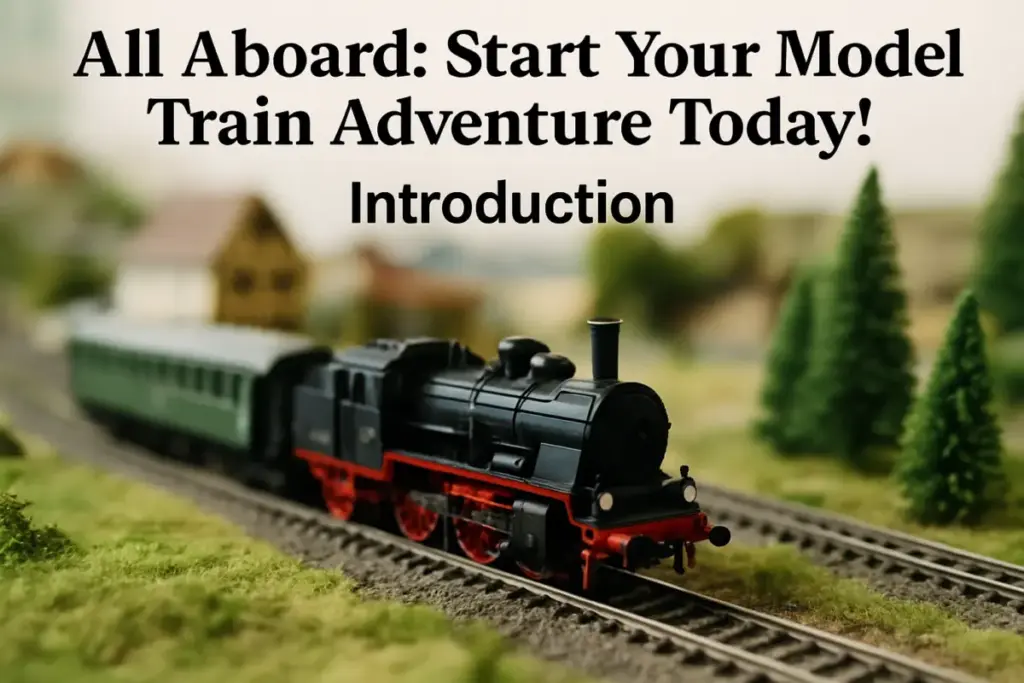
For newcomers, the prospect of collecting and constructing model trains can be both exhilarating and intimidating. Model railroading is a fascinating activity that blends engineering with art because of the rich history, creative potential, and technical complexity of the hobby. When starting out with this hobby, it’s important to know what to look for and what to avoid so that you can construct a model train setup that you’ll love. First things first: picking the correct scale is a crucial decision that will impact the whole model train journey. Popular scales include HO, N, and O, which represent the size ratio of the model train to the actual train. The most common is HO scale, which has a ratio of 1:87 and strikes a good compromise between space needs and level of detail. If you’re short on room, go with the smaller N scale (1:160) or go for the bigger O scale (1:48) for more manageable and detailed models. The required level of detail, the amount of room available, and individual taste determine the best scale to use. The following step, after deciding on the scale, is to plan the layout. The foundation of any model train arrangement is a carefully planned layout, which dictates how the trains move and interact inside the miniature world. If you’re just starting off, I recommend sticking to a basic track layout and adding features as you go. Before beginning construction, it is recommended to draw up the plan on paper or use specific software to see how everything will go together. To keep everything running smoothly and prevent derailments, things like track type, curves, and gradients need to be considered. If you want to run your model trains, picking the correct power source is just as important as the track. Digital command control (DCC) systems provide sophisticated features including multiple train operation and sound effects, and electric power is used by most modern model trains. It can be easier for newcomers to start with an analog system and then upgrade to DCC when they get more experienced. Technical difficulties can be avoided by making sure the power source, track, and trains are compatible. Additionally, when assembling a model train collection, the selection of locomotives and rolling stock is crucial. Instead than collecting a big quantity of low-quality models, beginners should concentrate on getting a few high-quality pieces. By taking this tack, one can better value the meticulous attention to detail that goes into every item. If you want to know what solutions are best within your budget, reading reviews and doing some research on other brands might help. Once the layout is in place, the next step is to add the scenery and details that will make the model train come to life. You may personalize everything from landscapes and buildings to figures and automobiles. Paint and ballast are good places for beginners to start when creating scenery, and as they gain experience, they can work their way up to more complicated techniques like weathering and lighting effects. Developing these talents requires time and experimentation, so practice makes perfect. In conclusion, there is a great deal of deliberation and preparation required to begin working with model trains. Beginning model railroaders can set themselves up for success with the right scale selection, functional layout design, compatible power system selection, and an emphasis on high-quality locomotives and scenery. If you’re looking for a hobby that can last a lifetime and help you develop your creativity and self-assurance, go no further than the world of model trains.Choosing The Right Scale: A Beginner’s Guide To Model Train Sizes
 Picking the correct scale is one of the first and most important considerations a beginner must make while starting the fascinating journey of model railroading. How big a model train is in comparison to the actual train it depicts is called its scale. Considerations including space needs, amount of detail, and budget are all affected by this choice, which in turn affects the overall experience. For this reason, it is crucial for a beginner model train fan to be familiar with the several scales that are available.
The “HO” (short for “Half O”) scale is the most common scale used by newcomers. The HO scale, with its ratio of 1:87, is perfect for beginners since it combines size with detail. The modest size of the object makes it possible to include detailed details without overwhelming the space. The abundance of components and accessories available in HO scale is a direct result of the scale’s immense popularity; this gives beginners plenty of leeway to personalize their layouts.
Moving on to a lower scale, the N scale provides a new set of benefits with a ratio of 1:160. Because it permits more complex layouts in a smaller area, this scale is especially attractive to people with limited room. N scale trains can still be very detailed despite their smaller size, and there is a wide selection of products available because of the scale’s rising popularity. In terms of space efficiency without compromising detail, the N scale is a great option for novices.
However, the O scale, which has a ratio of 1:48, may be more suited for individuals who want bigger models. This scale is well-liked by collectors and people who want to play with their models because of its sturdy build and high degree of detail. But keep in mind that O scale layouts take up a lot more room, so they might not work for everyone. O scale models and accessories also tend to be more expensive, which is something to think about for novices who are on a tighter budget.
The G scale, popular for garden railways, provides a ratio of 1:22.5 for enthusiasts who prefer an even greater scale. Because it permits large and aesthetically pleasing layouts, this scale is perfect for outdoor spaces. G scale models are great for outdoor use because of their durability, but they are expensive and take up a lot of room. Prior to committing to the G scale, novices who are interested in designing outdoor layouts should thoroughly examine these considerations.
Finally, for newcomers to the world of model trains, choosing the correct scale is a crucial step. The choice between the various sizes should be based on personal desire, available space, and price, as each has its own set of pros and cons. Novices can better realize their model train layout dreams by familiarizing themselves with the features of various scales. As one explores this fulfilling pastime further, the initial scale pick will lay the groundwork for innumerable hours of fun and creation.
Picking the correct scale is one of the first and most important considerations a beginner must make while starting the fascinating journey of model railroading. How big a model train is in comparison to the actual train it depicts is called its scale. Considerations including space needs, amount of detail, and budget are all affected by this choice, which in turn affects the overall experience. For this reason, it is crucial for a beginner model train fan to be familiar with the several scales that are available.
The “HO” (short for “Half O”) scale is the most common scale used by newcomers. The HO scale, with its ratio of 1:87, is perfect for beginners since it combines size with detail. The modest size of the object makes it possible to include detailed details without overwhelming the space. The abundance of components and accessories available in HO scale is a direct result of the scale’s immense popularity; this gives beginners plenty of leeway to personalize their layouts.
Moving on to a lower scale, the N scale provides a new set of benefits with a ratio of 1:160. Because it permits more complex layouts in a smaller area, this scale is especially attractive to people with limited room. N scale trains can still be very detailed despite their smaller size, and there is a wide selection of products available because of the scale’s rising popularity. In terms of space efficiency without compromising detail, the N scale is a great option for novices.
However, the O scale, which has a ratio of 1:48, may be more suited for individuals who want bigger models. This scale is well-liked by collectors and people who want to play with their models because of its sturdy build and high degree of detail. But keep in mind that O scale layouts take up a lot more room, so they might not work for everyone. O scale models and accessories also tend to be more expensive, which is something to think about for novices who are on a tighter budget.
The G scale, popular for garden railways, provides a ratio of 1:22.5 for enthusiasts who prefer an even greater scale. Because it permits large and aesthetically pleasing layouts, this scale is perfect for outdoor spaces. G scale models are great for outdoor use because of their durability, but they are expensive and take up a lot of room. Prior to committing to the G scale, novices who are interested in designing outdoor layouts should thoroughly examine these considerations.
Finally, for newcomers to the world of model trains, choosing the correct scale is a crucial step. The choice between the various sizes should be based on personal desire, available space, and price, as each has its own set of pros and cons. Novices can better realize their model train layout dreams by familiarizing themselves with the features of various scales. As one explores this fulfilling pastime further, the initial scale pick will lay the groundwork for innumerable hours of fun and creation.