

 Written by
 Model Trains for Beginners: How to Choose Your First Train Set
Getting into model railroading is a rewarding hobby that blends creativity, engineering, and storytelling. If you’ve searched for “model trains for beginners” or “model railroad beginner guide,” you’ve likely seen a dizzying array of scales, systems, and brands. This guide will walk you through everything you need to know to choose your first train set, plan a layout, handle wiring, and dive into model train customization and model railroad modding when you’re ready to expand. Whether you want a simple display loop or a fully scenicked micro layout, this article will help you get started with confidence.
Why Start With a Starter Set?
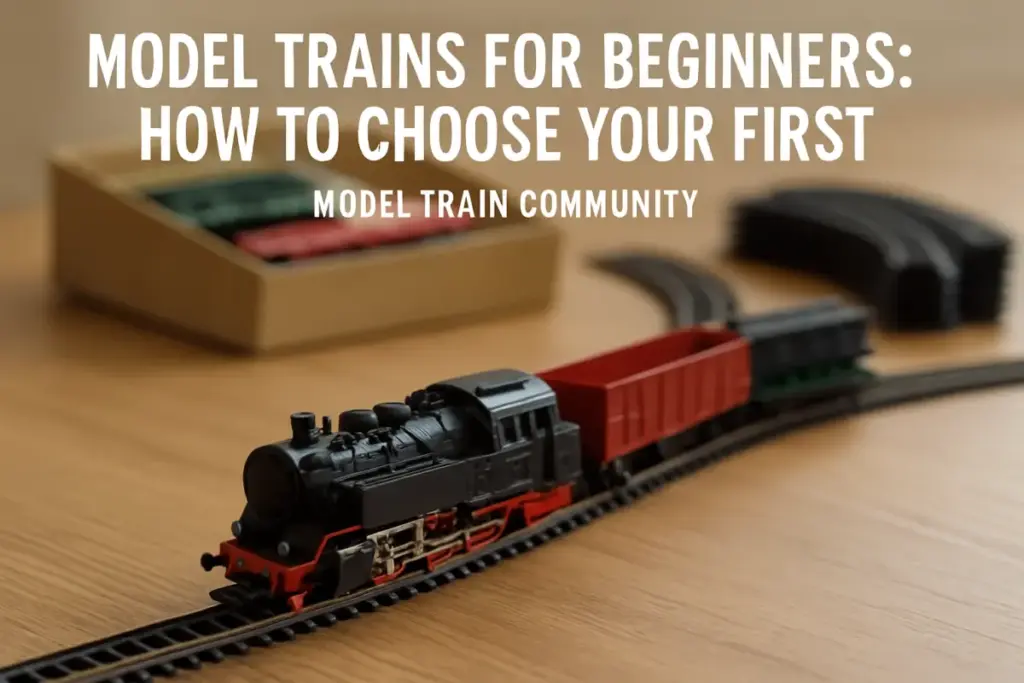
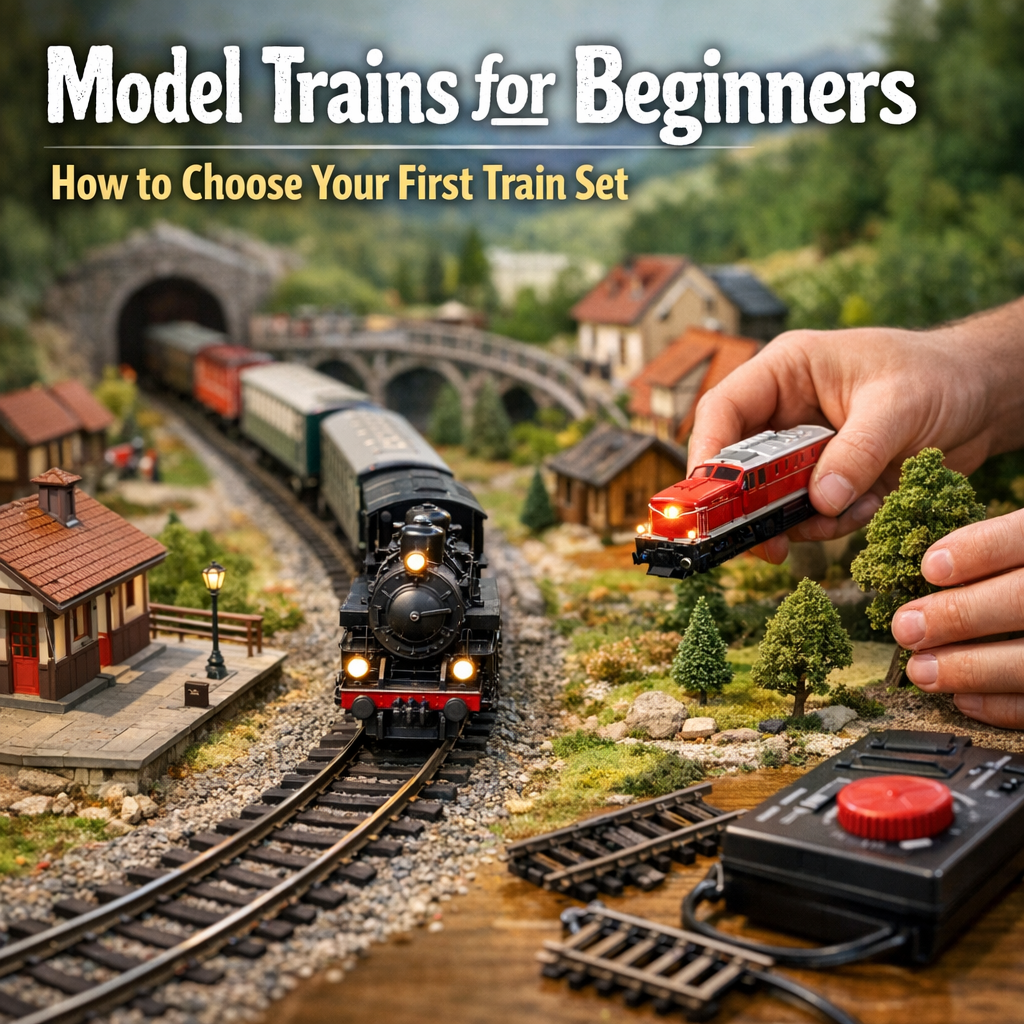
For most newcomers asking “how to start model trains,” a starter set is the safest and most economical entry point. Starter sets include:
– A locomotive and a few cars
– Track pieces to form a simple oval or loop
– A power pack (controller)
– Sometimes basic scenery items
Starter sets let you learn the basics—assembly, trackwork, basic electronics, and operations—without a large upfront investment. They also help you decide what scale and style you enjoy before committing to a full layout.
Choosing a Scale: Which One Is Right for You?

One of the first choices is scale—the ratio of model size to real-world prototype. Here are the common scales, pros, and who they’re best for:
– Z scale (1:220)
– Pros: Smallest, fits dramatic layouts in tiny spaces.
– Cons: Small parts can be fragile; less variety in products.
– Best for: People with very limited space or who enjoy micro layouts.
– N scale (1:160)
– Pros: Good balance between detail and space efficiency.
– Cons: Fine detail requires careful handling.
– Best for: Those who want long runs and complex track in moderate space.
– HO scale (1:87)
– Pros: Most popular; huge range of products and accessories; good detail.
– Cons: Requires more space than N, but still manageable.
– Best for: Beginners who want variety and community support—recommended for many newcomers.
– O scale (1:48)
– Pros: Large, durable, great detail and presence.
– Cons: Requires significant space; often more expensive.
– Best for: Display-oriented hobbyists or those nostalgic for classic layouts.
– G scale (Garden, ~1:22.5)
– Pros: Weatherproof outdoor use; dramatic scenery; easy to handle.
– Cons: Large and expensive; outdoor considerations.
– Best for: Garden railroads and outdoor installations.
Tip: If you’re unsure, HO is often the sweet spot. It’s the most popular scale for beginners and has the largest selection of ready-to-run starter sets.
Decide Between DC and DCC: What’s the Difference?
A major technical choice that affects future upgrades is whether to start with traditional DC (Direct Current) or DCC (Digital Command Control).
– DC (Analog)
– How it works: Voltage on the track controls speed; power is shared by all locomotives on a track segment.
– Pros: Simple and inexpensive for small setups; easy to get started.
– Cons: Running multiple independent trains is complicated; adding realistic operations requires block wiring and switches.
– DCC (Digital Command Control)
– How it works: Digital signals on the rails let a command station control individual locomotives via onboard decoders.
– Pros: Easy to run multiple engines independently; advanced features like sound and lighting; scalable for operations.
– Cons: Higher initial cost; steeper learning curve.
For many beginners who want an operational layout and plan to keep the hobby long-term, starting with a DCC-ready set or choosing DCC later can be wise. Many starter locomotives are “DCC ready” (have socket or space for a decoder); you can run them on DC and upgrade later.
Starter Sets to Consider (Examples)
– Bachmann E-Z Track Starter Sets (HO/N): Includes track, locomotive, cars, and E-Z track that’s beginner-friendly.
– Kato Unitrack Starter Sets (N/HO): Excellent track quality and secure connections.
– Hornby Select Starter Sets (OO scale): Popular in the UK; good starter value.
– Lionel Pennsylvania Flyer (O gauge): Classic beginner set for O gauge, often DC or basic DCC-compatible.
– Hornby/Rivarossi/Bachmann Thomas & Friends or themed sets: Great for kids and family projects.
Buy from reputable brands that support parts and have community resources. Read reviews and watch setup videos for the specific starter set you’re interested in.
Planning Your First Layout
Even a simple oval can be delightful, but a little planning goes a long way. Here’s how to think about layout design:
– Start small and modular
– Example: A 4×8-foot HO layout can show lifelike scenes and a continuous run.
– Consider N scale if space is tighter—an N 4×8 can be very expansive.
– Choose a theme and era
– Prototype (based on a real place and railroad) or freelance (fictional but realistic).
– Era affects rolling stock and locomotive selection (steam vs diesel vs modern).
– Basic trackplans for beginners
– Oval with siding for passing and staging.
– Point-to-point shelf layout for simple operations.
– Dogbone layout maximizes run length in a compact footprint.
– Benchwork and modules
– Plywood or foam base? Plywood is sturdy; extruded foam is lighter and easier to carve for scenery.
– Modular standards (like NTrak or Free-mo) let you build pieces that connect at shows or with friends.
Example simple HO plan:
– 4×8 plywood base
– Oval mainline using starter track with one siding and a small yard
– Town scene on one side, hillside with industry on the other
– Total runtime: several minutes with a single locomotive, with visual interest added by passing cars and a small station
Track and Wiring Basics
Good trackwork is foundational.
– Track types
– Snap-track vs sectional vs flex track. Flex track allows smoother curves and more prototypical layouts.
– For HO/N, brands like Peco, Atlas, and Kato provide high-quality track.
– Trackwork tips
– Ensure tight, clean rail joints; use rail joiners and check electrical continuity.
– Use a track plan and lay a roadbed (foam or cork) under track for realism and noise reduction.
– Wiring essentials (basic DC)
– Power pack to track feeder wires.
– For a small layout, two feeder wires at opposite ends reduce voltage drop.
– Wiring essentials (basic DCC)
– Command station connects to track, with decoders in locomotives.
– DCC is more forgiving with wiring—fewer isolated blocks required, but good feeders and consistent power are still important.
– Tools you’ll need
– Soldering iron (for connecting feeders)
– Small pliers, rail cutters, track gauge, multimeter
– Hobby knife and glue gun
If all wiring sounds intimidating, many starter sets eliminate complex wiring by including pre-wired track with a single plug-in for power.
Rolling Stock and Locomotives: What to Buy First
Start with a locomotive that suits your theme and a few cars.
– Locomotive considerations
– Power and pulling capacity—DC locomotives vary; in DCC, ensure the decoder is installed and configured.
– Wheel pickup—more powered axles equal smoother running.
– Sound and detail—nice to have but costs more.
– Types of cars and why they matter
– Freight cars: enable switching operations (shunting).
– Passenger cars: good for scenic, timetable-based operation.
– Specialty cars (tank, hopper, flat) add industry-specific interest for switching.
Example beginner roster:
– 1 diesel or modern steam locomotive (DCC-ready if possible)
– 1-2 freight gondolas or boxcars
– 1 caboose (for nostalgia) or a passenger coach
– 1 tank car or hopper to represent an industry
Scenery, Buildings, and Detailing
One of the most creative aspects of model railroading is scenery. Start simple and grow complexity.
– Basic scenery steps
– Paint the baseboard with earth tones.
– Lay ground cover using scenic glue (white glue diluted 50/50).
– Add roads and small buildings—ready-to-run kits make this fast.
– Trees, grass, and water
– Use foam or plaster for terrain; static grass, turf, and clump foliage for vegetation.
– Resin or realistic water products can create ponds and rivers.
– Weathering and realism
– Weathering powders, acrylic washes, and dry brushing make models look lived-in.
– Ballast the track with appropriate-scale ballast glued with diluted white glue.
– Example small scene: a single-industry siding (a coal dealer or feed mill) with a simple loading trestle, a small office building, and a gravel drive creates lots of operational interest for little effort.
Custom Model Trains and Model Train Customization
As you get comfortable, you’ll want to personalize your trains. Custom model trains and model train customization can include painting, kitbashing, decaling, and adding electronics.
– Painting and decaling
– Remove parts for painting; use primer and thin acrylic or enamel paints.
– Apply decals using decal-setting solution; seal with matte or gloss varnish.
– Kitbashing
– Combine parts from multiple kits or spare parts to create unique rolling stock or structures.
– Example: Combine two freight car bodies to make a longer special car, or swap truck assemblies for more prototypical detail.
– 3D printing and scratchbuilding
– 3D printing is a growing frontier for custom parts like unique signs, couplers, or small buildings.
– Scratchbuilding with styrene or basswood lets you create custom structures that match your scene.
– Electronics and LEDs
– Add LED lighting to cabooses, passenger cars, and buildings.
– Create circuits for signals and crossing gates.
– Example starter customization project
– Upgrade a starter locomotive: install a small DCC decoder (or sound decoder), add LED headlights, and apply subtle weathering to the body.
Model Railroad Modding: Tech Upgrades and Automation
Model railroad modding goes beyond cosmetic changes into tech and automation—perfect for tinkerers and those wanting more realistic operations.
– Sound decoders and speakers
– Adds engine whistles, horns, bell, and ambient sounds.
– Requires space in the locomotive shell and a small speaker.
– Turnout motors and remote control
– Motorize turnouts (switches) with solenoid or slow-motion motors and control them remotely.
– Useful for yard control and automated operations.
– Block detection and signaling
– Use current-sensing detectors for occupancy detection and connect to signals or a computer.
– Computer control and software
– JMRI (Java Model Railroad Interface) is an open-source platform for programming decoders, throttle control, and automation.
– DCC systems can integrate handheld throttles, WiFi throttles, and apps.
– Example mod: automated switching
– Use a microcontroller (Arduino) to sequence turnout changes and signal aspects for a small yard, triggered by train detection.
Buying Used vs New
Buying used can stretch your budget and gives you access to older, well-built models, but inspect carefully.
– What to check when buying used
– Smooth operation of the locomotive (drive train, wheel pickup).
– Condition of wheels and couplers.
– Rust, cracked bodies, and missing parts.
– Where to find used gear
– Local hobby shops, train shows, online marketplaces, and club sales.
– Many hobbyists sell well-maintained locomotives that are great bargains.
– When to buy new
– For electronics (DCC decoders, new locomotives with warranties) or when you want the latest features and manufacturer support.
Budgeting: What to Expect to Spend
Your budget will determine how fast you move from a simple loop to a fully scenicked layout.
– Entry-level starter set: $100–$300
– Basic tools and glue: $30–$100
– DCC starter system: $200–$600 (depends on brand and features)
– Track for a small 4×8 layout: $100–$250 (using quality sectional or flex track)
– Scenery materials: $50–$300 depending on complexity
– Locomotive upgrades (decoders, sound): $40–$200 each
– Total small layout: $400–$1,500 realistic range for a satisfying first project
Spend slowly and prioritize quality for track and locomotives—cheap track can cause poor electrical contact and frustration.
Maintenance and Troubleshooting
Routine maintenance keeps your trains running and reduces headaches.
– Track cleaning
– Wipe rails with a track-cleaning pad or alcohol; use a stiff nylon brush for grime.
– Perform regular visual inspections for misaligned joints.
– Wheel and coupler cleaning
– Wheels should be clean for electrical pickup; use a track/rivet eraser or isopropyl alcohol.
– Lubricate gears lightly with plastic-safe oil.
– Common issues and fixes
– Stalling or intermittent power: check dirty wheels, bad rail joints, or poor wiring.
– Poor pickup on turnouts: add additional feeders or clean the frogs.
– DCC programming problems: double-check decoder addresses and wiring.
Joining the Community: Clubs, Forums, and Learning Resources
Model railroading has a supportive community that can help you progress faster.
– Clubs and layout tours
– Local clubs often have modular layouts and mentor programs for beginners.
– Attend open house tours to see layouts in person and get ideas.
– Online resources
– Forums: Model Railroader, TrainBoard, Reddit’s r/modeltrains
– YouTube channels: look for step-by-step scenic tutorials and wiring guides.
– Software: JMRI for DCC integration and planning.
– Publications and events
– Model Railroader magazine, Railroad Model Craftsman, and local train shows.
Joining a club or online forum is one of the fastest ways to learn troubleshooting tips, discover shops, and find used gear.
A Simple 90-Day Plan to Get Started
If you’re ready to start, here’s a practical plan to follow.
– Week 1: Research and choose your scale
– Visit a local hobby shop or club; pick a starter set and buy basic tools.
– Weeks 2–3: Set up your starter set and run the train
– Assemble track, power up, and practice basic operations.
– Weeks 4–6: Plan a small layout and gather materials
– Draft a simple trackplan for a 4×8 or shelf layout and buy track, power supply, and one additional turnout.
– Weeks 7–8: Build the benchwork and lay track
– Construct a base (plywood or foam) and lay and wire the track.
– Weeks 9–12: Add scenery and practice operations
– Paint baseboard, add ballast, place buildings, and try simple switching or timetabled runs.
This approach breaks the hobby into manageable steps and keeps costs spread out.
Safety and Best Practices
– Use lead-free solder and well-ventilated spaces when soldering.
– Keep small parts away from children and pets.
– Use proper lighting and magnification for fine work.
– Label wires and keep an organized workspace to avoid mistakes.
Final Tips for Choosing Your First Train Set
– Pick a scale that fits your space and tastes—HO is a safe choice for most.
– Start with a reputable starter set and invest in quality track.
– Consider DCC if you want realistic operations and plan to run multiple trains.
– Learn basic maintenance early to avoid frustration.
– Explore custom model trains and model train customization gradually as your skills grow.
– Don’t be afraid to buy used—inspect items carefully or ask for videos from sellers.
– Join a club or online community for support and inspiration.
Conclusion
Starting in model railroading is an exciting journey where small investments and steady learning lead to a deeply rewarding hobby. Whether you begin with a simple starter set or jump into DCC and model railroad modding, the most important thing is to enjoy the process: run trains, build scenes, and gradually customize your roster and landscape. Use this model railroad beginner guide as your roadmap—plan your space, pick the right scale, learn basic wiring and maintenance, and expand into custom model trains and modding when you’re ready. Happy railroading!

