


 Written by
 Layout Storage Solutions: Stunning, Effortless Ideas for Model Railroad Planning
Model railway layout planning becomes much easier when storage is treated as part of the design, not an afterthought. A well-planned layout can look impressive, stay organized, and remain practical to build, expand, and maintain over time. For many enthusiasts, the challenge is not only creating a realistic scene for model trains, but also making sure tools, track pieces, scenery materials, and rolling stock all have a dedicated place. Good storage solutions reduce clutter, protect delicate components, and make every session more enjoyable.
A thoughtful approach to storage can also improve the overall quality of your build. When everything has a home, you spend less time searching for parts and more time refining your model railroad. Whether you are working on a compact shelf layout or a large basement empire, smart storage can help you achieve a cleaner workspace and a more polished final result.
Why Storage Matters in Model Railroad Layout Design

Storage is one of the most overlooked parts of model railroad layout design, yet it has a major impact on how smoothly a layout functions. Track sections, uncouplers, scenic materials, paint, wiring supplies, and locomotives all require safe and accessible storage. Without it, even the most creative model train layout ideas can become frustrating to execute.
Proper storage helps in several ways:
– Protects delicate model trains from dust and damage
– Keeps tools and supplies easy to find
– Prevents clutter from interfering with construction and maintenance
– Makes future expansion simpler
– Helps maintain a realistic and visually appealing layout area
When storage is built into your planning process, the entire hobby becomes more manageable.
Smart Model Train Layout Ideas That Include Storage
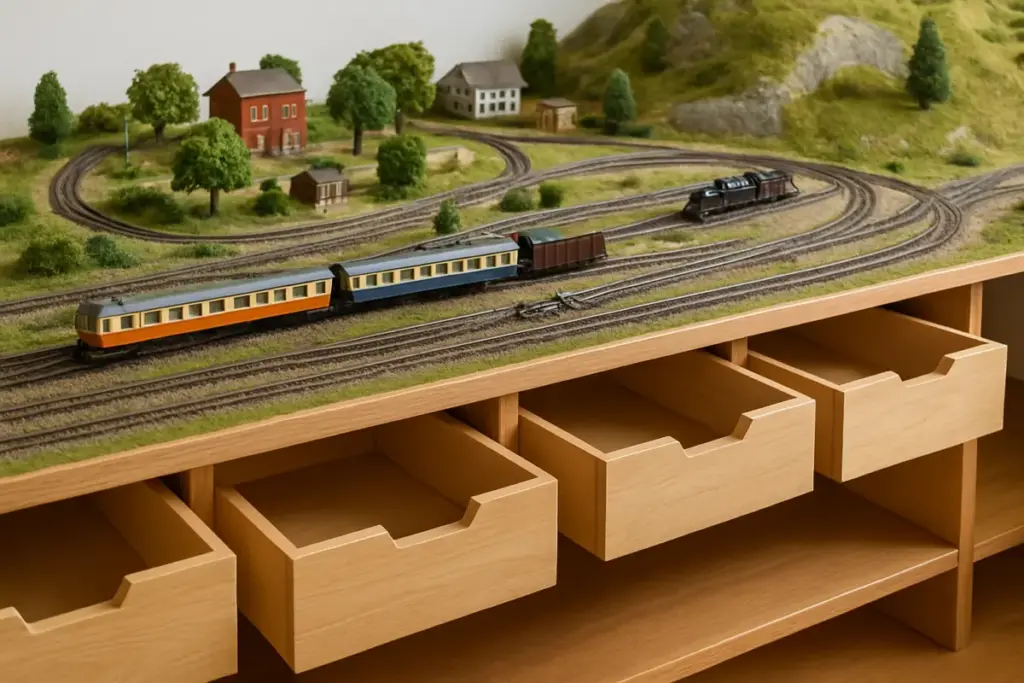
There are many clever ways to combine layout features with storage. The best model train layout ideas often use space efficiently while keeping the layout attractive and functional. Here are some practical approaches to consider.
Use the Baseboard for Hidden Storage
If your layout is elevated, the area beneath it can become valuable storage space. Rolling carts, drawer units, and labeled bins can fit under the layout without affecting scenery above. This is especially useful for model railroad layout planning in smaller rooms where every square foot counts.
You can store:
– Extra scenery supplies
– Tools and adhesives
– Spare locomotives and rolling stock
– Track components
– Manuals and wiring diagrams
Make sure items are stored in sealed containers if dust is a concern.
Build Drawers Into the Workbench
A workbench near your layout can serve as both a building station and a storage hub. Shallow drawers are ideal for small parts such as couplers, screws, decals, and electronic components. Deeper drawers can hold larger tools or unfinished projects.
This setup supports a more efficient workflow, since your essential materials are always close at hand. It also helps keep your model railroad workspace tidy and focused.
Integrate Shelving Along the Walls
Wall-mounted shelves are a simple and attractive solution for organizing supplies. Clear bins, labeled boxes, and display cases can all be arranged neatly without taking up floor space. This is a great option for hobby rooms where the layout occupies most of the center area.
Shelving also lets you showcase finished locomotives, structures, and scenic pieces. In this way, storage becomes part of the room’s presentation rather than something hidden away.
Choose Modular Storage Units
Modular storage is one of the most flexible options for model railway layout planning. Stackable containers, movable drawer towers, and adjustable shelving systems can evolve as your collection grows. This is especially helpful if your model trains and accessories expand over time.
Modular units make it easier to reorganize your room without major rebuilding. If your layout design changes, your storage can adapt with it.
Practical Model Railroad Layout Planning Tips for Better Organization
Good organization starts with planning. Before construction begins, it helps to think about where items will live during each stage of the project. Effective model railroad layout planning should include designated zones for building, storage, display, and maintenance.
Here are a few useful tips:
– Group similar items together, such as electrical supplies or scenery materials
– Label every bin and drawer clearly
– Keep frequently used tools within arm’s reach
– Store seasonal or rarely used items higher up or farther away
– Reserve one area for active projects and another for finished pieces
By organizing your space around how you actually work, you can reduce interruptions and make hobby time more productive.
Storage Ideas for Different Types of Model Trains and Accessories
Not all model trains and accessories require the same kind of storage. Some items are large and sturdy, while others are highly fragile. Matching storage methods to the item helps preserve quality and extend the life of your collection.
Locomotives and Rolling Stock
These should be stored in their original packaging when possible, especially if you need long-term protection. Foam-lined boxes, plastic display cases, and drawer inserts can also work well. Avoid stacking items loosely, as this can lead to broken details or bent couplers.
Track and Electrical Components
Track pieces can be grouped by type and length in labeled containers. Electrical items such as wires, switches, controllers, and connectors should be separated by function. Small parts organizers are especially useful here.
Scenic Materials and Structures
Foam, trees, ground cover, and building kits are best stored in dry, sealed containers. Fragile completed structures can be kept in display cabinets or padded boxes to prevent dust and impact damage.
Keeping the Layout Area Clean and Accessible
A beautiful model railroad depends on more than impressive scenery. Accessibility matters just as much. If storage is difficult to reach, items will eventually pile up in the wrong places. Aim to make every storage solution easy to use in daily practice.
A few habits can make a big difference:
– Return tools to the same place after each session
– Keep a small trash bin nearby for packaging and scrap material
– Schedule periodic cleanup days
– Reassess storage as your collection changes
Consistency is the key to long-term organization.
Combining Style and Function in Model Railroad Layout Design
The best storage solutions do more than hold supplies—they complement the layout itself. Cabinets can be finished to match the room’s decor. Shelves can frame the layout visually. Drawers can disappear beneath the scene, preserving the illusion of a real miniature world.
This balance between style and function is what makes model railroad layout design so rewarding. Storage should support the hobby without drawing attention away from the trains, scenery, and storytelling.
Final Thoughts
Stunning, effortless layout storage solutions are not about adding more furniture or hiding everything out of sight. They are about creating a system that supports creativity, efficiency, and enjoyment. With the right approach to model railroad layout planning, you can protect your collection, streamline your workflow, and keep your space visually appealing.
Whether you are just starting to explore model train layout ideas or refining an advanced model railroad, smart storage will make every part of the process easier. By planning for organization from the beginning, you set yourself up for a layout that is not only impressive, but also practical and enjoyable for years to come.

