

 Written by
 Model Railroad Track Planning: Stunning Best Layout Ideas for Custom Trains
Model railroad track planning is the foundation of every memorable layout. Whether you are building a compact tabletop scene or a large basement empire, the way you design your track determines how realistic, enjoyable, and expandable your railway will be. A thoughtful plan helps you balance aesthetics, operation, space, and creativity while giving your custom model trains the perfect stage to run on.
Many hobbyists begin with a few pieces of track and a dream, only to discover later that poor planning limits movement, creates bottlenecks, or leaves little room for scenery. That is why model train track design matters so much. It is not just about connecting rails; it is about creating a miniature world that looks believable and operates smoothly. With the right approach, you can turn a simple layout into a stunning display full of action, detail, and personality.
Why Model Railroad Track Planning Matters

A strong layout starts long before the first piece of track is placed. Proper model railroad track planning helps you avoid common problems such as steep grades, sharp curves, awkward access points, and unrealistic traffic flow. It also makes it easier to decide what kind of railroad you want to build.
For example, are you more interested in continuous running so trains can circle endlessly, or do you want switching operations that mimic real freight work? Do you want a mountain town, an industrial district, or a modern intermodal yard? Your answers will shape the track plan and influence everything from scenery placement to locomotive selection.
Good planning also supports future model train customization. If you know you want to add special rolling stock, digital controls, signal systems, or a custom-painted locomotive fleet later, your layout should include room for those upgrades from the start.
Popular Train Track Layout Ideas for Any Space

When exploring train track layout ideas, it helps to think in terms of your available space and goals. Different plans work better for different room sizes and operating styles.
Oval and Loop Layouts
The classic oval is simple, reliable, and perfect for beginners. It allows trains to run continuously and is ideal for displaying scenic detail. While it may seem basic, an oval can still be made interesting with sidings, small towns, bridges, and elevation changes.
Figure-Eight Designs
A figure-eight adds visual interest by crossing tracks and creating the illusion of a longer route. This is a great choice if you want trains to appear as though they are traveling through a more complex landscape without requiring a huge footprint.
Point-to-Point Plans
If you enjoy operation and realism, a point-to-point layout may be the best option. Trains travel from one destination to another, just like on a real railroad. This style works especially well for custom freight operations, passenger service, and switching chores.
Around-the-Walls Layouts
These layouts use the perimeter of a room and make excellent use of space. They are ideal for larger setups where you want multiple scenes, yards, and industries without sacrificing aisle access.
Shelf Layouts
Shelf plans are narrow but highly detailed. They are often used by modelers who want a realistic industrial branch, short line, or city scene. Shelf layouts are perfect for hobbyists who enjoy model railroad modding and want to focus on realism over size.
Building Around Custom Model Trains
If you are investing in custom model trains, your track plan should showcase them properly. A beautifully detailed locomotive deserves curves, scenery, and operations that allow it to stand out. In many cases, the layout itself becomes part of the custom experience.
For instance, a weathered steam engine looks stunning on a mountain line with tunnels, trestles, and rock faces. A modern diesel set may look best on a sleek mainline with long sidings, warehouses, and signal towers. Passenger trains benefit from stations, platforms, and urban details, while freight trains look more authentic when serving industries, railyards, and loading areas.
Custom equipment often reflects specific eras or railroads, so your track plan should match the theme. A well-matched scene enhances the realism and gives your collection a stronger visual story.
Smart Model Train Track Design Tips
Effective model train track design is both creative and practical. Here are a few principles that can improve nearly any layout:
– Keep curves smooth: Wide curves look better and reduce derailment risk, especially with longer cars.
– Plan for access: Make sure you can reach all parts of the track for maintenance and repairs.
– Add passing sidings: These create operational interest and allow trains to meet or overtake each other.
– Avoid steep grades: Trains pull better on gentle inclines, and realistic slopes look more natural.
– Use hidden staging wisely: Hidden tracks can make the layout feel like part of a larger network.
– Think in scenes: Break the layout into believable sections like a town, forest, yard, or industrial area.
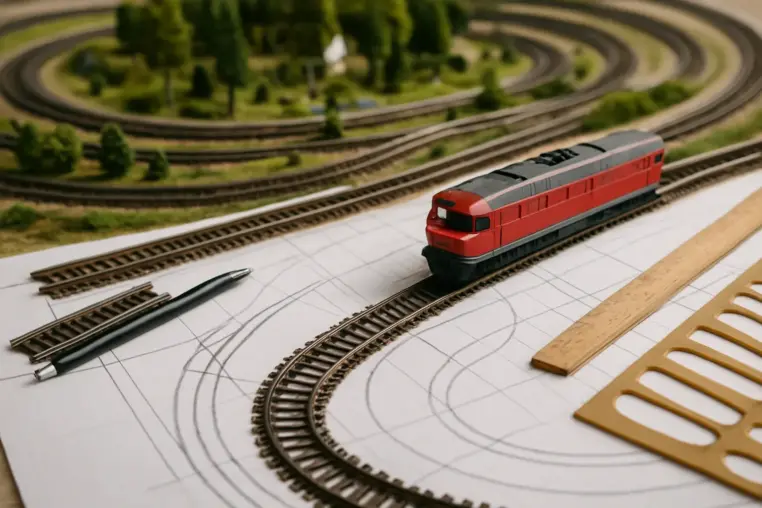
It also helps to sketch your plan before building. Many hobbyists use graph paper, digital layout software, or cardboard templates to test ideas. This early stage is where you can experiment freely and refine your vision before committing to track.
The Role of Model Railroad Modding
Model railroad modding can take a layout from good to exceptional. Once your track plan is in place, modding allows you to improve performance, realism, and visual appeal. This might include installing better turnouts, upgrading wiring, adding signals, integrating DCC controls, or customizing locomotives and cars.
Modding also supports more advanced operating styles. For example, you can add uncoupling magnets, switching controls, sound systems, or automation features that make the railroad feel more alive. The more carefully your track is planned, the easier it becomes to incorporate these upgrades later.
For many hobbyists, model railroading is not only about running trains but also about building and improving them. That is where the creative satisfaction of modding becomes especially rewarding.
Creative Layout Features That Stand Out
If you want your layout to feel truly special, include features that create movement and drama. Some standout ideas include:
– A mountain pass with tunnels and bridges
– A harbor scene with freight transfer
– A busy downtown station
– A yard full of switching activity
– A rural branch line with small industries
– A freight terminal with multiple delivery points
These details add purpose to the track and help your railroad tell a story. Even a modest layout can feel impressive if every section has a clear function and visual identity.
Final Thoughts
Strong model railroad track planning turns an ordinary set of rails into a miniature transportation system with character, purpose, and visual appeal. By combining thoughtful model train track design with practical operation and creative scenery, you can develop a layout that reflects your interests and showcases your custom model trains beautifully.
Whether you prefer classic train track layout ideas, detailed switching districts, or ambitious model railroad modding projects, success begins with a plan. Take time to design with intention, build with patience, and leave room for future model train customization. The result will be a layout that not only runs well but also inspires admiration every time it is switched on.

