


 Written by
 Scale Conversion Guide: Best Model Train Scales for Beginners
Model trains for beginners often start with one big question: which scale should you choose? The answer matters more than many new hobbyists realize, because the scale you pick affects everything from layout size and budget to detail level and ease of handling. If you’re trying to figure out how to start model trains, understanding the most common model train scales is the best first step.
A beginner-friendly layout should be fun to build, simple to maintain, and realistic enough to keep you interested as your skills grow. That’s why this guide focuses on the scales most commonly recommended for newcomers, especially HO scale trains and N scale trains. Whether you want a compact layout for a small room or a larger setup with easier handling, this model railroad beginner guide will help you make a smart choice.
What Are Model Train Scales?

Model train scales refer to the size ratio between a model train and the full-size prototype it represents. For example, a train in 1:87 scale is 87 times smaller than the real thing. Different scales offer different advantages depending on your goals, available space, and comfort level with building small details.
For beginners, the most important thing to understand is that scale is not just about size. It also affects:
– How much space your layout will need
– How detailed the trains and scenery can be
– How easy it is to work with track, wiring, and rolling stock
– How much items may cost
– How realistic the overall setup can look
Smaller scales make it easier to fit more railroad into less space, while larger scales can be easier to handle and detail. There’s no single “best” scale for everyone, but there is usually a best scale for your specific situation.
HO Scale Trains: The Most Popular Choice for Beginners
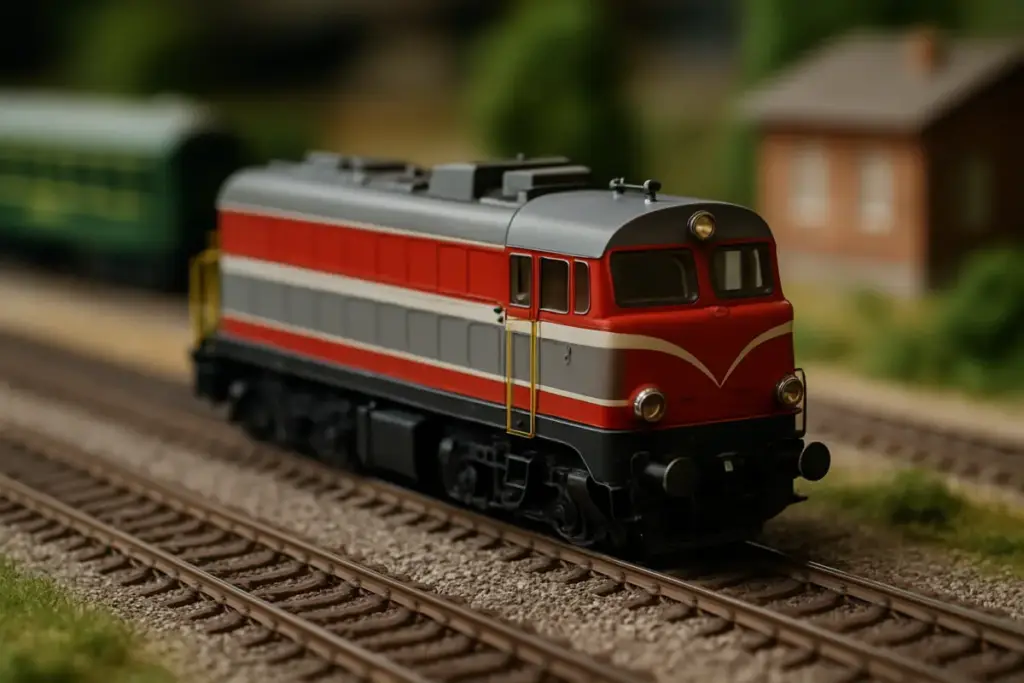
If you are just getting into the hobby, HO scale trains are often the first recommendation you’ll hear. HO scale is 1:87, which makes it large enough to handle comfortably but small enough to fit a decent-sized layout in a bedroom, basement, or spare room.
Why HO Scale Works Well for Newcomers
HO has become the most widely used scale in model railroading for several practical reasons:
– Wide product availability: You can find locomotives, freight cars, passenger cars, track, buildings, and accessories in many styles and price ranges.
– Good balance of size and detail: HO models are small enough to create a realistic scene without needing a huge amount of space.
– Easy to learn on: The trains are large enough for many beginners to handle without too much frustration.
– Strong community support: Because HO is so popular, tutorials, forums, and beginner advice are easy to find.
HO Scale Limitations
Even though HO is a great starting point, it does have a few drawbacks:
– It still requires a fair amount of space for longer trains and broad curves.
– It may not be ideal if you only have a very small apartment or tabletop area.
– Detail parts can be small enough to challenge beginners who have shaky hands or limited tools.
Still, for many people, HO offers the best mix of realism, affordability, and ease of use. If you want a scale with plenty of options and a manageable learning curve, it’s a strong place to begin.
N Scale Trains: Best for Small Spaces
N scale trains are another excellent choice for beginners, especially if room is limited. N scale is 1:160, which makes the trains much smaller than HO. That smaller size allows you to build larger-looking layouts in a compact area.
Why Beginners Choose N Scale
N scale is especially appealing if you want:
– More track and scenery in less space
– The ability to model mountains, long mainlines, and large rail scenes in a small room
– A modern, detailed layout without needing a large table or dedicated basement
For apartment dwellers or hobbyists with limited space, N scale can be a practical and exciting option. A small footprint can still produce a layout that feels expansive and realistic.
N Scale Challenges
N scale trains are smaller and can be trickier for some beginners. Common challenges include:
– Handling tiny parts and couplers
– More delicate track work and scenery
– Slightly more difficult maintenance and cleaning
– Greater frustration if your vision or dexterity is limited
That doesn’t mean N scale is hard to learn, only that it rewards patience and careful setup. If you enjoy fine detail and want maximum railroad in minimal space, N scale may be the better option.
Comparing Model Train Scales for Beginners
When choosing between HO scale trains, N scale trains, and other model train scales, it helps to compare them based on beginner priorities.
Space
– HO scale: Needs moderate space
– N scale: Ideal for small spaces
– Larger scales: Need significantly more room
Ease of Handling
– HO scale: Easier to grip and work with
– N scale: Smaller and more delicate
Detail
– HO scale: Offers a strong balance of detail and size
– N scale: Can still look very realistic, though details are smaller
Cost
Costs vary by brand and quality, but in general:
– HO has many budget-friendly options
– N scale can be affordable, but small parts and specialized items may add complexity
– Larger scales often cost more overall due to size and materials
Layout Possibilities
– HO scale: Great for a balanced layout with reasonable space requirements
– N scale: Best if you want a large-looking railroad in a compact footprint
How to Start Model Trains: A Beginner’s Practical Approach
If you’re still wondering how to start model trains, begin with a simple plan instead of buying everything at once. Too many beginners overthink the setup and end up spending money on items they don’t need yet.
Here’s a simple approach:
1. Choose your scale
Pick HO or N based on your available space, budget, and comfort level.
2. Set a layout size
Start small. A simple oval, figure-eight, or switching layout is enough for learning.
3. Buy quality basics
Focus on a locomotive, a few cars, track, and a power pack or digital controller.
4. Practice track assembly
Build and test the track before adding scenery.
5. Add scenery later
Start with the train running reliably, then add buildings, roads, grass, and trees.
6. Learn from the hobby community
Beginner videos, local clubs, and online forums can save time and money.
Starting small helps you build confidence. The goal is not to create a massive railroad on day one. It’s to enjoy the process and grow your skills naturally.
Best Model Train Scales for Beginners
If you want the simplest recommendation, here it is:
– Choose HO scale trains if you want the most popular beginner-friendly option with strong availability and a good size-to-space balance.
– Choose N scale trains if your space is limited and you want to model more railroad in less room.
For most newcomers, HO is the easiest all-around starting point. For those working with very limited space, N scale is often the smartest choice. Both are excellent model trains for beginners when matched to the right environment and expectations.
Final Thoughts
Learning about model train scales is one of the most important parts of getting started in the hobby. The right scale can make the difference between a layout that feels fun and one that feels frustrating. HO scale trains remain the top choice for many beginners because they are versatile, widely available, and easier to handle. N scale trains, meanwhile, are a fantastic solution for hobbyists who need to conserve space without giving up realistic operation.
If you’re following a model railroad beginner guide, focus first on your space, your goals, and how much detail you want to manage. Once you choose the scale that fits your needs, the rest of the hobby becomes much easier to enjoy. The best way to begin is simply to start small, stay curious, and build one successful step at a time.

