

 Written by
 Model Train Track Design: Best Layout Ideas for HO and N Scale
Model train track design is one of the most rewarding parts of building a model railroad. A well-planned layout can turn a simple shelf, table, or basement space into a believable miniature world full of movement, scenery, and operating interest. Whether you are working with HO scale trains, N scale trains, or comparing different model train scales, the right design choices will help you make the most of your available space and create a layout that is fun to run for years.
Understanding the Basics of Model Railroad Track Planning
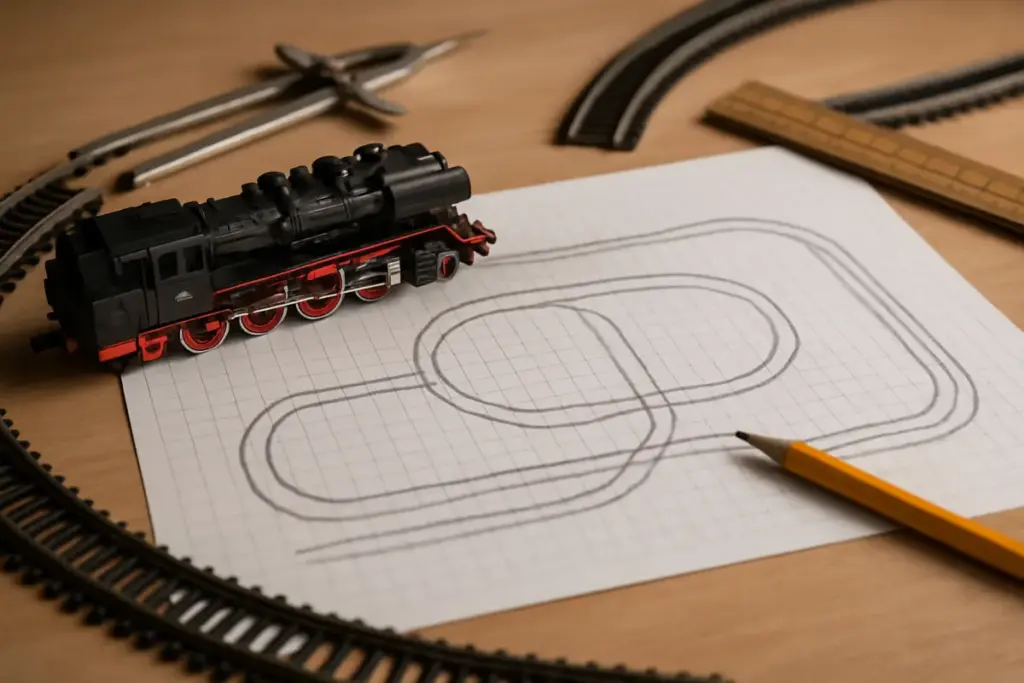
Before laying a single piece of track, it helps to think through the goals of your railroad. Good model railroad track planning is not just about fitting rails into a space. It is about deciding what kind of operation you want, how realistic you want it to feel, and how much room you have for scenery, structures, and maintenance access.
Some modelers prefer continuous running so trains can circle the layout while others enjoy switching industries, building realistic yards, or modeling a point-to-point route. Your track plan should match your interests.
A few important planning questions include:
– Do you want a simple beginner layout or a more advanced operating scheme?
– Will the railroad be temporary or permanent?
– Are you focused on scenery, operations, or a balance of both?
– How much space do you have for curves, sidings, and staging?
Answering these questions early makes the design process much easier.
Why Scale Matters in Track Layout Ideas

One of the biggest decisions in layout design is choosing the scale. The size of your trains affects how much track you can fit into a room, how wide your curves need to be, and how realistic the scene will look.
HO Scale Trains
HO scale trains are among the most popular because they offer a strong balance between size, detail, and layout flexibility. HO scale is large enough to show fine detailing and easy handling, but small enough to build a reasonably sized layout in a spare room or basement.
HO layouts work especially well if you want:
– Detailed scenery and structures
– Easier handling for beginners
– A wide range of available locomotives and rolling stock
– More realistic switching and yard operations
Because HO scale is larger than N scale, it usually needs more room for broad curves and sidings. That means layout planning must be a little more careful, especially in smaller spaces.
N Scale Trains
N scale trains are a great choice for modelers with limited space or those who want more track and scenery in the same footprint. Since N scale is much smaller, it allows for longer mainlines, larger visible towns, and more complex track arrangements in compact areas.
N scale is ideal if you want:
– More railroad in less space
– Longer trains and broader scenes
– A layout that fits on a shelf or small table
– Greater opportunities for realistic distance and perspective
N scale can be more delicate to handle, but it rewards careful design by giving you more operational possibilities in a smaller area.
Best Train Track Layout Ideas for Different Spaces
The best train track layout ideas depend on your room size, scale choice, and goals. Below are several proven layout styles that work well for both HO and N scale.
1. Simple Oval Layout
The oval is the classic beginner design. It is easy to build, simple to wire, and perfect for testing equipment. Trains can run continuously while you experiment with scenery and basic operations.
This layout is especially useful if you are new to model train scales and want to learn the basics before building something more advanced. An oval can also be expanded later with sidings, passing tracks, and industries.
2. Figure-Eight Design
A figure-eight layout adds visual interest by creating an over-and-under route. It makes trains appear to travel through varied terrain without requiring a huge footprint.
This design works well in both HO and N scale, though N scale can often handle tighter spaces more easily. It is a good option if you want movement and variety without a complicated switching plan.
3. Point-to-Point Layout
For more realistic operation, a point-to-point layout is an excellent choice. Trains travel from one terminal to another, often passing through industries, yards, or staging areas. This style is popular among operators who enjoy switching and schedule-based running.
Point-to-point planning is often stronger in HO scale because the larger size makes industries and structures easier to model. However, N scale can also be excellent for this type of railroad, especially in smaller homes where space is limited.
4. Around-the-Walls Shelf Layout
A shelf layout along the walls is one of the smartest choices for limited space. It uses narrow benchwork and can still provide a long mainline run with towns, sidings, and scenic variety. This approach is especially effective in N scale, though HO shelf layouts can also work well if the room is large enough.
Shelf layouts are ideal for:
– Apartment or spare-room modelers
– Realistic operations
– Maximum scenic length
– Easy access for maintenance
5. Switching Layout
If you enjoy local railroad work, a switching layout may be perfect. These layouts focus on industries, sidings, and yards rather than continuous running. Trains move cars between locations in a way that feels hands-on and tactical.
A switching layout can be built in HO scale for maximum detail or in N scale for a compact, space-saving version. This style gives you plenty of operating interest without needing a huge room.
Choosing the Right Layout for HO and N Scale
When comparing HO scale trains and N scale trains, the best layout depends on your priorities.
Choose HO scale if you want:
– Easier handling
– Rich detail
– A large selection of accessories and rolling stock
– A layout that feels substantial and realistic up close
Choose N scale if you want:
– More track in less space
– Longer runs and larger scenes
– A compact layout with strong visual depth
– Better use of small rooms or apartments
In general, HO is better for modelers who value detail and accessibility, while N scale is better for those who want maximum layout size in minimum space.
Practical Tips for Better Model Train Track Design
A good layout is more than just an attractive drawing. It must also be reliable and easy to maintain. Keep these tips in mind during planning:
– Use curves that fit your equipment and scale
– Leave room for scenery and structures, not just track
– Avoid overly tight clearances around tunnels and bridges
– Include access points for derailments and repairs
– Plan for wiring, turnouts, and future expansion
– Test your design before permanently fixing track
It is often helpful to sketch several versions before choosing the final plan. Many experienced modelers revise their original ideas multiple times before building.
Final Thoughts
Successful model train track design combines creativity, realism, and practicality. The best layouts are not necessarily the largest or most complex—they are the ones that fit your space, your scale, and the way you enjoy the hobby. Whether you choose HO scale trains for their detail or N scale trains for their space-saving advantages, thoughtful model railroad track planning will help you build a railroad that is enjoyable to operate and satisfying to look at.
By exploring different train track layout ideas and understanding the strengths of each scale, you can create a model railroad that reflects your goals and brings your miniature world to life.

