

 Written by
 Model Train Safety Tips: Must-Have Best Practices for Safe Customization
Model train safety tips are essential for anyone who wants to enjoy customizing layouts, rolling stock, and locomotives without damaging equipment or creating unnecessary hazards. Whether you are new to custom model trains or have years of experience with model train customization, a careful approach helps protect your investment, improve performance, and make the hobby more enjoyable. Safe practices matter not only for the train itself, but also for electrical components, tools, paint, adhesives, and the workspace where your model railroad comes to life.
Why Safety Matters in Model Train Customization

Customizing model trains is one of the most rewarding parts of the hobby. You may want to repaint a locomotive, upgrade couplers, install lighting, or add sound and digital control features. But every modification introduces some level of risk. A simple wiring mistake can damage a decoder. Too much glue can ruin fine detail parts. Poor ventilation during painting can affect your health. Even a small slip with a hobby knife can cause injury.
Safety is important because model railroad modding often combines several activities at once: cutting, soldering, painting, electrical work, and mechanical adjustment. Each one calls for different precautions. When you build safe habits early, you reduce errors and get cleaner, more professional results.
Set Up a Safe Workspace First
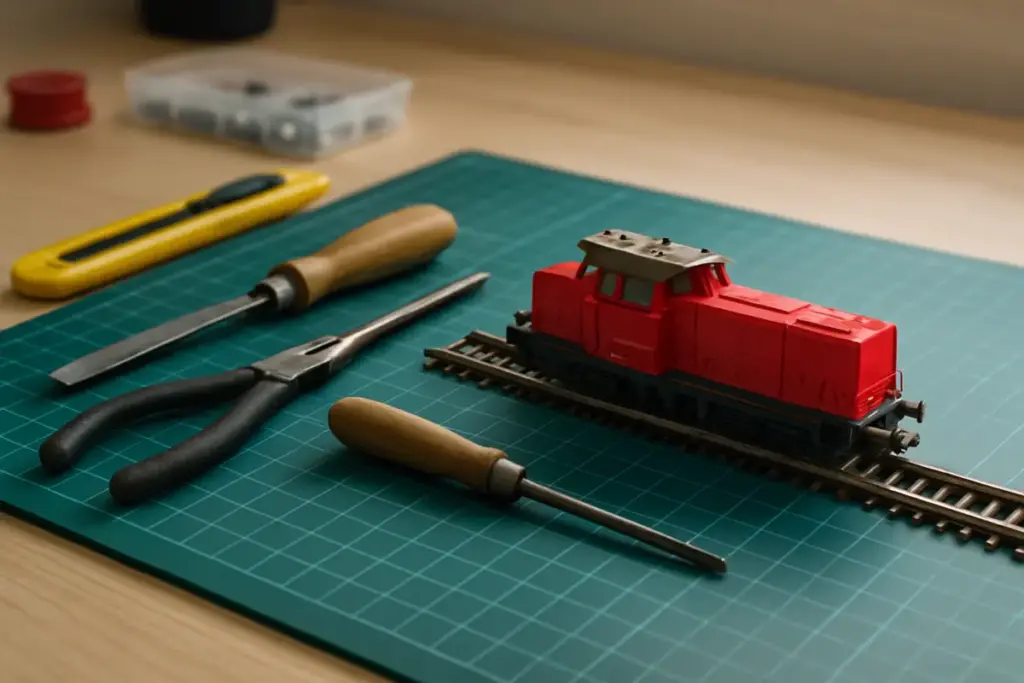
Before you start any project, make sure your workspace is organized and suitable for detailed work. A cluttered table increases the chance of accidents and makes it easier to lose tiny parts.
Here are a few basics to keep in place:
– Good lighting, preferably bright and focused
– A stable work surface with enough room for tools and parts
– Ventilation for painting, gluing, or soldering
– A small container or organizer for screws, couplers, and decals
– A cutting mat to protect surfaces and improve control
If possible, keep tools stored in one dedicated area. This prevents you from reaching across sharp blades or hot equipment while working. A clean and structured setup makes custom model trains easier to handle and reduces mistakes.
Follow Electrical Safety Practices
Many model railroad projects involve wiring, and that means electrical safety should always be a priority. Even low-voltage systems can cause damage if they are connected incorrectly.
Keep these tips in mind:
– Always disconnect power before working on a locomotive or track
– Double-check polarity before attaching wires
– Use the correct gauge wire for the job
– Insulate exposed connections with heat shrink or electrical tape
– Test new wiring on a low-risk section before full installation
If you are installing DCC, sound, or lighting systems, read the manufacturer’s instructions carefully. Different brands and components may have different voltage tolerances. A rushed electrical project can burn out a decoder or create intermittent issues that are difficult to troubleshoot later.
Use the Right Tools for Model Railroad Modding
Model railroad modding often requires precision tools, and using the right one for each task is part of safe customization. A dull blade or incorrect screwdriver can damage parts and make work more dangerous.
Recommended tools include:
– Hobby knife with replaceable blades
– Small screwdrivers for delicate screws
– Tweezers for tiny parts
– Soldering iron with a fine tip
– Wire strippers sized for small gauge wire
– Sanding sticks or fine files
Inspect tools regularly. Replace dull blades and worn bits before they become a problem. A sharp blade is actually safer than a dull one because it requires less force and gives you more control. Likewise, a properly sized tool reduces the chance of stripping screws or slipping off parts.
Protect Yourself During Cutting, Sanding, and Soldering
Physical safety should always come first when working on model trains. Small parts can be sharp, brittle, or hot depending on the task.
When cutting or trimming parts:
– Cut away from your body
– Keep fingers clear of the blade path
– Use a cutting mat and steady pressure
– Store blades with covers or in a secure container
When sanding or filing:
– Wear eye protection if dust or debris may fly
– Work slowly to avoid removing too much material
– Use a dust mask if creating fine plastic or resin particles
When soldering:
– Work in a ventilated area
– Use a heat-resistant mat
– Never leave a hot soldering iron unattended
– Let parts cool before handling them
These steps may seem basic, but they prevent common injuries and protect delicate custom model trains from heat damage.
Handle Paints, Glues, and Chemicals Carefully
One of the most creative parts of model train customization is painting and weathering. However, paints, solvents, and adhesives can be hazardous if used carelessly.
Best practices include:
– Read product labels before use
– Use sprays, primers, and solvents in ventilated spaces
– Wear gloves when handling strong adhesives or weathering chemicals
– Keep containers closed when not in use
– Avoid mixing products unless the instructions say it is safe
It is also wise to test new paints or adhesives on scrap material before applying them to your model railroad project. Some plastics react poorly to certain solvents, and some paints may not bond well without proper priming. Testing first can save both time and money.
Test Modifications in Small Steps
A major safety habit in custom model trains is testing one change at a time. This reduces the chance of compounding problems. If you change the motor, lighting, and couplers all at once, it becomes harder to identify what went wrong if the train stops working.
Try this approach:
1. Make one modification
2. Inspect the work carefully
3. Test the train on a short section of track
4. Confirm performance before moving to the next step
This method is especially useful in model railroad customization involving electronics. Small tests help you catch loose wires, alignment issues, and compatibility problems early.
Keep Small Parts and Magnets in Mind
Model trains often include extremely small components, and some projects involve magnets, metal fittings, or tiny screws. These can create safety concerns for both you and your equipment.
A few reminders:
– Keep small parts away from children and pets
– Use trays or magnetic mats to prevent loss
– Store magnets separately from electronic components when possible
– Be careful with metal filings near motors and mechanisms
Loose metal particles can interfere with smooth operation, while tiny screws can disappear quickly and cause frustration. Good storage habits are part of safe and successful model railroad work.
Don’t Rush the Process
One of the biggest safety risks in model train customization is rushing. Enthusiasm is great, but impatience leads to mistakes. Paint applied too soon may not cure properly. A solder joint made too quickly may be weak. A part forced into place can snap.
Give each step enough time:
– Let glue dry fully
– Allow paint to cure before handling
– Verify measurements before cutting
– Check fit before final assembly
Patience improves both safety and quality. Most experienced hobbyists will tell you that careful work always pays off.
Store and Maintain Your Equipment Properly
Safe customization does not end when the project is finished. Proper storage helps preserve both your tools and your model railroad equipment.
Store items in dry, temperature-stable areas to protect them from moisture and warping. Keep locomotives and cars in protective cases when not in use. Coil wires neatly and label them if they are part of a larger system. Clean tools after each session so they are ready for the next project.
Regular maintenance also helps prevent future problems. Inspect track, wheels, and connectors for wear. A well-maintained layout is safer, smoother, and more reliable.
Final Thoughts
Custom model trains offer endless opportunities for creativity, but safe habits should always guide the process. From electrical precautions to proper tool use and ventilation, each step matters. By following these model train safety tips, you can enjoy model train customization with greater confidence and fewer setbacks. Safe model railroad modding protects your equipment, improves your results, and makes the hobby more satisfying over time.
Whether you are upgrading a single locomotive or building a large model railroad, the best practice is simple: work carefully, test often, and put safety first.

