

 Written by
 Model Trains for Beginners: Essential, Effortless Wiring Guide
Model trains for beginners can feel intimidating at first, especially when wiring comes into the picture. The good news is that a basic model railroad beginner guide does not need to be complicated. With a simple understanding of power, track connections, and a few essential tools, you can get your layout running smoothly without frustration. Whether you want to learn how to start model trains, explore custom model trains, or eventually move into model railroad modding, wiring is one of the most useful skills you can master early.
Getting Started with Model Trains for Beginners

Before you begin wiring anything, it helps to understand the major parts of a model railroad system. At the most basic level, you need a power source, track, and a locomotive. Once those are connected properly, your train can move. The challenge comes when you add extra track sections, switches, lights, accessories, or multiple trains.
For beginners, the smartest approach is to keep the first layout simple. Start with one loop of track and one train. This gives you a chance to learn the basics of electrical flow without dealing with unnecessary complications. A simple setup also makes troubleshooting much easier if something goes wrong.
If you are researching how to start model trains, wiring should be seen as a step-by-step process, not a technical barrier. Think of it as building confidence one connection at a time.
Understanding the Basics of Track Power
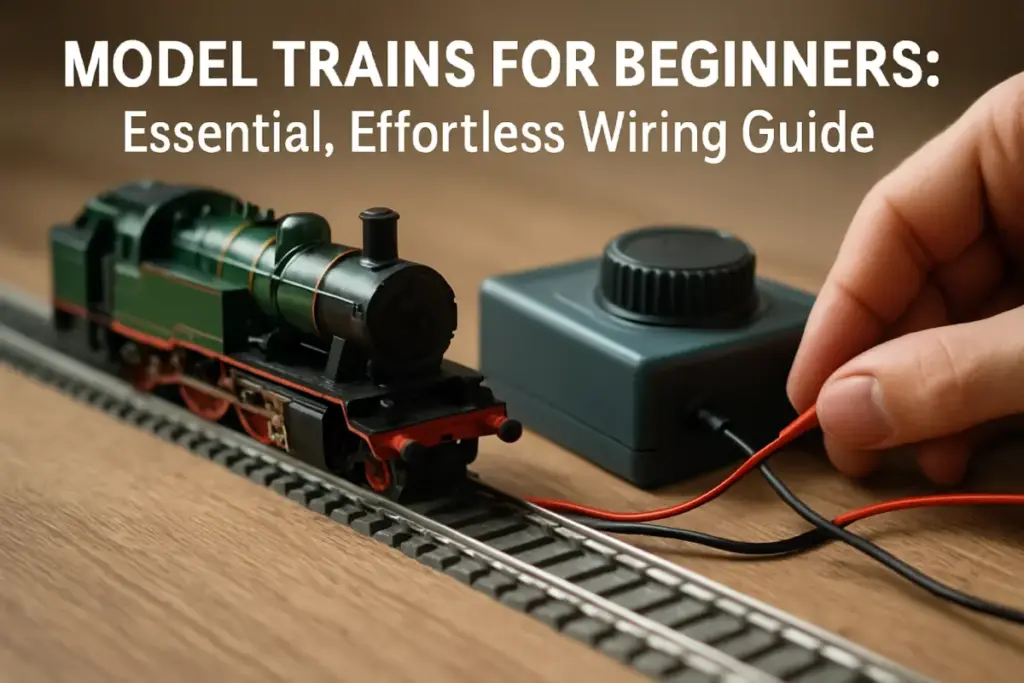
Most model railroads use either direct current (DC) or digital command control (DCC). If you are new, the difference is worth understanding before buying parts.
DC systems send power to the track, and the train responds based on how much power is applied. This is the traditional option and is often easier for absolute beginners with a small layout.
DCC systems send constant power to the track, but each locomotive has a decoder that receives specific commands. This setup is more advanced, but it offers greater flexibility, especially if you want to run multiple trains independently.
For a beginner layout, either system can work. The best choice depends on your goals, budget, and how much complexity you are comfortable managing. If your aim is to learn through practice, a basic DC setup is often the easiest starting point.
Essential Tools and Supplies
You do not need a large workshop to wire a model railroad. In most cases, a few basic tools are enough:
– Wire cutters
– Wire strippers
– Small screwdriver set
– Soldering iron and solder
– Electrical tape or heat-shrink tubing
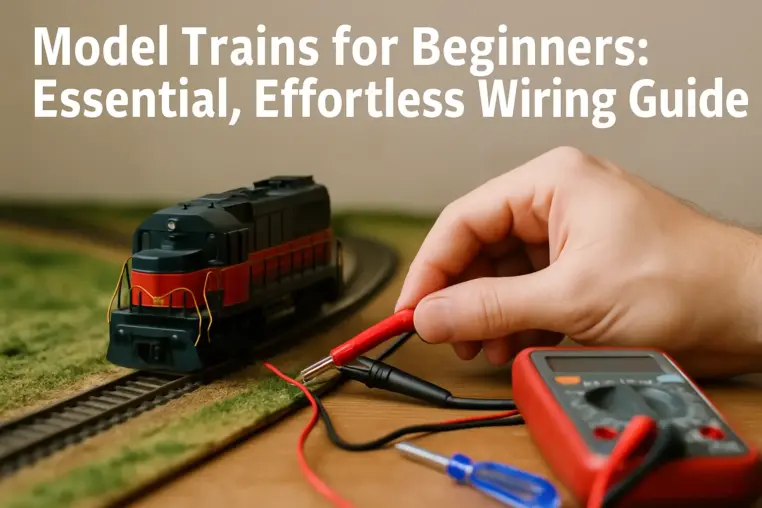
– Multimeter
– Feeder wires and bus wire
– Connectors or terminal strips
A multimeter is especially helpful because it allows you to test continuity and find power issues quickly. Many beginners skip this tool, but it can save a lot of time later.
When planning custom model trains or future model train customization projects, it is also smart to keep extra wire and connectors on hand. The more accessories you add, the more useful these supplies become.
The Simplest Wiring Setup for Beginners
A beginner-friendly wiring plan usually includes three main elements: the power pack or command station, the main track loop, and feeder wires.
Feeder wires connect the track to the power source. Even if your track sections are joined tightly, relying only on rail joiners can create weak electrical contact over time. Feeder wires help ensure steady power around the entire loop.
Here is the simplest way to wire a beginner layout:
1. Place your track in the desired layout.
2. Connect the power pack or DCC system to the track.
3. Add feeder wires at several points around the layout.
4. Test the train movement slowly.
5. Check for dead spots and fix them before expanding the layout.
This basic method prevents many common problems. It also creates a strong foundation if you decide later to expand into model railroad modding.
Common Wiring Mistakes to Avoid
Beginners often make a few predictable wiring mistakes, and knowing them in advance makes the process much easier.
One common issue is using too few feeder wires. Track joiners are not always reliable for long-term electrical flow, so additional feeders are important.
Another mistake is mixing up wire polarity. If your train runs in the wrong direction or shorts out, double-check how the wires are connected.
A third problem is overcomplicating the first layout. It is tempting to add signals, lights, and multiple sidings immediately, but this can make troubleshooting frustrating. Start small, then add features later.
It is also important not to use wire that is too thin for the distance it must carry power. Thicker wire is often better for the main bus line, while thinner wire works for short feeder connections.
How Wiring Supports Model Train Customization
Once you understand the basics, wiring becomes the gateway to more advanced creative options. Model train customization often involves adding building lights, signals, switch machines, animated accessories, and sound features. All of these upgrades depend on good wiring.
For example, you might want to create a small town scene with illuminated streetlights and a station platform. Or perhaps you want to build custom model trains with enhanced electronics and realistic behavior. These projects are much easier when your base wiring is clean and organized.
Model railroad modding also becomes far more rewarding when you can troubleshoot and expand your electrical system confidently. Instead of treating wiring as a chore, you begin to see it as the foundation for creativity.
Testing and Troubleshooting
After wiring your layout, always test it before you consider the job complete. Run the train slowly around the full loop and watch for hesitation, sudden stops, or flickering lights.
If the locomotive stops in one area, check the rail joiners and feeder connections in that section. If the entire layout loses power, inspect the main connection to the power source.
A multimeter can help identify whether power is reaching the track. This is especially useful for beginners who are still learning how to start model trains and diagnose electrical problems.
A good rule is to solve one issue at a time. Make one adjustment, test again, and then move forward. This method is far less stressful than changing multiple things at once.
Building Confidence as You Grow
The best part of starting with simple wiring is that each project builds your confidence. What begins as a single loop can eventually become a detailed railroad with multiple lines, accessories, and custom features. As your skills improve, you will be better prepared for larger layouts and more advanced model train customization.
Every experienced hobbyist started somewhere. By learning the basics now, you are preparing yourself for more creative and ambitious builds later. Whether your goal is a compact shelf layout or a detailed scene with custom model trains, wiring is one of the most valuable skills you can learn early.
Final Thoughts
A beginner does not need to master everything at once. The easiest way to get started is to focus on the essentials: a simple layout, reliable power, proper feeder wires, and careful testing. With these basics in place, model trains for beginners become much more approachable and enjoyable.
If you follow a clear model railroad beginner guide and take your time, wiring will stop feeling complicated and start feeling empowering. From there, you can explore how to start model trains more confidently, add custom model trains features, and eventually move into more advanced model railroad modding with ease.

