

 Written by
 Model Train Layout Ideas: Stunning, Effortless First Diorama Guide
Model train layout ideas can feel overwhelming at first, especially when you’re trying to build something that looks impressive without making the process too complicated. The good news is that a first diorama does not need to be large, expensive, or highly technical to look convincing. With a simple plan, a few smart design choices, and the right scenery techniques, you can create a layout that feels realistic, balanced, and enjoyable to build.
For beginners, the best approach is to focus on a small, manageable scene rather than trying to create an entire miniature world at once. A well-designed starter layout gives you room to learn the basics of track placement, terrain shaping, and scenery building without getting discouraged. Whether your goal is a quiet countryside branch line, a busy freight yard corner, or a small mountain town, the key is to keep it simple and intentional.
Start with a Clear Layout Concept
Before purchasing materials or laying track, decide what kind of scene you want to build. A strong concept helps guide every decision, from the shape of the track to the type of scenery you add later.
Some beginner-friendly concepts include:
– A rural stop with a short loop of track
– A compact industrial switching scene
– A small depot surrounded by grass and trees
– A mountain pass with a single tunnel and bridge
– A suburban rail corner with roads and houses
When thinking about model railroad layout design, simplicity is an advantage. A single focal point often looks better than trying to include too many features. For example, a station, a bridge, or a small village can become the centerpiece of the entire scene. Once you have that anchor, everything else can support it visually.
Keep Model Railway Layout Planning Practical

Good model railway layout planning starts with space. Measure your available area carefully and decide how much room you can realistically dedicate. A first diorama can be built on a tabletop, a small board, or even within a shallow display box. You do not need a large basement setup to make something visually striking.
A few planning tips:
– Choose a scale that fits your space and budget
– Avoid overly complex track arrangements at the beginning
– Leave enough open area so the scene does not feel crowded
– Plan access for wiring, cleaning, and later adjustments
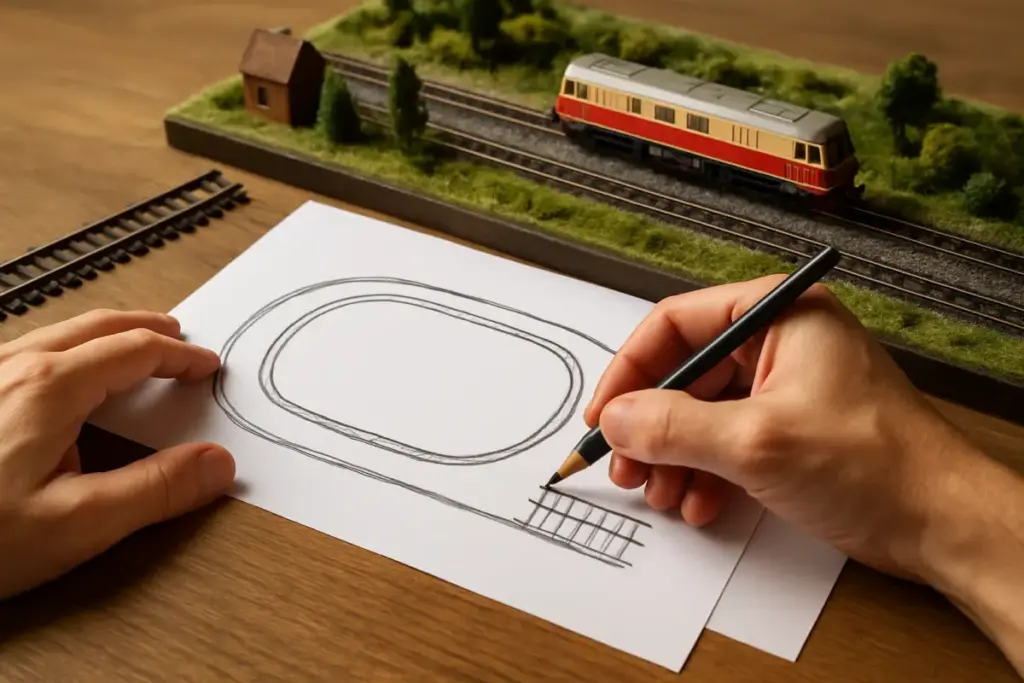
– Sketch your layout before building anything permanent
It is also helpful to think in layers: base structure, track, terrain, then details. This makes the project feel manageable and prevents you from jumping ahead before the foundation is ready. If you build with a clear sequence, the final result will look more polished.
Simple Track Shapes Work Best for Beginners
One of the most common mistakes in a first layout is making the track plan too complicated. Curves, sidings, crossings, and elevations can all add interest, but too many elements can make the scene look cluttered or unrealistic.
For a beginner, these track shapes are usually the easiest to work with:
– An oval with scenery hiding part of the loop
– A point-to-point line with two terminals
– A single main line with one branch
– A small switching puzzle with a few industry tracks
These layouts are effective because they allow movement without requiring too much engineering. They also leave space for scenery, which often matters more visually than the track itself. In many cases, a modest track plan with strong scenery will look better than a busy layout with little environment around it.
Use Model Train Scenery to Add Depth
Model train scenery is what turns a train setup into a believable miniature world. Even a very small base can look dramatic if the scenery is arranged thoughtfully. The goal is not to fill every inch, but to create depth, texture, and visual interest.
Start with the landform. Slight hills, embankments, and uneven ground can make the scene feel more natural. Flat bases often look artificial unless they represent a specifically built-up location like a yard or urban area.
Then add features such as:
– Grass and ground foam
– Rocks and gravel
– Small water areas
– Fences and roads
– Trees, bushes, and hedgerows
– Buildings or industrial structures
Try to vary the textures. Real landscapes are not uniform, so mixing materials creates a more convincing effect. A dirt path next to tall grass, or a gravel lot beside a patch of weeds, immediately makes the scene feel more authentic.
DIY Model Railway Scenery on a Budget
DIY model railway scenery is one of the best ways to save money while still achieving a detailed result. Many realistic effects can be created using simple household or inexpensive craft materials.
For example:
– Sculpt terrain with plaster, foam, or cardboard layers
– Use sifted dirt or colored sawdust for ground cover
– Make tree trunks from wire or twisted floral stems
– Create water effects with clear glue or resin alternatives
– Build fences from coffee stirrers or balsa wood
– Use printed textures for signs and building details
The advantage of DIY methods is that they allow you to customize the scene to your exact vision. You are not limited to store-bought pieces, and the imperfections often make the layout look more natural. Handmade scenery can also give your first diorama a unique personality that mass-produced accessories cannot match.
Focus on Realistic Model Railroad Landscaping
Realistic model railroad landscaping is all about observing how nature and human development actually interact. A believable scene usually has a sense of purpose. Roads lead somewhere. Trees cluster in certain areas. Buildings sit on level ground. Rails follow the terrain rather than floating above it.
To improve realism, consider these principles:
1. Blend the Track into the Land
Railroad tracks usually have gravel ballast and cleared edges, but they should still feel embedded in the landscape. Add slopes, drainage ditches, or small patches of weeds near the line.
2. Avoid Symmetry
Nature is rarely perfectly balanced. Randomize tree placement, grass height, and rock distribution for a more natural appearance.
3. Match the Scenery to the Location
A desert line should not look like a forest branch. A city scene needs pavement, utility poles, and structured building placement. The environment should support the story of the railroad.
4. Add Weathering
A little weathering goes a long way. Faded paint, dusty ground, and slightly worn structures help the scene feel lived in rather than brand new.
Build Around a Strong Focal Point
A successful first diorama often has one main feature that draws attention. This could be a bridge over a ravine, a small station platform, a tunnel exit, or a locomotive servicing area. Once the focal point is chosen, the rest of the layout should support it without competing for attention.
For example, if the centerpiece is a bridge, use the surrounding terrain to frame it. Add a creek below, trees along the banks, and a road nearby to suggest scale. If the focal point is a station, place benches, lamps, signs, and nearby structures to create a sense of activity. The surrounding scenery should guide the viewer’s eye naturally.
Final Tips for a First Diorama
When building your first project, remember that progress matters more than perfection. It is better to finish a small, attractive scene than to get stuck planning an oversized layout that never gets completed.
Keep these final tips in mind:
– Start small and expand later if needed
– Test everything before gluing it down permanently
– Use reference photos for inspiration
– Mix store-bought and handmade scenery for variety
– Leave room for future upgrades and details
A first layout is both a learning experience and a creative outlet. With thoughtful model train layout ideas, practical model railroad layout design, and careful model railway layout planning, you can create something that looks impressive from the start. Add in well-balanced model train scenery, a few DIY model railway scenery touches, and attention to realistic model railroad landscaping, and even a compact beginner setup can feel like a miniature world worth exploring.
If you approach the project with patience and a clear vision, your first diorama can be both stunning and effortless to build.

