

 Written by
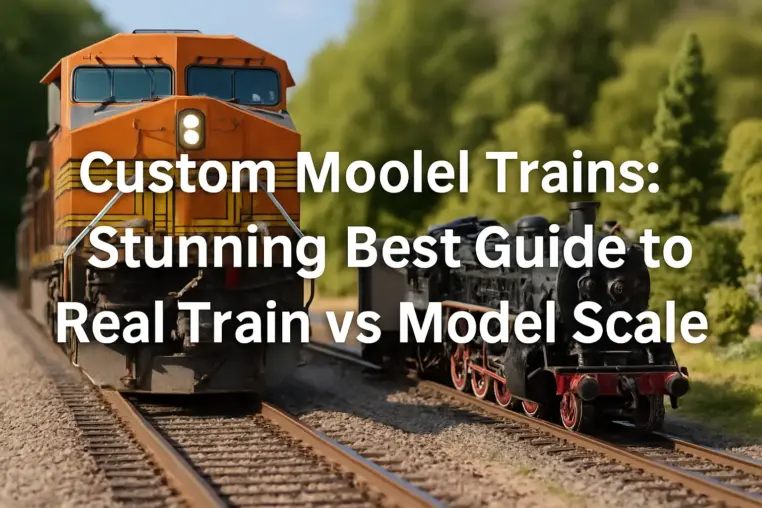
 Custom Model Trains: Stunning Best Guide to Real Train vs Model Scale
Custom model trains offer one of the most rewarding ways to combine craftsmanship, creativity, and a love of railroads. Whether you are building a compact display layout or a detailed miniature empire, understanding the difference between real trains and model scale is essential. Scale affects everything from realism and spacing to compatibility, scenery design, and the level of detail you can achieve. If you are new to the hobby or looking to improve your layout, learning how scale works will help you make better choices and get more enjoyment from the process.
What Makes Custom Model Trains So Popular?

The appeal of custom model trains goes far beyond simply placing trains on a track. Many hobbyists enjoy the challenge of building a miniature world that feels alive and authentic. Others like the technical side, such as wiring, control systems, and layout planning. For many enthusiasts, it is a creative outlet that blends engineering and artistry.
One of the biggest reasons people are drawn to the hobby is flexibility. You can create a layout that reflects a real railroad line, a fictional mountain route, a busy city terminal, or a small industrial scene. With model train customization, nearly every element can be modified—locomotives, freight cars, passenger cars, buildings, terrain, lights, and even weathering effects.
Understanding Model Train Scales

Before comparing real train proportions to miniature versions, it helps to understand model train scales. Scale refers to the ratio between the model and the actual train it represents. For example, a 1:87 scale model is 87 times smaller than the real thing.
The most common model train scales include:
– HO scale trains – 1:87 scale, one of the most popular choices for hobbyists
– N scale trains – roughly 1:160 scale, ideal for smaller spaces
– O scale – larger and more detailed, often preferred for display
– G scale – large garden railroad scale, often used outdoors
Each scale has its own advantages. HO scale trains are widely available and strike a good balance between detail and space. N scale trains are excellent for compact layouts because they allow more track and scenery in a smaller area. The best scale for you depends on your space, budget, and level of detail.
Real Train vs Model Scale: How the Comparison Works
When comparing a real train vs model scale, the main idea is size reduction. A real locomotive may be 70 feet long, but in HO scale, that same locomotive would be just under 10 inches long. In N scale, it would be even smaller, allowing a full train to fit on a modest table or shelf.
This reduction in size affects more than just the train itself. Everything around it must also be scaled properly. Bridges, buildings, trees, people, signage, and roads should all match the chosen scale if you want the scene to feel believable. Even small inconsistencies can make a layout look unrealistic, so scale accuracy matters.
The comparison also shows why different model train scales offer different experiences. Larger scales allow for more visible detail and easier handling, while smaller scales maximize space efficiency. Choosing between them is often a matter of balancing realism with practical layout size.
Choosing Between HO Scale Trains and N Scale Trains
Two of the most common choices for hobbyists are HO scale trains and N scale trains. Each has distinct strengths.
HO Scale Trains
HO scale is often considered the standard for model railroading. It offers a strong balance between size and detail. Because the models are large enough to handle comfortably, HO scale is great for beginners and experienced builders alike. There is also a huge variety of products available, including locomotives, rolling stock, track systems, and scenery items.
HO scale trains are a smart choice if you want realistic detail, easier maintenance, and a wide selection of aftermarket parts for model train customization.
N Scale Trains
N scale trains are much smaller and ideal for hobbyists with limited room. Since the trains and scenery take up less space, you can create longer mainlines, more complex track plans, and larger landscapes in a compact area. This makes N scale especially attractive for apartment layouts, shelf layouts, or intricate multi-level designs.
While smaller parts can be harder to handle, modern manufacturing has improved detail and performance significantly. For model railroad modding in a small space, N scale is an excellent option.
The Role of Model Train Customization
Model train customization is what transforms a standard set into something truly unique. Some hobbyists start with factory-made models and gradually upgrade them. Others build from kits or scratch-build from raw materials. Common customization options include:
– Repainting locomotives and cars
– Adding decals and numbering
– Installing lights and sound
– Upgrading couplers and wheels
– Weathering cars to make them look used
– Modifying interiors and cab details
– Changing scenery to match a specific region or era
Customization gives you the freedom to tell a story. A well-customized freight car with rust streaks, faded paint, and realistic loads instantly adds character to a layout. This is where model railroad modding becomes especially satisfying, because small details can dramatically improve the overall look.
Model Railroad Modding Tips for Better Realism
If you are interested in model railroad modding, focus on improvements that enhance both appearance and performance. Even simple upgrades can make a big difference.
A few useful tips include:
1. Match the era and location
Try to keep trains, buildings, and vehicles consistent with the time period you want to represent.
2. Use weathering carefully
A little grime, dust, and fading can make models look more believable, but too much weathering can overwhelm the scene.
3. Pay attention to scenery scale
Trees, grass, and figures should match your chosen model train scales.
4. Upgrade lighting
LED lights can add realism to locomotives, street scenes, and station buildings.
5. Test modifications before final installation
Always make sure mechanical changes do not affect running performance.
The best modding projects improve both style and reliability. A train that looks great but runs poorly will not be satisfying for long.
How to Decide Which Scale Is Right for You
Choosing among different model train scales depends on a few practical questions:
– How much space do you have?
– Do you want maximum detail or maximum track length?
– Will children be involved in the hobby?
– Are you more interested in display, operation, or collecting?
– What is your budget for locomotives, track, and scenery?
If you want a large amount of detail and easier handling, HO scale trains may be best. If space is limited, N scale trains can let you build a surprisingly impressive layout in a smaller footprint. There is no single correct answer—only the scale that best fits your goals.
Final Thoughts
Custom model trains are more than miniature machines; they are a creative project that allows you to build a world in detail. By understanding the relationship between a real train vs model scale, you can make smarter decisions about layout design, realism, and customization. Whether you prefer HO scale trains for their detail or N scale trains for their compact versatility, the right scale will help bring your vision to life. With thoughtful model train customization and a few clever model railroad modding techniques, your layout can become a true standout in the hobby.

