

 Written by
 Model Train Setup Step-by-Step: Stunning, Easy Model Railroad Guide
Model train setup can be one of the most rewarding hobbies you ever take on. Whether you’re building your first small layout or planning a larger scenic railroad, the process blends creativity, technical skill, and a love of miniature detail. A well-planned model railroad does more than just move locomotives around a track—it tells a story, captures a mood, and creates a world that feels alive.
For beginners, the biggest challenge is often knowing where to start. With so many track systems, scales, scenery options, and electrical choices, it’s easy to feel overwhelmed. The good news is that a successful layout doesn’t have to be complicated. By following a simple step-by-step approach, you can build a setup that looks stunning, runs smoothly, and leaves room for future upgrades.
Plan Your Model Railroad Before Buying Anything

Before you purchase track or scenery, take time to map out your goals. Ask yourself what kind of model railroad you want to create. Do you want a compact display layout, a realistic operation-focused setup, or a scenic mountain route with multiple towns?
Think about these basics:
– Scale and size: N scale, HO scale, O scale, and others all have different space requirements.
– Available room: Measure your table, shelf, or dedicated train room carefully.
– Theme: Modern city, steam-era countryside, industrial yard, or mixed-era rail scene.
– Operating style: Continuous loop, point-to-point, switching layout, or combination.
At this stage, sketch a rough plan. Even a simple drawing helps you understand how curves, turnouts, stations, and scenery will fit together. Planning ahead saves money and prevents frustrating redesigns later.
Choose the Right Base and Layout Surface
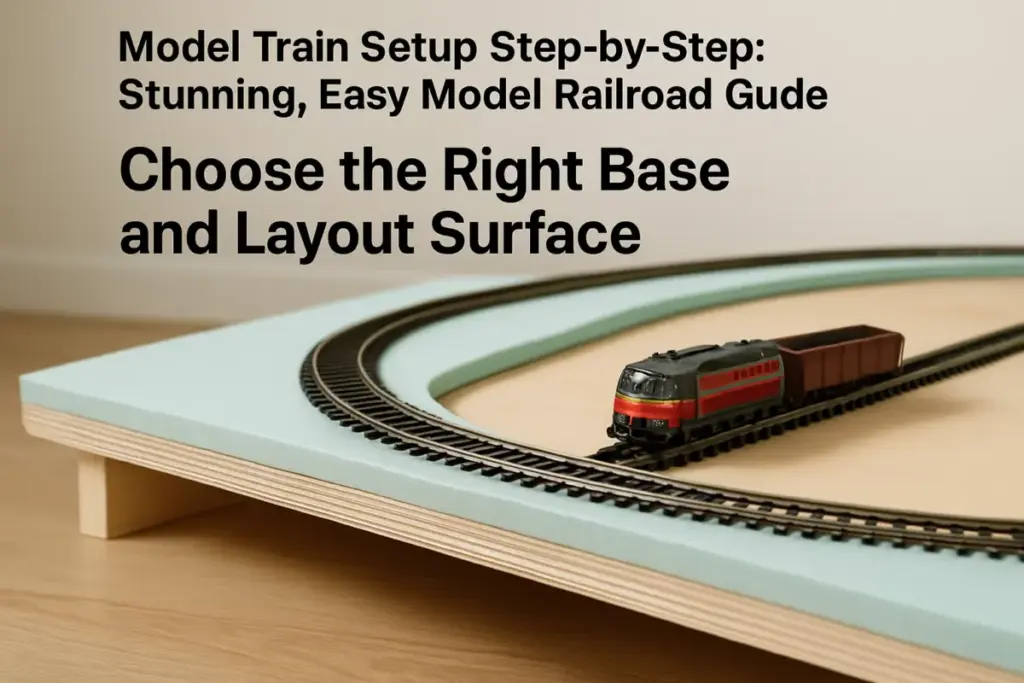
A solid base is the foundation of any good setup. Many hobbyists build on plywood, foam board, or modular benchwork. The best choice depends on your budget, skill level, and long-term goals.
For beginners, foam board is often a smart option because it is lightweight, easy to cut, and simple to shape for hills or valleys. Plywood offers strength and durability, especially for larger layouts. If you want a more advanced setup, modular benchwork gives flexibility and makes expansion easier.
Make sure the surface is level and sturdy. A wobbly table can cause track problems, derailments, and scenery issues. If you’re building on a permanent table, leave enough room for wiring access and maintenance.
Lay the Track With Smooth Operation in Mind
Track layout is where the railroad begins to come alive. When installing track, focus on smooth curves, reliable connections, and easy access for repairs.
Here are some important tips:
– Avoid extremely sharp curves unless you are using small rolling stock.
– Test-fit all track pieces before fastening them down.
– Keep turnouts accessible for cleaning and adjustments.
– Use track joiners carefully to maintain alignment.
– Check that rail ends are flush to prevent derailments.
If you’re new to the hobby, a looped track design is a great starting point. It lets you enjoy running trains right away while learning the basics of model railroad modding and operation. Once you gain experience, you can add sidings, yards, branch lines, and extra features.
Wire the Layout for Reliable Performance
Good wiring is essential for dependable train operation. Even a beautifully detailed layout will be frustrating if the trains stall, flicker, or lose power.
Depending on your system, you may use analog DC or digital command control (DCC). DCC is popular because it allows multiple trains to run independently on the same track, and it opens the door to sound, lighting, and advanced functions.
Basic wiring advice includes:
– Plan feeder wire placement before attaching scenery.
– Use consistent color coding for polarity.
– Test sections of track as you go.
– Keep wire connections secure and organized.
– Label everything if your layout is complex.
If you’re unsure about wiring, start simple and expand gradually. A clean electrical system makes future upgrades much easier.
Add Scenic Details That Bring the Layout to Life
Scenery is what transforms plain track into a believable world. This is where your creativity can really shine. Trees, roads, water features, buildings, bridges, rock formations, and figures all help create depth and atmosphere.
Start with the landforms. Foam, plaster cloth, and sculpting materials can create hills and terrain. Then add ground cover such as grass mats, turf, ballast, and dirt textures. After that, layer in structures and small details.
To make the scene feel realistic:
– Use a mix of textures and colors
– Vary the height of trees and plants
– Add weathering to buildings and trackside structures
– Include signs, fences, utility poles, and vehicles
– Create a focal point, such as a station or bridge
Scenery does not need to be perfect right away. Many hobbyists improve their layouts over time, refining areas as their skills grow.
Explore Custom Model Trains and Personalization
One of the most enjoyable parts of the hobby is working with custom model trains. This can mean adding decals, repainting locomotives, upgrading couplers, installing sound systems, or creating one-of-a-kind rolling stock.
Model train customization lets you reflect your own style and railroad theme. For example, you might:
– Weather freight cars for a more used look
– Add LEDs to passenger cars
– Install detailed interiors
– Customize locomotive paint schemes
– Create era-specific freight consists
If you enjoy hands-on projects, model railroad modding offers endless possibilities. You can modify engines for better performance, improve lighting, add realistic sound, or change details to match a specific prototype railroad. Even small upgrades can make a big visual difference.
The key is to start with manageable projects. Learn one new skill at a time, and your confidence will grow quickly.
Test, Adjust, and Improve Over Time
No layout is finished on the first day. Testing is an important part of the process. Run trains slowly at first and watch for derailments, electrical issues, or clearance problems. Make adjustments as needed before adding delicate scenery.
A helpful habit is to build in stages:
1. Benchwork and base surface
2. Track installation and testing
3. Wiring and electrical checks
4. Basic scenery and terrain
5. Structures, details, and finishing touches
This step-by-step method keeps the project manageable and prevents costly mistakes. It also lets you enjoy progress at each stage instead of waiting until everything is complete.
Keep Maintenance Simple and Consistent
Once your model trains are running, regular maintenance will keep them in top shape. Dust can build up on rails, wheels, and scenery, so occasional cleaning is essential. Check track joints, lubricate moving parts when needed, and inspect locomotives for wear.
A few maintenance tips:
– Clean track with a soft cloth or approved cleaning solution
– Keep rolling stock wheels free of debris
– Store locomotives carefully when not in use
– Recheck wiring after major layout changes
– Fix small problems early before they grow
A well-maintained layout not only performs better but also lasts longer.
Conclusion
Building a beautiful model railroad is a process of planning, patience, and creativity. By starting with a solid layout plan, choosing the right base, installing reliable track and wiring, and adding scenery and custom details, you can create a setup that feels both stunning and rewarding. Whether you’re focused on realistic operation or artistic display, the hobby offers room to grow at every level.
From simple starter layouts to advanced custom model trains, every step gives you a chance to learn and improve. Take your time, enjoy the process, and let your imagination shape the railroad you’ve always wanted.

