


 Written by
 Model Railroad Tools You Need
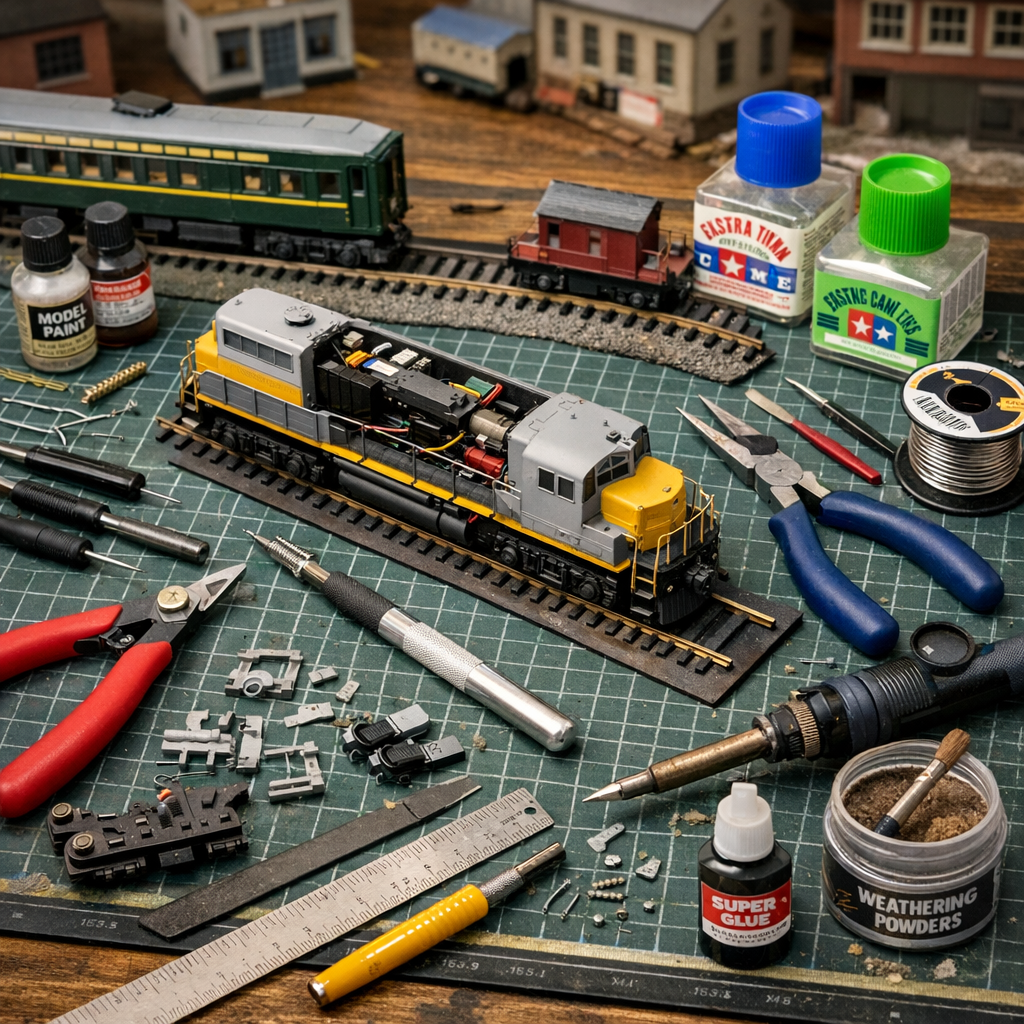
Building and customizing model trains is a rewarding hobby that blends craftsmanship, electronics, and creativity. Whether you’re upgrading an out-of-the-box locomotive into a finely detailed scale model or scratchbuilding scenery to create a lifelike layout, having the right tools makes the difference between frustration and satisfaction. This guide covers essential tools for beginners through advanced hobbyists, touches on supplies and workspace tips, and includes practical examples of projects to illustrate how tools are used in real model train customization and model railroad modding.
Keywords to keep in mind while reading: custom model trains, model train customization, model railroad modding, model trains, model railroad.
Why the Right Tools Matter
Good tools:
- Save time and frustration by enabling precise work.
- Improve results—neat solder joints, smooth paint finishes, and realistic weathering.
- Make complex projects like DCC installs or lighting much more approachable.
- Extend the life of delicate models by minimizing accidents during handling.
Investing in a modest set of quality tools pays dividends as you dive into custom model trains and model railroad modding. You don’t need to buy everything at once; start with essentials and add specialized items as projects demand.
Workshop Basics: Setup, Lighting, and Safety
Before listing tools, make sure your workspace supports detailed hobby work.
- Workbench: Sturdy, well-lit surface approximately waist-high. A cutting mat protects the bench and provides measurement guides.
- Lighting: A bright overhead light plus an adjustable LED task lamp with a daylight (5000–6500K) temperature helps with color accuracy when painting and weathering.
- Ventilation: Essential for glues, paints, and solvents. Use a fan or, ideally, an exhaust system or fume extractor when airbrushing or soldering.
- Storage: Small parts organizers, drawers, and labeled bins prevent tiny screws, couplers, and electronics from getting lost.
- Safety gear: Eye protection, nitrile gloves, and a basic first-aid kit. Respirator masks for spray painting and sanding dust.
Essential Hand Tools
These are the tools almost every hobbyist will use regularly.
- Precision screwdrivers: Flat and Phillips in miniature sizes (00, 0, 1). Magnetic tips are helpful.
- Needle-nose pliers: For gripping small parts and bending wire.
- Flat-nosed pliers: Useful for holding and manipulating larger parts without crushing.
- Diagonal cutters: For cleanly cutting wire and plastic sprues.
- Tweezers: Fine-point and curved-tip tweezers for placing decals, small screws, and detail parts.
- Hobby knife: A high-quality X-Acto or similar with replaceable blades for trimming flash, cutting decals, and scoring.
- Files: A set of needle files (flat, round, half-round, triangular) for shaping and smoothing plastic and metal.
- Small hammer and pin vise: For light tapping and hand drilling. The pin vise (hand drill) is essential for small holes up to ~3 mm.
- Ruler and calipers: A 6-inch or 12-inch metal ruler and a digital caliper for precision measurement.
- Centering and alignment tools: Small squares and alignment jigs for ensuring parts fit correctly.
Example use: Removing a sprue gate cleanly with diagonal cutters, tidying the remaining nub with a hobby knife, and finishing with a fine file yields invisible joins on a plastic detail part.
Glues and Adhesives
Different materials require different adhesives. Stock a range to suit plastic, metal, and wood.
- Plastic cement (solvent weld): Melts and fuses styrene parts—essential for most injection-molded model parts.
- CA glue (cyanoacrylate/superglue): Fast-setting; available in thin (penetrating), medium, and thick viscosities. Thin CA for capillary action, thick CA for gap-filling.
- Epoxy: Two-part epoxies (5–30 minute set) for strong bonds, especially metal-to-plastic or larger parts.
- PVA wood glue: For scenery and wooden sub-assemblies.
- Plastic welding cement (for polystyrene): For stronger joints than typical liquid plastic cement.
- Solvent cement applicators: Syringe tips or pin applicators help apply tiny amounts precisely.
Tip: Use CA accelerator to set joins instantly for fiddly parts, but be cautious—accelerator fumes can fog clear plastics.
Precision Cutting and Shaping
- Hobby knife blades: Keep a supply of #11, #16, and #18 blades for different cuts.
- Razor saw: For cutting metal or thicker plastic pieces cleanly.
- Rotary tool (Dremel): For cutting, grinding, drilling, and polishing. Use a variable speed and appropriate bits; a flex shaft enhances control.
- Sandpaper and sanding sticks: 80–2000 grit progression for smoothing plastics and metal.
- Micro-mesh: For polishing clear parts like windows to remove fine scratches.
- Pin vise and micro drill bits: Drill sizes from 0.3 mm to 2.5 mm for detail holes, lamp posts, and mounting screws.
Safety reminder: Clamp or hold parts securely when using rotary tools to avoid slips and damage.
Painting and Finishing Tools
Finishing makes models look realistic. The right painting tools are critical.
- Paints: Acrylics for easy cleanup; enamels for durability and certain finishes. Brands cater to modelers—use colors and mixes appropriate to prototype schemes.
- Brushes: A variety of sizes, including fine detail brushes (000–1), flats for washes, and synthetic/ sable options depending on paint type.
- Airbrush: For smooth, even coats and subtle shading. Single-action or dual-action airbrushes can be used; compressors with moisture traps and regulators ensure consistent spray.
- Masking tape: Low-tack painter’s tape and ultra-thin masking tape for crisp edges.
- Primer: Light gray or white primer helps paint adhesion and reveals imperfections.
- Thinners and cleaners: Model-specific thinners and brush cleaners.
- Weathering products: Pastels/chalks, weathering powders, oil paints (for streaking and filters), and washes.
- Clear coats: Matte, satin, and gloss clear coats to protect paint and adjust finish.
Example technique: Use an airbrush to apply a base coat, then lightly mist panel lines with a slightly darker shade to emphasize detail. Lock everything with a matte clear coat and add weathering powders to settle into recesses.
Electronics, Lighting, and DCC Tools
Model railroad modding often involves electrics—lighting, sound, and DCC. Essential tools include:
- Soldering iron: A temperature-controlled 25–60W iron with fine tip for small electronics. Solder wick and flux improve joint quality.
- Solder: 60/40 tin-lead for easy soldering, or lead-free if you prefer. Use 0.5–0.7 mm diameter for small wires.
- Helping hands / PCB holders: Hold small parts stable for soldering or assembly.
- Multimeter: For voltage, continuity, and troubleshooting.
- Wire stripper: Precision strippers for 32–24 AWG wires commonly used in models.
- Heat shrink tubing and hot air tool: For insulating and tidying wire joints.
- Decoders and DCC tools: Manufacturers produce locomotive decoders, sound decoders, and accessory decoders. A decoder programming track and a basic DCC system help test installs.
- IC tweezers and component testers: Helpful for installing tiny LEDs or resistors into custom lighting circuits.
- JST connectors and pigtails: For detachable wiring inside shells.
Example project: Installing interior lighting in a passenger car—drill small holes, solder LEDs to a pigtail with resistor, run wires to a decoder or track power pickup, secure LEDs with low-odor CA, and test with a multimeter.
Track, Wheel, and Coupler Tools
Maintaining reliable running and prototypical coupling requires specific tools.
- Track gauge: Ensures rails are the correct distance; narrow prototypes have their own gauges.
- Rail joiner pliers: For removing and inserting rail joiners without damaging rails.
- Track cleaner: Track eraser, cleaning pads, or chemical cleaners; a track cleaning car keeps rails conductive.
- Wheel truing tool / lathe: For cleaning and true-running wheels on locomotives.
- Coupler shims and alignment tools: To ensure couplers are at the correct height and function smoothly.
- Track pins and pinner: For pinning down flexible track during layout construction.
- Ballast tools: Brushes, spoons, and small spreaders for neat ballast application.
Tip: Regular wheel and track maintenance prevents electrical pickup issues during long runcycles.
Detailing and Scratchbuilding Supplies
For those who want to create custom model trains or detailed structures:
- Styrene sheets, rods, and tubes: The backbone for scratchbuilding.
- Detail parts: Handrails, ladders, grab irons, and aftermarket detail sets for enhancing kits.
- Photo-etch bending tool: For crisp bending of brass photo-etched parts.
- Micro saws and bracing jigs: For precise cutting and assembly of frames and bodies.
- Templates and scale plans: For matching prototype details when making custom model trains.
- Epoxy putty / Milliput / Squadron Green Putty: For filling gaps and sculpting small details.
Example: To replace a molded handrail with wire, drill precise holes using a pin vise, shape stainless wire to the profile, and secure with thin CA or epoxy for a crisp, realistic rail.
Paint, Weathering, and Finishing Accessories
- Airbrush cleaning pot and brush cleaner: Keep your airbrush in good working order.
- Masks and stencils: For striped liveries and graffiti effects.
- Filters and washes: Oil filters and enamel washes to accentuate panel lines and grime.
- Pastels, pigments, and fixer: For realistic dirt and rust tones. Apply dry, then fix with a matte medium or clear coat.
- Sponge and chipping techniques: Use small pieces of sponge and hairspray or chipping fluids to create paint chipping effects.
Example: To simulate rust streaks, thin oil paint and drag with a fine brush downward from seams; blend with a clean brush to soften and make it look natural.
Organizational and Measurement Tools
Small parts are a modeler’s nemesis. Organization saves time.
- Parts trays and magnetic trays: Keep screws and metal bits from vanishing.
- Labeling machine or printed labels: For kit parts, paints, and electronic components.
- Small parts storage: Drawer cabinets with small bins.
- Notebook or digital log: Keep build notes, paint recipes, wiring schematics, and decoder addresses.
Suggested Tool List by Skill Level
Beginner essentials:
- Hobby knife, spare blades
- Small set of tweezers
- Needle-nose pliers and diagonal cutters
- Precision screwdrivers
- Plastic cement and CA glue
- Sandpaper assortment
- Small paintbrushes and basic acrylic paints
- Cutting mat and ruler
Intermediate additions:
- Airbrush and compressor (or at least practice with spray cans)
- Soldering iron and multimeter
- Pin vise with micro drill bits
- Rotary tool (Dremel) with accessories
- Files and sanding sticks
- Decoders for simple DCC conversions
Advanced/professional:
- Digital calipers and precision measuring tools
- Wheel truing tool and coupler alignment jig
- Photo-etch tools and micro-bending equipment
- Advanced sound decoders and programming devices
- Fume extractor and dedicated paint booth
- Workbench vise and dedicated electronics station
Budgeting and Where to Buy
- Local hobby shops: Great for hands-on advice and immediate parts.
- Online retailers: Larger selection and specialized aftermarket parts.
- Second-hand tools: Often fine for hand tools (pliers, files) but be cautious with electronics and soldering irons.
- Brand choices: There are reputable brands across the price range. For example, start with a mid-range soldering iron and upgrade to a temperature-controlled unit later.
Plan purchases around your next project: if you’ll be installing DCC, prioritize a good soldering iron, multimeter, decoder, and wiring tools.
Care and Maintenance of Tools
- Clean and oil pliers and cutters periodically.
- Replace hobby knife blades frequently for clean cuts.
- Keep soldering iron tips tinned and clean; use tip tinner/cleaner.
- Store small bits and drills in labeled containers to avoid dulling.
- Calibrate measuring tools occasionally to maintain accuracy.
Project Examples: Putting Tools to Work
Here are three concise examples showing a realistic toolset in action.
Example 1 — Converting a Locomotive to DCC (basic model train customization)
- Tools used: Precision screwdrivers, soldering iron and solder, multimeter, wire stripper, decoder, small drill (pin vise).
- Steps: Disassemble shell, identify motor and pickup wires, desolder or clip existing wiring, solder decoder pigtails to motor/pickups, insulate joints, reassemble, program decoder on a programming track, test.
- Tips: Label wires before removing; use heat shrink tubing for insulation.
Example 2 — Adding LED Interior Lighting to a Passenger Car (model railroad modding)
- Tools used: Pin vise, micro drill bits, fine tweezers, soldering iron, LEDs/resistors, heat shrink, CA glue, multimeter.
- Steps: Drill mounting holes, solder LEDs with resistors to a harness, test on bench, install LEDs and diffuse with small translucent strip, route wires to pickup or decoder, secure wires, reassemble.
- Result: Realistic internal lighting enhances realism at night scenes.
Example 3 — Weathering a Freight Car for Realism (custom model trains aesthetic)
- Tools used: Airbrush, paints and thinners, weathering powders, fine brushes, sponge chips, matte clear.
- Steps: Prime and base coat, mist darker shades for grime and soot, apply washes to panel lines, use sponge to simulate chipping, dust with pigments around lower edges, seal with matte coat.
- Effect: Gives the model a service-worn, prototypical appearance.
Learning Resources and Community
- Forums and social media groups: Share photos, ask for troubleshooting help, and learn techniques.
- YouTube channels and tutorials: Visual step-by-step guides for soldering, airbrushing, and weathering.
- Local clubs and model railroad shows: Hands-on advice, swaps, and demonstrations are invaluable.
- Manufacturer manuals and decoder documentation: Always read wiring diagrams and programming notes for safe installs.
Final Tips for Successful Model Railroad Modding
- Start small: Take on mini-projects to build confidence before attempting complex custom model trains.
- Practice soldering on scrap wire and components before working on valuable models.
- Keep a project log with part numbers, paint mixes, and wiring diagrams to replicate work or fix issues later.
- Test frequently: Power up and test sub-assemblies to catch issues early.
- Be patient: Precision work often requires slow, steady hands and good lighting.
Conclusion
Equipping yourself with the right tools transforms model railroad modding from a frustrating chore into an enjoyable creative process. Start with high-value essentials—precision hand tools, a good hobby knife, a soldering iron, and basic painting supplies—then expand into electronics, airbrushing, and specialty tools as your projects mature. Whether your goal is to build custom model trains, improve running reliability, or create richly weathered rolling stock, the combination of the right tools, a tidy workspace, and focused practice will get you there. Enjoy the process of learning, and soon your layout will reflect the care and skill you bring to each detail.